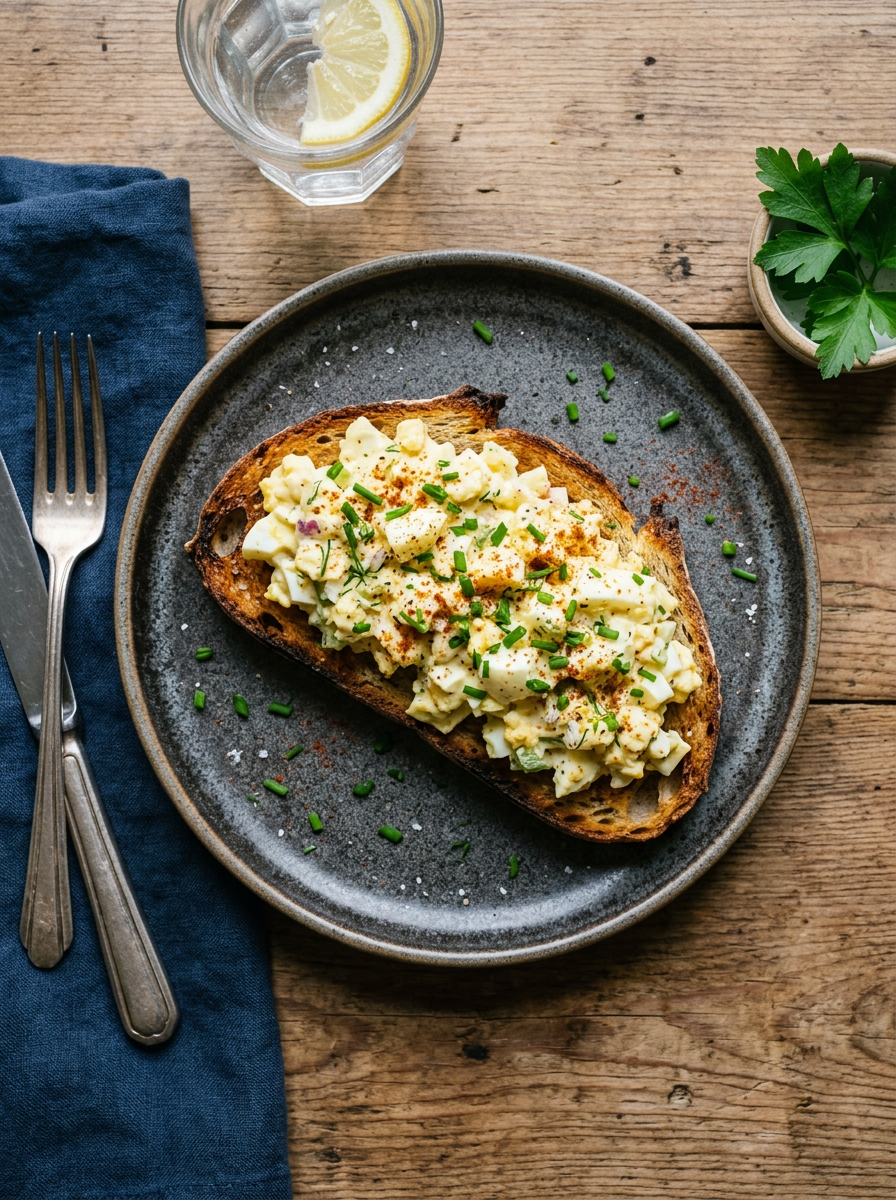
Egg salad has a reputation problem. Most versions are either too wet, too bland, or have the rubbery, sulfurous quality that comes from overcooked eggs. When it’s done right — properly cooked eggs, the right amount of mayonnaise, good seasoning, and a texture that has some variation rather than a uniform paste — it’s genuinely satisfying and versatile enough to use in multiple ways across the week. The difference between bad egg salad and good egg salad comes down to a few specific decisions, none of which are complicated once you understand what you’re trying to achieve.
- Ready in 25 minutes — 11 minutes of cooking plus 10 minutes in an ice bath, minimal prep
- Key technique: separate the yolks and whites, mash the yolks first then fold in chopped whites for a textured result rather than a uniform paste
- Serve on toast, in a sandwich, in butter lettuce cups, or as part of a lunch plate with Caesar salad
10 mins
11 mins
25 mins
4
Easy
220 kcal
13g
2g
18g
0g
Breakfast and Brunch That Doesn’t Suck
This egg salad is a preview of the egg-cooking approach throughout the cookbook — from scrambled to hard-boiled to poached, every recipe is built around getting the egg exactly right. 30+ breakfast and brunch recipes worth making on purpose.
The Egg-Cooking Method That Eliminates the Gray Ring
The gray-green ring around the yolk that you see in most egg salad is iron sulfide, and it forms when eggs are cooked at too high a temperature for too long. It’s harmless, but it tastes slightly sulfurous and is a visual signal that the eggs were overcooked. The fix is simple: bring water to a full boil, lower the eggs in gently, then immediately reduce the heat to a gentle simmer. Cook for exactly 11 minutes — not 12, not 10. At 11 minutes, the yolks are fully cooked through but haven’t started to oxidize, so they come out with a clean, bright yellow color and a creamy rather than chalky texture.
After the 11 minutes, transfer the eggs immediately to an ice bath — a bowl of water with a generous handful of ice. Leave them there for at least 10 minutes. The ice bath stops the cooking instantly (preventing that gray ring from forming even if the yolk was close to the danger zone) and makes the shells dramatically easier to peel. The thermal shock contracts the egg slightly away from the shell membrane, so even fresh eggs — which are notoriously hard to peel — come off cleanly with a little practice.
Peeling Eggs Without Destroying the White
After the ice bath, crack the egg gently on the counter — just enough to create a network of small cracks across the surface, not a big split that tears the white. Then roll it lightly under your palm to loosen the shell pieces before you start peeling. Start peeling from the rounder end of the egg, where there’s a small air pocket that gives you a gap to get under the membrane. Peel under a thin trickle of running water if the shell is sticking — water gets under the membrane and separates it from the white cleanly.
The age of the eggs matters here. Fresh eggs (less than a week old) have a tighter membrane and are harder to peel than slightly older eggs. If you’re planning to make egg salad, eggs that have been in the fridge for 10 to 14 days peel almost effortlessly after the ice bath treatment. This is one recipe where grocery store eggs — which are typically at least a week old by the time you buy them — actually have an advantage over farm-fresh eggs.
Chopping vs. Mashing: The Texture Decision
The texture you want in egg salad depends on how you’re serving it. For sandwiches and toast, a mix of textures works better — some finely chopped white, some larger chunks, and yolks that are partially smashed but still have some body to them. A uniform paste reads as cafeteria egg salad and is less interesting to eat. For a composed plate or a lettuce wrap, slightly coarser pieces hold together better and look more deliberate.
The method I use: halve the eggs, pop out the yolks into a bowl and smash them with a fork until crumbly but not completely smooth. Chop the whites separately into roughly half-inch pieces, with a few smaller bits mixed in. Then combine them rather than mashing everything together in one bowl. This gives you control over the final texture that you don’t get when you just dump the whole egg and start chopping. The yolk-forward mixture also coats the dressing more evenly because the crumbled yolk distributes throughout the bowl rather than sitting in larger chunks that don’t absorb flavor.
The Dressing Ratio That Doesn’t Make It Wet
Most egg salad recipes call for too much mayonnaise. The correct amount is just enough to bind the mixture and provide richness — not so much that the eggs are swimming in it or the texture becomes loose. For 6 eggs, I use 3 tablespoons of good-quality full-fat mayonnaise, 1 teaspoon of Dijon mustard, and 1 teaspoon of apple cider vinegar. The mustard adds depth without making it taste like a mustard salad, and the vinegar lifts the richness of the mayo and yolks — without it, egg salad can taste flat and heavy. Start with this ratio, mix, taste, and adjust from there rather than adding mayo until it looks right.
Salt and pepper are non-negotiable, and they need to be added generously. Eggs are relatively bland on their own and the yolks absorb seasoning, so what seems like too much salt dry will taste right once everything is combined. A pinch of celery salt in addition to regular salt adds a background flavor that makes the whole dish taste more complete without being identifiable as a specific ingredient. Fresh chives or a tablespoon of finely diced celery adds a textural contrast and a bit of freshness.
Making Egg Salad Worth Eating on Day 2 and Day 3
The biggest enemy of leftover egg salad is moisture. As it sits, the eggs continue to release liquid, which dilutes the dressing and makes the texture wet and loose. Two things prevent this: first, make sure the eggs are completely cooled and dry before you mix them — any warmth or moisture from the ice bath will break down the mayo faster. Second, store it in a container with a piece of paper towel laid on top before closing the lid. The paper towel absorbs the excess moisture that accumulates over time and keeps the texture consistent for 2 to 3 days.
Don’t add the celery or chives until the day you’re eating it — both release moisture as they sit, and the celery in particular becomes soft and loses its textural contrast. Keep the base egg salad mixture (eggs, mayo, mustard, vinegar, salt, pepper) stored separately and add the crisp elements right before serving. This sounds fussy but takes 30 seconds and means the texture on day 3 is nearly as good as day 1. Serve on bread, with my Caesar salad on the side, or in butter lettuce cups if you want to skip the bread entirely.
The Kitchen Setup That Makes Egg Salad Easier
Egg salad is one of those recipes that benefits from a good prep setup rather than fancy techniques. A sharp knife for the whites, a small fork for the yolks, and a mixing bowl that’s large enough to toss without things falling out make the whole process cleaner. The cutting surface matters more than most people think — a reactive surface can impart a metallic taste to slightly acidic preparations like this. The Taima Titanium Cutting Board Set is non-reactive, non-porous, and easy to clean without absorbing odors — which matters when you’re working with eggs regularly. For the complete picture on non-reactive kitchen equipment, my titanium cookware guide covers why the surface material matters for flavor-neutral prep. If you’re building a consistent egg-based meal prep rotation, the 52-Week High-Protein Meal Prep Cookbook has a full chapter on protein-rich lunch prep that includes egg salad variations and how to extend the base recipe across three different serving formats.
Classic Egg Salad
Prep: 10 min | Cook: 11 min | Total: 25 min (with ice bath) | Servings: 4
Ingredients
- 6 large eggs
- 3 tbsp full-fat mayonnaise
- 1 tsp Dijon mustard
- 1 tsp apple cider vinegar
- 1/2 tsp kosher salt (plus more to taste)
- 1/4 tsp black pepper
- Pinch celery salt
- 1 tbsp fresh chives or celery, finely chopped (add right before serving)
Instructions
- Bring a pot of water to a full boil. Lower eggs in gently and reduce to a gentle simmer. Cook 11 minutes exactly.
- Transfer immediately to an ice bath (cold water + ice). Cool for at least 10 minutes.
- Peel eggs. Halve and separate yolks into a bowl. Chop whites into roughly 1/2-inch pieces.
- Mash yolks with a fork until crumbly. Add mayo, mustard, vinegar, salt, pepper, and celery salt. Mix until smooth.
- Fold in chopped whites. Taste and adjust salt.
- Store covered with a paper towel under the lid. Add chives or celery right before serving.
Tools
- Medium saucepan
- Ice bath bowl
- Taima Titanium Cutting Board Set — non-reactive surface for neutral-tasting prep
- Sharp chef’s knife and fork
Notes
11 minutes exactly: prevents the gray yolk ring and keeps texture creamy.
Older eggs peel easier: use eggs 10 to 14 days old if possible.
Storage tip: paper towel under the lid absorbs moisture and keeps texture fresh for 3 days.
More non-reactive kitchen equipment: titanium cookware guide.
You Might Also Like
- Scrambled Eggs Recipe That Changes How You Cook Breakfast
- Tuna Salad Recipe That Actually Has Flavor and the Right Texture
- Omelette Recipe Two Ways: American and French
Frequently Asked Questions
Why does my egg salad get watery?
Eggs continue to release moisture after cooking, especially if they were still warm when you mixed in the mayo. Make sure the eggs are fully cooled and dried after the ice bath before mixing. Store the finished egg salad with a paper towel laid on top under the lid — it absorbs the moisture that accumulates and keeps the texture consistent for up to 3 days.
How do I cook eggs so there’s no gray ring around the yolk?
Bring water to a boil, lower the eggs in gently, then reduce immediately to a gentle simmer and cook for exactly 11 minutes. Transfer straight to an ice bath. The gray ring forms when eggs are cooked at too high a temperature or for too long — the 11-minute gentle simmer keeps the yolk bright yellow and creamy rather than chalky.
Can I make egg salad without mayonnaise?
Yes. Greek yogurt is the most straightforward substitute — use the same amount as you would mayo for a tangier, slightly lighter result. Avocado mashed into the yolks works well too and adds healthy fat. A combination of half mayo and half Greek yogurt is also common and gives you a lighter texture while keeping the richness.
How long does egg salad last in the fridge?
Up to 3 days in a sealed container, with a paper towel laid on top to absorb moisture. Add any crisp elements (celery, chives) fresh each day rather than mixing them in from the start. After 3 days the texture starts to deteriorate and the mayo begins to separate — it’s best eaten within that window.
What can I serve egg salad on besides bread?
Butter lettuce cups make a clean, low-carb option that holds the salad well without going soggy. Cucumber rounds or endive leaves work as small bites or starters. Rice cakes add crunch without bread. For a more substantial plate, serve alongside a Caesar salad or with sliced tomatoes and pickles.
Why is my egg salad bland even after seasoning?
Egg yolks absorb a lot of salt. Season more aggressively than feels right — what seems like too much salt dry will taste correct once everything is combined. Adding celery salt in addition to regular salt creates a background depth that makes the whole dish taste more complete. The apple cider vinegar is also essential; it lifts the richness and makes every other flavor more distinct.
Can I make egg salad ahead for meal prep?
Yes — keep the base (eggs, mayo, mustard, vinegar, seasoning) mixed and refrigerated, and add any crisp elements (celery, chives) fresh each day. This keeps the texture consistent for 3 days. For best results, don’t add the celery until the day you’re eating — it releases moisture and softens as it sits, losing its textural value overnight.
Leave a Reply