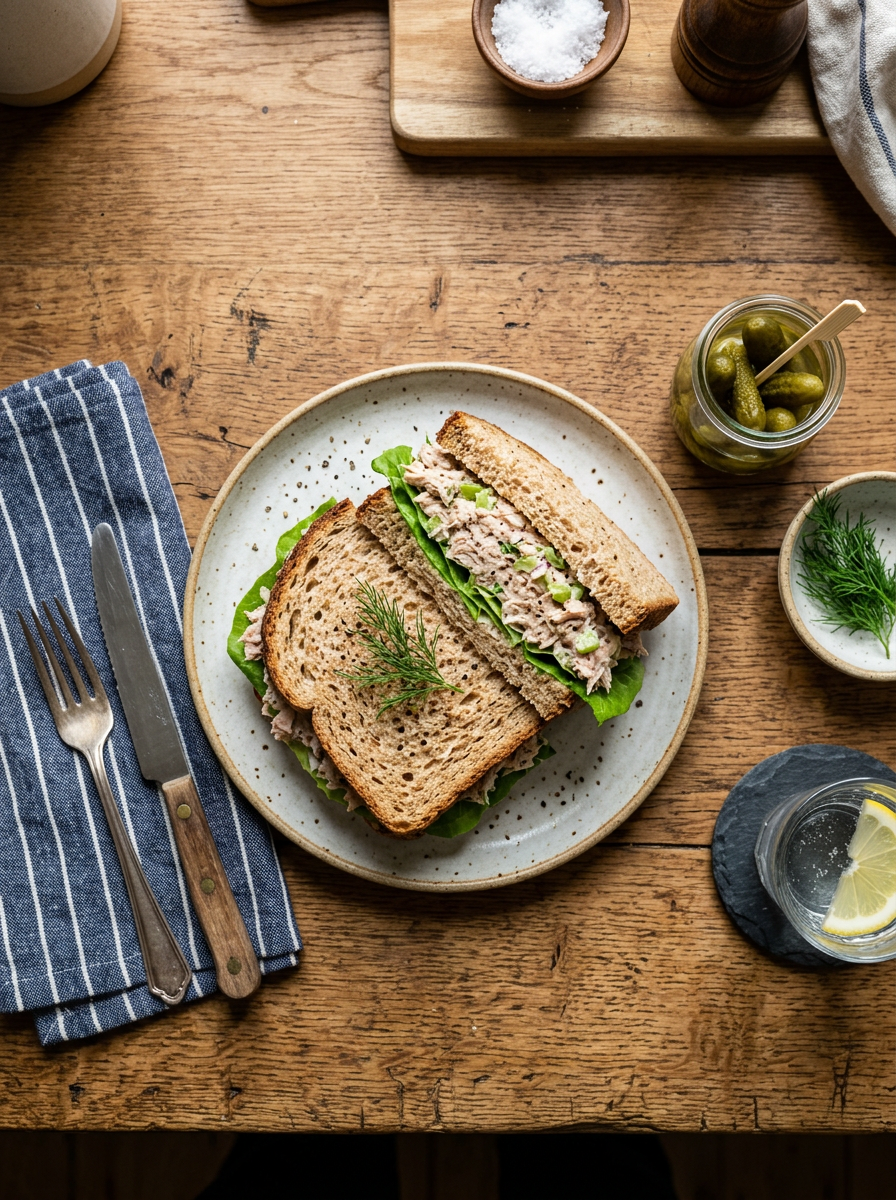
Most tuna salad is disappointing in the same way: too wet, too mayo-heavy, underseasoned, and relying entirely on the crunch of celery to create the impression of texture. The result is something you eat because it’s there, not because it’s good. Getting tuna salad right means making a few specific decisions about the tuna itself, the binders, the balance of flavors, and the order things go in the bowl. None of it is complicated, but all of it matters.
The Tuna: Which Can to Buy and How to Drain It Properly
Chunk light tuna in water is the standard option, and it works well for a creamy sandwich-style tuna salad. Solid white albacore has more structure and holds its shape better if you want larger pieces. Oil-packed tuna has more flavor and a silkier texture — Italian brands packed in olive oil are noticeably better than their water-packed counterparts. Whatever you use, drain it thoroughly. Wet tuna makes watery tuna salad. Press the drained tuna between paper towels or use the lid of the can to squeeze as much liquid out as possible before it goes into the bowl.
Flake the tuna with a fork before mixing anything in. The size of the flake determines the final texture — large flakes give you a chunky salad with defined pieces of fish, fine flaking gives you something closer to a spread. Both are valid. Choose your texture before you start mixing and flake accordingly.
The Mayo Question: How Much and What to Mix It With
Mayonnaise is the classic binder and there’s no shame in using it, but the ratio is where most recipes go wrong. Too much mayo makes tuna salad taste like mayonnaise with tuna in it. Start with two tablespoons per can of tuna — you can always add more, but you can’t take it out. The mayonnaise should coat the tuna and bring it together, not swim around it.
A small amount of Dijon mustard added to the mayo before mixing changes the flavor profile completely — it adds sharpness and depth that plain mayonnaise can’t provide on its own. Start with half a teaspoon per can. A squeeze of fresh lemon juice does the same thing. Greek yogurt in place of half the mayo cuts richness and adds a slight tang that makes the salad feel lighter. These aren’t substitutions — they’re improvements that work alongside the mayo, not instead of it.
The Crunch: What Actually Works Beyond Celery
Celery is fine but has a watery quality that dilutes the flavor of the salad over time, especially once it sits. Finely diced red onion is better — sharper flavor, less water, more presence. Diced cucumber adds crunch without the grassy flavor of celery. Finely chopped dill pickles add crunch and acidity at the same time, which is why dill pickle tuna salad is the version that converts people who claim not to like tuna salad.
Whatever crunchy add-in you choose, dice it finely and consistently. Pieces that are too large create uneven bites where you get a mouthful of onion or a chunk of celery rather than a balanced combination of everything in every bite. A sharp knife and a few extra seconds of knife work makes the difference.
The Flavor: What Lifts a Tuna Salad from Edible to Good
Salt is the most important seasoning and the most commonly insufficient one. Tuna absorbs salt well and needs a generous amount — season to taste and then taste again after everything is mixed. Fresh dill is the herb that makes tuna salad taste noticeably better. Dried dill works but is significantly weaker — if you’re using dried, use twice as much. A small amount of garlic powder (not fresh garlic, which is too sharp) adds a low background note. Black pepper is necessary and should be freshly ground.
For depth without changing the character of the salad: a small amount of Worcestershire sauce. A quarter teaspoon per two cans of tuna adds a savory note that makes the salad taste like it has more going on without tasting like Worcestershire. This is the kind of addition that makes people ask why your tuna salad tastes different from theirs.
How Long to Rest It Before Serving
Tuna salad improves significantly after 30 minutes in the refrigerator. The mayo redistributes, the seasoning absorbs into the tuna, and the flavors integrate. Making it and eating it immediately is fine in a pinch, but if you have time, make it at least 30 minutes ahead. Made the night before is even better for sandwiches the next day. The texture will be slightly firmer after chilling because the fat in the mayo sets — a single stir and it comes back together.
Serving: Sandwiches, Salads, and Everything Else
The classic is on toasted bread — toast the bread, not the tuna salad. The crunch of toast against the cold, creamy salad is part of the appeal. Croissants work well for a slightly richer version. Lettuce wraps keep it lighter. Tuna salad on a bed of mixed greens with sliced cucumber and a drizzle of lemon vinaigrette is a full lunch without any bread. Stuffed into halved avocados is another option that adds richness and works well for meal prep.
If you want a proper knife that handles the fine dicing this recipe requires — the onion, the pickles, the herbs — the Taima Titanium Cutting Board Set gives you a surface that holds up to this kind of prep work without any warping or harboring bacteria from the fish. I use it as my primary cutting surface for any protein-adjacent prep. Full context on titanium kitchen surfaces in my titanium cookware review.
For a salad that has a similar balance of flavor and texture — creamy dressing, fresh crunch, protein — the Caesar salad recipe uses the same approach to seasoning that makes both work. And if you want 52 weeks of recipes using affordable protein like canned tuna built into a weekly plan, the 52-Week High-Protein Meal Prep Cookbook was designed for exactly this.
Tuna Salad Recipe
Prep time: 10 minutes | Rest time: 30 minutes | Total time: 40 minutes | Servings: 2–3
Ingredients
- 2 cans (5 oz each) chunk light or solid white albacore tuna, well-drained
- 3 tbsp mayonnaise
- ½ tsp Dijon mustard
- 1 tbsp fresh lemon juice
- ¼ tsp Worcestershire sauce
- 2 stalks celery OR ¼ cup finely diced red onion
- 2 tbsp finely diced dill pickles (optional but recommended)
- 1 tbsp fresh dill, chopped (or 1 tsp dried)
- ¼ tsp garlic powder
- Salt and freshly ground black pepper to taste
Instructions
- Drain tuna thoroughly. Press between paper towels to remove excess liquid.
- Flake tuna with a fork to your preferred texture — chunky or smooth.
- In a bowl, mix mayo, Dijon, lemon juice, and Worcestershire.
- Add tuna. Fold gently to combine.
- Add celery or red onion, pickles (if using), dill, and garlic powder.
- Season generously with salt and black pepper. Taste and adjust.
- Refrigerate at least 30 minutes before serving for best flavor.
- Serve on toasted bread, lettuce wraps, crackers, or over greens.
Tools
- Taima Titanium Cutting Board Set — antibacterial surface, ideal for fish and vegetable prep
Notes
- Drain and press tuna dry — this is the most important step for texture.
- Rest 30 minutes minimum — the flavor improves significantly.
- Dill pickle adds both crunch and acidity — worth including.
- Taste before serving and add more salt than you think you need.
Leave a Reply