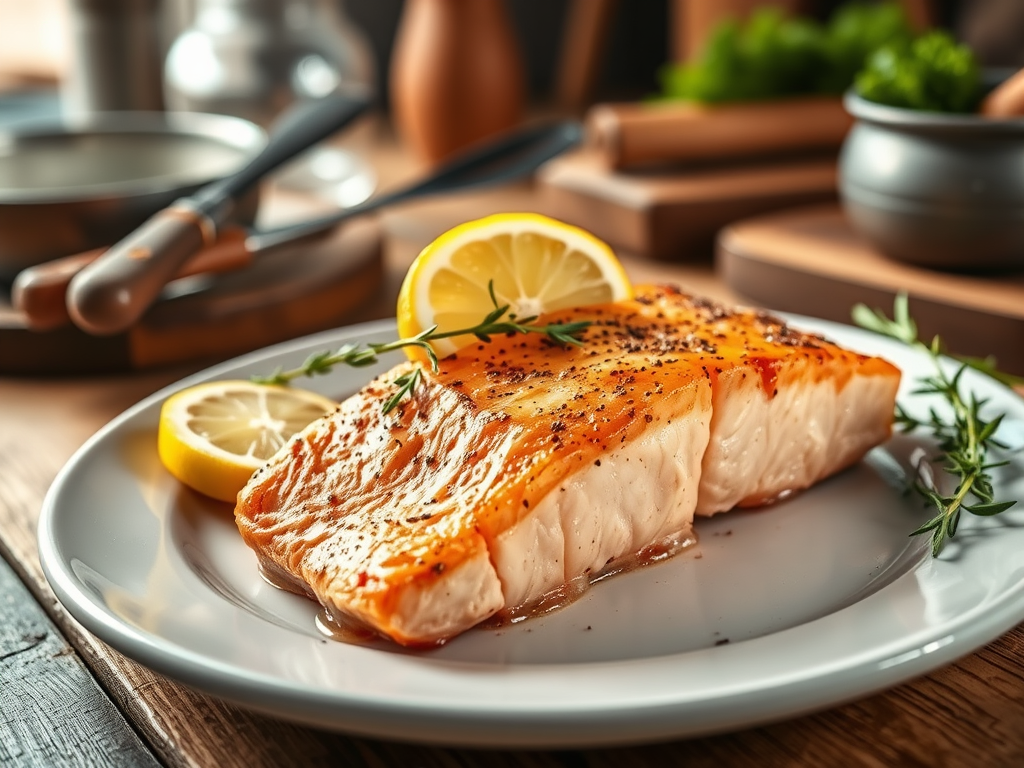
Baked salmon recipe was the dish I avoided for years because I kept producing overcooked, chalky fillets that made me feel like I had wasted a beautiful piece of fish and a significant amount of money along with it. It turned out the problem was not the recipe — it was not knowing exactly when to pull the salmon out of the oven. Two degrees too far past done and the texture changes completely. Once I started using a thermometer and pulling at the right temperature, the result changed instantly.
If you are new to cooking fish and have been intimidated by it, start here. Salmon is forgiving in many ways — it takes flavour readily, pairs with almost anything, and the fifteen-minute bake time means that even if the temperature runs slightly hot, the damage is limited. The techniques in this post will set you up to cook salmon confidently every time.
In this post you will learn how to choose and prepare a salmon fillet, why oven temperature matters more than timing, how to make a simple lemon garlic glaze that improves every variation, exactly when to pull the fish for a juicy, flaky result, and how to use leftover baked salmon across a full week of meals.
5 mins
12–15 mins
20 mins
4
Easy
Choosing the Right Salmon Fillet
Center-cut salmon fillets are the best choice for an easy baked salmon recipe — they are thicker and more even in depth than tail fillets, which means the whole piece finishes cooking at the same time. Tail fillets taper to a thin edge that overcooks before the thicker portion is done.
Wild-caught salmon — sockeye, coho, or king — has a more pronounced flavour, a deeper colour, and a firmer texture than farmed Atlantic salmon. Farmed salmon is milder, fattier, and more forgiving about overcooking because the higher fat content keeps it moist longer. Both work in this recipe. Wild-caught produces a more impressive result; farmed is more forgiving for a first attempt.
Skin-on fillets bake better than skinless. The skin acts as a natural barrier between the delicate flesh and the hot pan, allowing the top and sides to cook through gently while the bottom is protected. The skin can be removed easily after cooking and slides off in one clean piece once the salmon is done.
The Right Oven Temperature for Baked Salmon
400°F is the sweet spot for lemon garlic salmon in the oven. It is hot enough to set the glaze and cook the fillet in about twelve to fifteen minutes, but not so hot that the outside overcooks before the centre is done. Higher temperatures — 425–450°F — produce a slightly more caramelised exterior but require very precise timing to avoid drying out the flesh.
A lower oven temperature of 300–325°F produces exceptionally tender, almost silky salmon, cooked more like a gentle poach than a bake. The tradeoff is a longer cook time — 25 to 30 minutes — and less colour on the surface. This method is worth trying for thicker fillets or anyone who prefers their salmon on the medium-rare side.
Always let the salmon come to room temperature for 10 to 15 minutes before it goes in the oven. A cold fillet straight from the fridge creates uneven cooking — the outside reaches temperature while the centre is still cold, which increases the risk of overcooking the outer layers before the inside is done.
The Temperature Is the Recipe
The single most important thing you can do for baked salmon is pull it at the right internal temperature. Overcooked salmon is dry, chalky, and has a strong fishy smell. Properly cooked salmon is flaky, moist, and rich — the difference between 125°F and 145°F is the difference between those two outcomes.
The FDA recommends 145°F as the safe minimum — fully cooked, slightly firm, and moist. Most experienced cooks pull salmon at 125–130°F, which produces a medium texture — translucent at the very centre, deeply flaky throughout the rest, and significantly more juicy than fully cooked. For a first attempt, 130–135°F is the ideal target: safe, impressive, and clearly above any risk of undercooking.
The ThermoPro TwinTempSpike Bluetooth Thermometer removes all the guesswork — leave the probe in the thickest part of the fillet and monitor from your phone. The moment it hits your target temperature, pull the salmon and rest it for two minutes. Residual heat carries it a further three to five degrees after it leaves the oven.
The Lemon Garlic Glaze
A simple glaze of melted butter, fresh lemon juice, lemon zest, minced garlic, and a pinch of salt is all a good salmon in the oven needs. It applies in under two minutes, adheres to the fish as it bakes, and produces a flavoured surface that looks and tastes significantly more complex than the effort involved.
Brush the glaze on generously and evenly, covering the top and sides of each fillet. A teaspoon of Dijon mustard added to the glaze emulsifies it slightly and helps it adhere through the bake rather than running off as the butter melts. It also adds a mild, tangy depth that complements the richness of the salmon without tasting strongly of mustard.
Season with salt and pepper just before it goes into the oven — not earlier. Salt draws moisture out of the flesh if left on too long before cooking, which can make the surface slightly wet and reduce the quality of the final texture.
Sheet Pan or Baking Dish
A foil-lined sheet pan is the most practical vessel for a baked salmon fillet. The foil makes clean-up effortless — salmon skin can stick aggressively to unlined pans — and you can crimp the foil up around the edges to form a loose boat that concentrates the glaze and any released juices around the fish as it bakes.
Parchment paper is an alternative to foil and prevents sticking equally well without any metallic contact. It does not crimp as cleanly as foil but produces a cleaner release and no flavour interaction.
For even more flavour, place thin lemon slices directly under the salmon fillet before baking. They release their juice into the fish from below as they warm, adding a gentle citrus note from the bottom up that complements the glaze on top.
The Doneness Test Without a Thermometer
If you do not have a thermometer, use the fork-flake test. Insert a fork at the thickest point of the fillet and twist gently. If the flesh separates into clean, opaque flakes without resistance, the salmon is done. If it resists or looks translucent throughout, it needs two to three more minutes.
Another method: press the top of the fillet gently with your finger. A done salmon fillet feels firm but springs back slightly — like pressing a fully cooked chicken breast. An underdone fillet has more give and feels slightly soft and yielding. An overdone fillet feels hard and dry.
These visual and tactile cues are reliable enough for everyday cooking. But for a piece of salmon that costs as much as a good fillet does, the thermometer approach produces consistent results that these alternative methods simply cannot match.
What to Serve It With
Roasted asparagus, green beans, or broccolini cook at the same temperature as the salmon and can go on the same sheet pan for the last ten minutes — a complete dinner with no extra dishes. Dress with a little olive oil, salt, and pepper before they go in.
Over rice: jasmine rice with the pan juices from the baked salmon spooned over the top is one of the simplest, most satisfying weeknight dinners in this repertoire. The lemon garlic butter from the glaze doubles as a sauce.
As a meal prep protein: baked salmon stores well and is exceptional the next day flaked over salads, stirred into pasta, or built into a grain bowl. The salmon meal prep bowls guide covers exactly this — using baked or glazed salmon as the centrepiece of a full week of assembled bowls with jasmine rice and roasted vegetables. The 52-Week High-Protein Meal Prep Cookbook extends that framework into a full year of high-protein batch-cooking plans with salmon and other fast-cooking proteins.
Variations on the Glaze
Honey soy glaze: replace the butter with a mix of soy sauce, honey, sesame oil, and minced garlic. Brush on and bake at 400°F. The sugars in the honey caramelise slightly on the surface, producing a sticky, deeply flavoured crust that is one of the best ways to eat salmon over rice.
Dijon herb crust: mix Dijon mustard, fresh chopped dill, parsley, lemon zest, and a tablespoon of olive oil. Spread generously over the top of the fillet and bake as usual. The mustard crust forms a slightly textured surface and the herbs toast lightly around the edges.
Brown sugar and smoked paprika: mix brown sugar, smoked paprika, garlic powder, salt, and a little olive oil into a paste. Rub over the salmon and bake at 400°F. The sugar caramelises and the paprika adds a smoky note that makes the salmon work beautifully alongside roasted sweet potato.
Storage and Leftovers
Baked salmon keeps in the fridge for up to two days in an airtight container. It is genuinely excellent eaten cold the next day — flaked over a green salad with capers, red onion, and a simple lemon vinaigrette. Cold salmon has a firmer texture and a cleaner flavour than reheated salmon.
If reheating is necessary, do it gently. A 275°F oven for eight to ten minutes or a covered pan over medium-low heat with a splash of water preserves the texture better than a microwave, which produces uneven heat and can make the fish rubbery. Avoid high heat at all costs when reheating cooked salmon.
Leftover salmon also makes excellent salmon patties — flake it into a bowl with a beaten egg, breadcrumbs, Dijon, lemon juice, and fresh herbs. Form into small rounds and pan-fry in the Taima Titanium Nutri Pan Pro 2.0 over medium heat until golden. A completely different meal from the same piece of fish.
Lemon Garlic Baked Salmon
Flaky, juicy salmon fillets glazed with lemon, garlic, butter, and a touch of Dijon, baked at 400°F until perfectly done. Fifteen minutes, one sheet pan, and a thermometer that tells you exactly when to pull it.
Ingredients
The Salmon
- 4 salmon fillets, center-cut, skin-on (about 180g / 6 oz each)
- Salt and coarse black pepper
- 1 lemon, half juiced, half sliced into thin rounds
Lemon Garlic Glaze
- 2 tbsp unsalted butter, melted
- 1 tbsp olive oil
- 3 cloves garlic, minced
- 1 tsp Dijon mustard
- Zest of 1 lemon
- 1 tbsp fresh lemon juice
- 1/2 tsp salt
- 1/4 tsp black pepper
- Fresh parsley or dill, chopped, to finish
Instructions
- Remove salmon from the fridge 15 minutes before cooking. Preheat oven to 400°F (200°C). Line a baking sheet with foil and crimp the edges up slightly.
- Mix all glaze ingredients together in a small bowl until combined.
- Place lemon slices on the foil in a single layer where the salmon will sit. Lay the salmon fillets skin-side down on top of the lemon slices.
- Pat the tops of the fillets dry with paper towels. Season with salt and pepper. Brush the glaze generously over the top and sides of each fillet.
- Bake for 12–15 minutes until the salmon flakes easily at the thickest point with a fork and is opaque throughout. For precise doneness: pull at 125–130°F for medium, 130–135°F for medium-well, or 145°F for fully cooked. The salmon will carry over a few degrees as it rests.
- Rest for 2 minutes. Scatter fresh parsley or dill over the top and serve immediately with the pan juices spooned over rice or vegetables.
Notes
Storage: Refrigerate for up to 2 days. Eat cold over salad, or reheat at 275°F for 8–10 minutes. Avoid microwaving.
Frozen salmon: Thaw overnight in the fridge. Pat very dry before glazing — frozen salmon releases more water and benefits most from the dry step.
No Dijon: Skip it or substitute a teaspoon of honey. The Dijon helps the glaze adhere but is not essential to the flavour.
Sheet pan dinner: Add asparagus, green beans, or cherry tomatoes to the pan for the last 10 minutes. Dress with olive oil, salt, and pepper before adding — a complete dinner on one pan.
Beginner tip: Do not rely on time alone. Every oven runs differently and fillet thickness varies. Use a thermometer and pull at your target temperature — that is the only reliable way to guarantee juicy salmon every time.
Tools & Resources
- 52-Week High-Protein Meal Prep Cookbook — use baked salmon as a batch-cooked weekly protein across bowls, salads, and quick weeknight dinners
- ThermoPro TwinTempSpike Bluetooth Thermometer — monitor internal salmon temperature from your phone and pull at exactly 130°F for perfectly juicy fillets every time
- Taima Titanium Nutri Pan Pro 2.0 — PFAS-free, non-reactive pan for turning leftover baked salmon into golden salmon patties with no coating to worry about
- Taima Pure Titanium Cutting Board Set — non-porous, odor-resistant prep surface for slicing lemon, mincing garlic, and chopping herbs without any fish odour transferring
A great baked salmon recipe comes down to three non-negotiable decisions: center-cut skin-on fillets brought to room temperature before baking, a lemon garlic glaze applied just before the oven so the salt does not draw moisture out prematurely, and a thermometer to pull the fish at 130–135°F before residual heat carries it the rest of the way. Get those three things right and you will never produce dry, chalky salmon again — just flaky, richly flavoured fillets in fifteen minutes that look and taste like something you ordered at a restaurant.
The pan surface and the tools you use shape the result as much as the technique itself — a PFAS-free, non-reactive surface matters when you are working with a delicate fish and a butter-based glaze at high heat. If you are thinking about upgrading your cookware to something non-toxic and genuinely built for everyday cooking, the full breakdown is at Titanium Cookware That Actually Works (2025) — covering what sets pure titanium apart and which pieces to prioritize first.
Leave a Reply