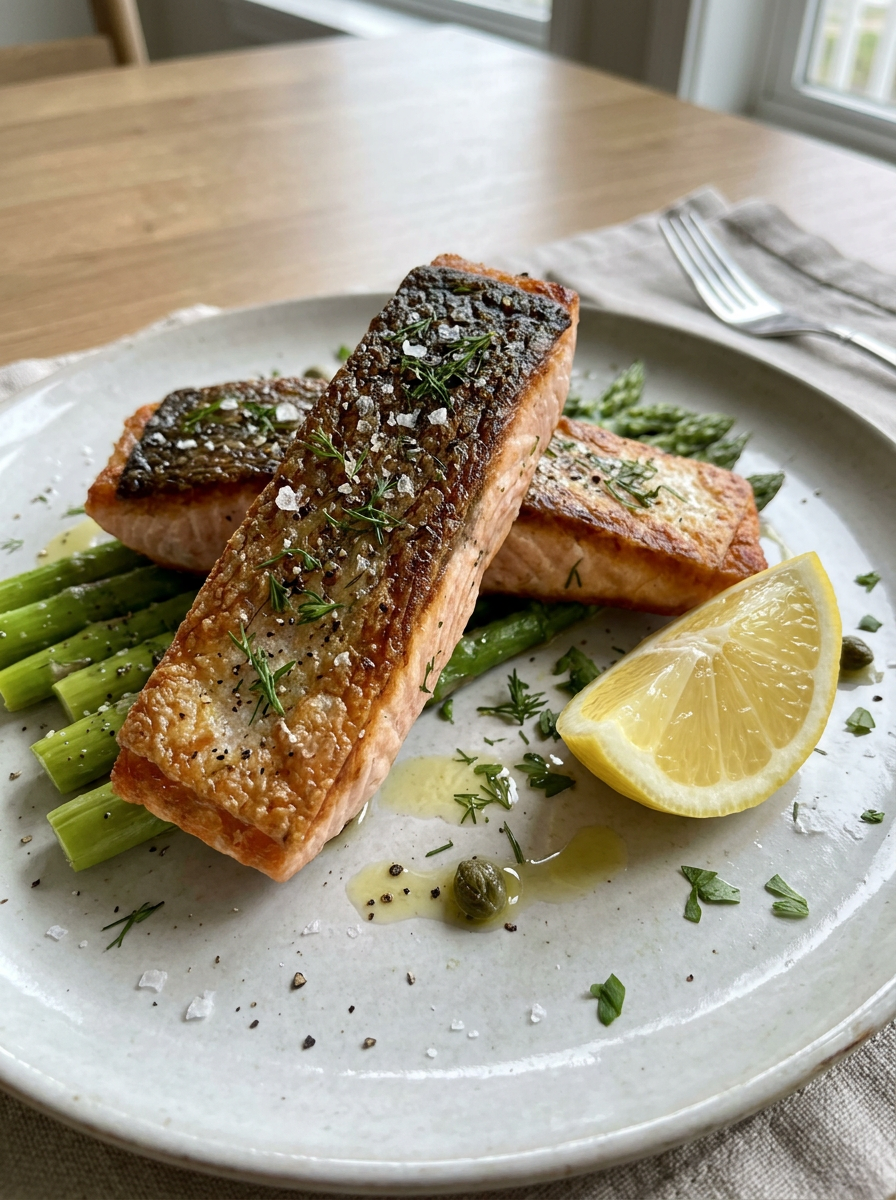
Air fryer salmon is one of those recipes that seems like it shouldn’t work as well as it does. The conventional wisdom is that salmon needs careful heat management, that it dries out easily, and that an air fryer’s circulating hot air would pull moisture out faster than a pan or oven. In practice, the opposite tends to be true. The air fryer’s enclosed environment and rapid heat circulation cook salmon faster than an oven, which actually reduces the window where the fish can dry out — as long as you know the right temperature and timing. This recipe has been my weeknight go-to for getting perfectly cooked, moist salmon in under 12 minutes.
Why Air Fryer Salmon Works Better Than Oven Salmon
The key advantage of the air fryer for salmon is speed. A standard oven at 400°F takes 12 to 15 minutes to cook a salmon fillet through, and the longer fish spends at elevated temperature, the more moisture it loses. An air fryer at the same temperature gets the job done in 7 to 10 minutes, depending on the thickness of the fillet. Less time in the heat means more retained moisture, which translates directly to the texture you want — firm but yielding, not dry or flaky in the bad way. The skin also comes out crispier than oven-cooked salmon because the circulating air hits both the top surface and the sides of the fillet simultaneously.
The other advantage is precision. An air fryer’s small cooking chamber heats up almost instantly and maintains a consistent temperature throughout the cook, while a conventional oven has hot and cold spots that vary by several degrees. That consistency is especially valuable for fish, which moves from perfectly cooked to overcooked within a very small temperature window.
Choosing Salmon Fillets for the Air Fryer
The best fillets for air frying are skin-on, center-cut pieces between 1 and 1.5 inches thick. Thinner tail pieces cook faster and are more prone to drying out — if you’re using them, reduce the cooking time by 2 minutes. Skin-on fillets hold their shape better during cooking and the skin crisps up against the basket, giving you a textural contrast that makes the whole dish more interesting. If you prefer skinless, they work fine, but expect them to cook about 30 seconds faster and handle them more carefully when removing from the basket.
For temperature accuracy, a good instant-read thermometer is worth using. Perfectly cooked salmon should register 125°F to 130°F at the thickest part for medium — still slightly translucent in the center and very moist. If you prefer it fully cooked through, pull it at 140°F, though anything beyond that starts to taste dry. The ThermoPro TwinTempSpike Bluetooth thermometer works well for this — you can monitor temperature without opening the air fryer drawer, which causes heat loss and inconsistent results.
The Right Seasoning and When to Apply It
Salmon has enough natural fat that it doesn’t need a heavy coating of oil — a very thin brush of avocado oil is enough to help seasoning adhere and promote browning. The seasoning I use most often is simple: kosher salt, black pepper, garlic powder, and a small amount of smoked paprika. The paprika adds color and a mild smokiness that complements the fish without overpowering it. Apply the seasoning right before cooking rather than marinating — the salt starts to draw moisture out of the flesh if left on for more than 10 minutes, which works against you.
For something more assertive, a honey-soy glaze works extremely well in the air fryer. Mix 1 tablespoon of honey, 1 tablespoon of soy sauce, and half a teaspoon of sesame oil. Brush it on at the start of cooking and again with 2 minutes remaining. The sugars caramelize against the hot air, creating a lacquered exterior without burning, as long as you’re watching the last few minutes carefully. The same glaze works on the baked salmon version in the oven — the technique transfers directly.
Temperature and Timing for Different Fillet Thicknesses
The consistent temperature I’ve found works best is 400°F. Lower temperatures don’t get the skin crispy, and higher temperatures risk drying out the exterior before the interior is cooked through. For a 1-inch thick fillet, 8 minutes at 400°F gets you to about 125°F internal — medium, with a slightly translucent center. For 1.25 to 1.5 inch thickness, that extends to 10 to 11 minutes. These times assume the air fryer is fully preheated, which takes about 3 minutes for most models. Starting with a cold basket adds 2 minutes or more to the cook time and produces uneven results.
Don’t open the air fryer drawer to check on the salmon before the 7-minute mark. Every time the drawer opens, the temperature drops and the cooking time resets slightly. Resist the urge to peek and rely on a thermometer for accuracy. If you’re cooking two fillets at once, make sure they’re not touching — air flow between the pieces is what makes both sides cook evenly.
Preparing the Basket So the Salmon Doesn’t Stick
Most air fryer baskets are non-stick, but salmon skin will stick if the basket isn’t properly prepared. A light brush of oil on the basket before adding the fillets almost always solves this. The other option is a small square of parchment paper cut to fit the basket with a few holes punched in it — this guarantees no sticking and makes cleanup easier, but does slightly reduce the airflow around the bottom of the fillet, meaning the skin won’t get quite as crispy. For most home cooks, the trade-off is worth it. If you care about maximally crispy skin, use oil on a bare basket and accept that you’ll be cleaning it more carefully.
One thing to avoid: covering the entire basket with foil. This traps steam from the fish and turns the air fryer into an oven, which is the opposite of what you want. The holes in parchment paper or the gaps around a small piece of parchment maintain enough airflow to keep the cooking environment dry and hot — the conditions that produce a good exterior on the fish.
What to Serve With Air Fryer Salmon
Salmon cooked this way is ready faster than almost any side dish, so it’s worth thinking about timing. Roasted broccoli takes 20 minutes at 425°F — start it in the oven before you cook the salmon, and they’ll finish at about the same time. Rice takes 18 minutes from start to finish in a covered pot. A simple cucumber and avocado salad takes 5 minutes to assemble. The salmon’s 8 to 10 minute cook time slots into almost any weeknight timing scenario as the last item you start.
For a complete weeknight meal setup that minimizes active cooking time, the cookware you use for sides matters. I cook grains and wilted greens in the Taima Titanium Nutri Pot Pro while the salmon is in the air fryer — the pure titanium surface doesn’t react with acidic ingredients like lemon juice or white wine, which can affect the flavor of delicate fish accompaniments. You can read more about why titanium cookware handles this better than most alternatives. Pair the salmon with a simple grain and whatever vegetable you have on hand and dinner is genuinely done in 15 minutes from start to finish. If you want a full system for doing this at scale across the week, the 52-Week High-Protein Meal Prep Cookbook covers salmon-based meal prep in detail.
Air Fryer Salmon
Prep: 5 min | Cook: 10 min | Total: 15 min | Servings: 2
Ingredients
- 2 salmon fillets, skin-on, 1 to 1.5 inches thick (about 6 oz each)
- 1 tsp avocado oil
- 1/2 tsp kosher salt
- 1/4 tsp black pepper
- 1/4 tsp garlic powder
- 1/4 tsp smoked paprika
- Optional glaze: 1 tbsp honey + 1 tbsp soy sauce + 1/2 tsp sesame oil
Instructions
- Preheat air fryer to 400°F for 3 minutes.
- Pat salmon dry with paper towels. Brush lightly with avocado oil. Season with salt, pepper, garlic powder, and paprika.
- Brush basket with a thin layer of oil (or use parchment with holes).
- Place salmon skin-side down in the basket with space between fillets.
- Air fry at 400°F for 8 to 10 minutes depending on thickness. Don’t open before 7 minutes.
- Check internal temperature: 125°F–130°F for medium, 140°F for fully cooked.
- Rest 1 minute before serving. Finish with a squeeze of lemon.
Tools
- Air fryer (any basket-style model)
- ThermoPro TwinTempSpike Bluetooth thermometer — for checking internal temperature without opening the drawer
- Taima Titanium Nutri Pot Pro — for cooking sides while salmon is in the air fryer
- Pastry brush for oiling basket and applying glaze
Notes
Thinner tail pieces: reduce time by 2 minutes and watch carefully after the 6-minute mark.
Glaze option: Apply at start and again with 2 minutes remaining. Watch for burning in the last 2 minutes.
Parchment is fine for ease of cleaning — it slightly reduces skin crispiness but prevents sticking completely.
More salmon techniques: see the titanium cookware guide for stovetop searing tips.
Leave a Reply