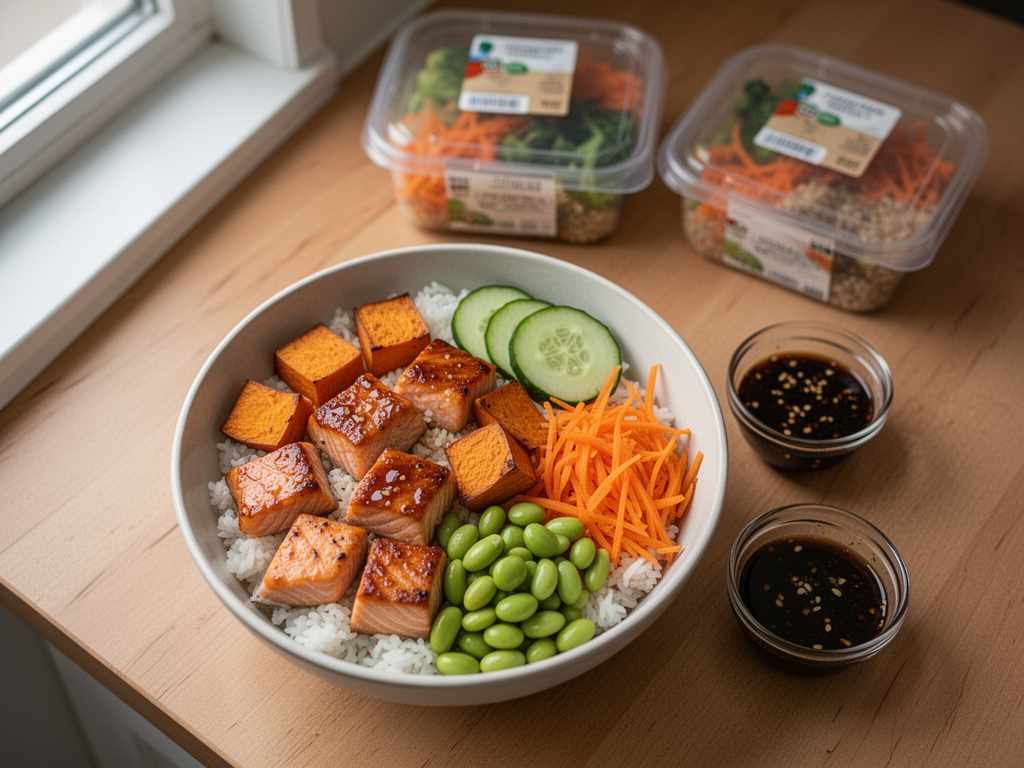
The first time I made salmon meal prep bowls on a Sunday, I genuinely looked forward to lunch every single day that week. That almost never happens with meal prep. Most of the time you are reaching for the container out of obligation. These bowls are different.
If you are a beginner home cook who wants to eat well without spending your evenings in the kitchen, this recipe was designed for you. Soy-glazed salmon over fluffy rice with crisp vegetables and a drizzle of sesame ginger sauce — it is one of the most satisfying healthy meal prep lunches you can have waiting in the fridge on a Tuesday.
In the sections below, I will walk you through why salmon holds up so well in meal prep, the simple technique that keeps it tender for days, the sauce that ties the whole bowl together, and exactly how to store everything so nothing goes soggy before Friday.
10 mins
20 mins
30 mins
4 bowls
Easy
Why Salmon Works So Well for Meal Prep
Chicken breast is the default meal prep protein for a reason — but it has a real weakness. After two days in the fridge, it starts to dry out. Salmon does not have that problem. Its natural fat content keeps the flesh moist and flavorful long after it has been cooked, which makes it one of the best proteins for a high protein meal prep that actually tastes good on day four.
Salmon also reheats well without turning rubbery, provided you keep the heat gentle. A minute on medium power in the microwave with a damp paper towel over the top is all it needs. It can also be eaten cold straight from the fridge, which makes these bowls genuinely grab-and-go.
Beyond the practicalities, salmon brings omega-3 fatty acids, vitamin D, and around 35 to 40 grams of protein per serving. For anyone building meals around real nutrition, it is one of the most efficient ingredients you can put in a weekly rotation.
The Soy-Ginger Marinade
The marinade is what separates a great salmon bowl from a forgettable one. Soy sauce, sesame oil, fresh ginger, garlic, honey, and a splash of rice vinegar — that is the full list. It takes three minutes to mix and ten minutes to work into the salmon before cooking.
The honey does two things: it adds a mild sweetness that balances the salt of the soy, and it helps the salmon caramelize slightly in the pan, creating a lightly sticky glaze that clings to each piece. That glaze is what makes the bowl taste like something you ordered rather than something you prepped at home.
Make a double batch of the marinade. Use half for the salmon before cooking and reduce the other half in a small saucepan for two to three minutes until it thickens into a drizzle sauce. That sauce over the finished bowl at serving time is the finishing touch that elevates the whole dish.
How to Cook Salmon for Meal Prep
The key decision is how to cut the salmon. Cubed salmon — bite-sized pieces about one inch thick — cooks faster, gets more surface contact with the marinade, and portions evenly into four bowls without any effort. Fillets work too, but cubes are the better call for meal prep specifically.
Pat the salmon completely dry before it goes anywhere near the marinade. Moisture on the surface dilutes the marinade and prevents any caramelization in the pan. Dry salmon absorbs more flavor and sears better.
Cook over medium-high heat for two to three minutes per side until the edges are golden and the center is just opaque. Do not overcook — salmon continues cooking off the heat, and slightly underdone is far better than overdone when it is going into containers for the week. A reliable instant-read meat thermometer takes the guesswork out entirely. Pull the salmon at 52°C / 125°F for the best texture in meal prep containers.
The Rice Base
Jasmine rice is the classic pairing — light, slightly fragrant, and neutral enough to let the salmon and sauce carry the flavor. Brown rice adds more fiber and a nuttier backbone. Quinoa pushes the protein content even higher and is worth trying if you are tracking macros closely.
Whatever base you choose, let it cool completely before packing it into containers. Warm rice generates steam inside a sealed container, which creates moisture that makes the bottom of the bowl soggy by the next day. Spread it on a baking sheet or leave it uncovered on the counter for fifteen minutes first.
If you want a framework for building a full week of intentional, protein-forward eating around meals like this one, the 52-Week High-Protein Meal Prep Cookbook is the resource I return to most. It removes the weekly planning headache entirely and keeps variety high without requiring you to think from scratch every Sunday.
The Vegetables
The best vegetables for a salmon rice bowl meal prep are the ones that hold their texture over several days without turning limp or releasing excess moisture. Cucumber, shredded carrot, edamame, snap peas, and roasted sweet potato all make the cut. Leafy greens like spinach or arugula are better added fresh at serving time.
For the roasted element, sweet potato is the standout choice here. It adds a natural sweetness that pairs beautifully with the soy-ginger glaze, holds its texture through four days in the fridge, and adds complex carbohydrates that make the bowl genuinely filling. Roast at 220°C / 425°F for twenty minutes until the edges char slightly.
The fresh vegetables — cucumber, shredded carrot, edamame — go in raw. Their crunch is part of what makes the bowl satisfying to eat. Add avocado only at serving time, not during assembly, as it browns quickly once cut.
Building the Bowl
The order of assembly matters. Rice goes on the bottom as the base. Roasted sweet potato goes in next. The raw vegetables sit alongside the sweet potato. The salmon goes on top last, where it is least likely to transfer excess moisture to the other components.
Keep any sauces and dressings in small separate containers — a silicone sauce cup clipped to the lid or a small jar alongside. Adding sauce during assembly means the rice has absorbed most of it before you eat, which dulls the flavor. Adding it fresh at the moment of eating keeps every bite tasting exactly as intended.
A pure titanium cutting board is worth using when prepping raw salmon and vegetables in the same session. Titanium is naturally antibacterial — no cross-contamination risk between the raw fish and your vegetables, and no plastic particles working into your food with every cut.
Salmon Bowl Sauce Variations
The soy-ginger glaze works beautifully as written, but the bowl format is endlessly adaptable. Here are four sauce directions that change the character of the whole dish with almost no extra effort:
- Lemon tahini: Tahini, lemon juice, garlic, water to thin. Earthy and rich. Pairs especially well with roasted vegetables and quinoa.
- Miso ginger: White miso, rice vinegar, sesame oil, fresh ginger, a touch of honey. Umami-forward and slightly sweet.
- Spicy mayo: Mayonnaise and sriracha in a two-to-one ratio, with a drop of sesame oil. Creamy, punchy, and very fast to make.
- Citrus herb: Olive oil, lemon zest, fresh dill, capers, a pinch of salt. Bright and clean — works particularly well if you are eating the bowl cold.
Rotating the sauce is the simplest way to keep this easy salmon meal prep from feeling repetitive week after week. Same base components, completely different experience. The spring meal prep guide on Jerome’s Kitchen has more ideas for varying your weekly bowls as the season shifts toward lighter, brighter flavors.
Storage and Make-Ahead
These salmon meal prep bowls keep well in the fridge for up to four days. Assemble each bowl in a separate airtight container — rice base, roasted vegetables, raw vegetables, salmon on top. Keep the sauce separate.
The salmon also freezes well for up to two months. Freeze it before assembling the bowls rather than after — the vegetables and rice are better added fresh when you are ready to eat from frozen. Thaw the salmon overnight in the fridge and assemble the bowl the following morning.
For anyone cooking a larger batch, a large titanium pot makes cooking a double or triple batch of rice completely effortless — even heat distribution, no sticking, and no off-flavors developing when the rice sits and cools before packing.
Is This Good for Beginners?
Yes — and that is by design. Cube the salmon, cook it in two batches over medium-high heat, roast the sweet potato, cook the rice. Each step is straightforward on its own. The only technique with any real learning curve is the salmon sear, and even that is just a matter of not moving the pieces too soon.
If you have never meal prepped fish before, this is the recipe to start with. Salmon is forgiving, flavorful, and gives you an immediate payoff when you open the fridge mid-week to a bowl that genuinely looks as good as it tastes.
Soy-Ginger Salmon Meal Prep Bowls
Glazed soy-ginger salmon over jasmine rice with roasted sweet potato, cucumber, edamame, and shredded carrot. Ready in 30 minutes, stays fresh all week, and tastes better cold than most meals taste hot.
Ingredients
- 600g (1.3 lb) skinless salmon fillet, cut into 1-inch cubes
- For the marinade and sauce:
- 3 tablespoons low-sodium soy sauce
- 1 tablespoon toasted sesame oil
- 1 tablespoon honey
- 1 tablespoon rice vinegar
- 2 cloves garlic, minced
- 1 teaspoon fresh ginger, finely grated
- 1 tablespoon neutral oil (for cooking)
- For the bowls:
- 1.5 cups dry jasmine rice (or brown rice or quinoa)
- 1 medium sweet potato, peeled and cubed
- 1 tablespoon olive oil (for roasting)
- 1 cup frozen edamame, thawed
- 1 large carrot, shredded
- 1 cucumber, thinly sliced
- 1 tablespoon sesame seeds, to garnish
- 2 green onions, sliced, to garnish
- Avocado, sliced — add at serving time only
Instructions
- Preheat oven to 220°C / 425°F. Cook rice according to package instructions and set aside to cool uncovered.
- Toss cubed sweet potato with olive oil, a pinch of salt, and a pinch of garlic powder. Spread on a baking sheet in a single layer and roast for 20 to 22 minutes until the edges begin to char. Do not stir mid-cook.
- While the sweet potato roasts, whisk together the soy sauce, sesame oil, honey, rice vinegar, garlic, and ginger in a small bowl. This is both the marinade and the sauce.
- Pat the salmon cubes completely dry with paper towels. Toss them in half the marinade mixture and let sit for 10 minutes.
- Pour the remaining half of the marinade into a small saucepan over medium heat. Simmer for 2 to 3 minutes, stirring, until slightly thickened. Set aside as the drizzle sauce.
- Heat neutral oil in a large skillet over medium-high heat. Add the salmon in a single layer — work in two batches if needed. Cook undisturbed for 2 to 3 minutes, then flip and cook another 1 to 2 minutes until just cooked through (52°C / 125°F internal). Remove from heat.
- Allow rice to cool for 15 minutes. Divide into 4 airtight containers. Top with roasted sweet potato, edamame, shredded carrot, and cucumber. Add salmon on top last. Store sauce separately.
- To serve: drizzle with the reserved sauce, add avocado slices, and garnish with sesame seeds and green onion.
Notes
Storage: Assembled bowls (without avocado and sauce) keep in the fridge for up to 4 days. Freeze salmon only for up to 2 months — add fresh rice and vegetables when assembling from frozen.
Reheating: Microwave on medium power with a damp paper towel over the container for 60 to 90 seconds. Or eat cold — these bowls are excellent straight from the fridge.
Substitutions: Swap sweet potato for roasted broccoli or bell pepper. Use tamari instead of soy sauce for a gluten-free version. Cauliflower rice works as a low-carb base.
Beginner tip: Do not skip patting the salmon dry. It is the single most important step for getting a good sear and ensuring the marinade actually sticks.
Tools and Resources
- 52-Week High-Protein Meal Prep Cookbook — the best companion for building a full week of protein-forward meals around recipes like this one
- Taima Nutri Pan Pro 2.0 — pure titanium pan ideal for high-heat salmon searing with no coatings to degrade
- Taima Pure Titanium Cutting Board Set — naturally antibacterial, no cross-contamination risk when prepping raw fish and vegetables together
- Instant-Read Meat Thermometer — takes the guesswork out of knowing exactly when the salmon is perfectly cooked
You now have everything you need to make salmon meal prep bowls that hold up all week — glazed, tender salmon that stays moist through day four, a rice base that stays fluffy when cooled correctly before packing, roasted sweet potato that caramelizes rather than steams, and a soy-ginger sauce that you drizzle fresh at serving time so every bowl tastes like it was just made. These are the fundamentals of genuinely good meal prep, and once they are part of your Sunday routine, the whole week changes.
If you are building out your kitchen alongside your cooking habits, the pan you cook salmon in makes a real difference. Jerome’s Kitchen put together a full breakdown of titanium cookware that actually works — covering every piece in the Taima lineup from the everyday pan to the wok and deep pan — so you can make an informed decision about what is worth investing in for a kitchen built around real cooking.
Leave a Reply