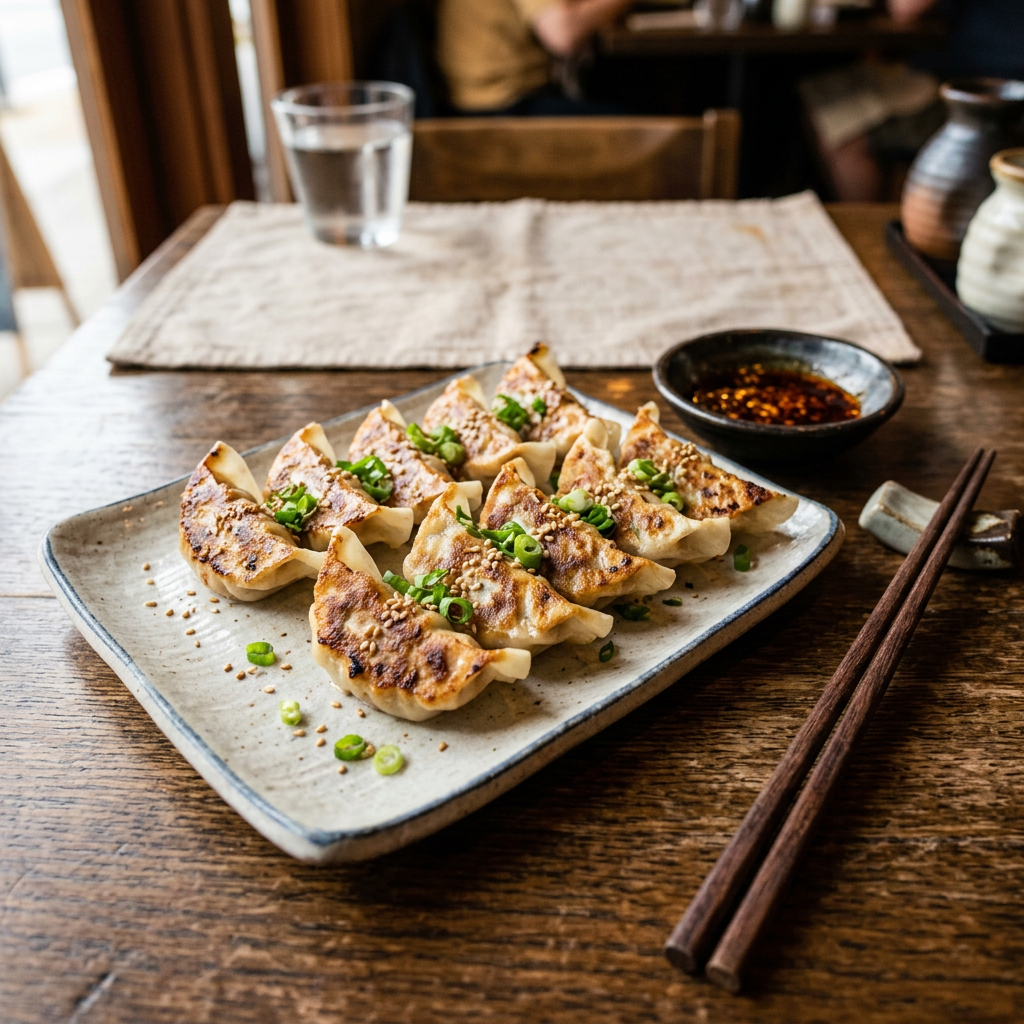
Japanese gyoza are among the most satisfying things you can make from scratch at home — crackly, golden on one flat side, steamed-soft on the other, with a juicy pork and cabbage filling that is nothing like the dim sum dumplings most people are more familiar with. Getting the two-stage cook right — fry first, then steam, then crisp again — is the whole technique, and once you have it, you will wonder why you ever ordered gyoza rather than making them. This guide covers the Japanese approach, the filling that makes gyoza so compulsive, the pleating technique for beginners, and the dipping sauce that makes the whole thing sing.
- Total time 50 minutes — medium difficulty, primarily the filling prep and pleating
- The key technique: the steam-then-crisp method — water into the hot pan creates steam to cook the filling, then evaporates to re-crisp the bottom
- Best served immediately with gyoza dipping sauce (soy, rice vinegar, sesame oil, chilli oil)
35 mins
12 mins
47 mins
4 (30–35 gyoza)
Medium
380 kcal
22g
38g
14g
2g
The Air Fryer Cookbook for Real Cooks
Gyoza in the air fryer is a legitimate alternative when you want the crispy result without the oil splatter — and this book covers air fryer dumplings, spring rolls, and dozens of Asian-style recipes alongside Western classics. Available for $13.
Japanese Gyoza — Understanding What Makes Them Different
Japanese gyoza evolved from Chinese jiaozi but developed into a distinctly different dumpling over the 20th century. The differences are specific: gyoza wrappers are thinner than Chinese dumplings, the filling uses more cabbage and less meat, and the cooking technique — pan-fry, steam, re-crisp — is the defining preparation. The result is a dumpling with a textural contrast that most dumpling styles do not achieve: a crackly, golden flat bottom, a soft, steam-cooked top, and a juicy filling that has absorbed both the Maillard flavour from the fry and the concentrated steam from the water addition. Understanding these distinctions helps explain why the technique is non-negotiable — changing the cooking method fundamentally changes the dish.
The Japanese Gyoza Filling That Makes All the Difference
The classic gyoza filling combines ground pork, napa (Chinese) cabbage, garlic chives (nira), ginger, garlic, soy sauce, sesame oil, and oyster sauce. The cabbage preparation is critical: the cabbage must be salted, left for 10 minutes, then squeezed extremely firmly to remove as much water as possible. Insufficient squeezing produces a wet filling that makes the wrappers soggy during steaming and prevents proper crisping. The filling should be visibly dry and hold its shape when squeezed in a fist. This step is the single most common point of failure in home gyoza making, and it requires more aggressive squeezing than most people apply.
Beginner-Friendly Gyoza Pleating Technique
Professional gyoza pleating creates 7 to 10 folds on one side of the wrapper that create a pleated half-moon shape. For beginners, the simplest effective approach is the half-moon fold with 3 to 4 large pleats: place filling in the centre, wet the edge with water, fold in half, and make 3 to 4 folds along the top edge from one end to the other. The gyoza will not look restaurant-perfect, but it will cook and taste identically. The only structural requirement is a tight seal — any air pocket inside will cause the gyoza to burst during the steam phase. Press firmly along the entire sealed edge after folding. Shape consistency is less important than structural integrity. For a video-style approach to the technique, the fried rice guide covers similar kitchen confidence-building principles.
The Steam-Then-Crisp Method — The Only Gyoza Cooking Technique Worth Knowing
Heat oil in a non-stick or well-seasoned pan over medium-high until shimmering. Place gyoza flat-side down in a single layer with a millimetre of space between each. Cook undisturbed for 2 to 3 minutes until the flat bottoms are deeply golden. Then, critically, add a splash of water (about 3 tablespoons) to the hot pan and immediately cover with a lid. The water creates a burst of steam that cooks the filling through in 3 to 4 minutes. When the water has fully evaporated and the gyoza are sizzling again, remove the lid for 1 more minute to re-crisp the bottom. The sound changes from a wet sizzle to a dry, crispy sizzle — that is the signal they are done. This two-stage method cannot be shortcut.
The Gyoza Dipping Sauce That Completes the Dish
The classic gyoza dipping sauce is a simple combination of soy sauce and rice vinegar in roughly equal parts, with a few drops of sesame oil and a teaspoon of chilli oil (rayu) for heat. Mix to taste — the sauce should be sharp, salty, and aromatic. Many Japanese restaurants add a few drops of toasted sesame oil and a pinch of sugar to create a slightly sweeter variation. Ponzu (citrus soy sauce) is an excellent ready-made alternative that requires no preparation. The dipping sauce is essential — gyoza without sauce is incomplete in the same way that sushi without wasabi and soy is incomplete. For reference to similar fermented, soy-based sauce combinations, this teriyaki sauce guide covers the fundamental flavour components of Japanese table sauces.
Ingredient Sourcing and Substitutions for Home Cooks
Gyoza wrappers are available fresh in most Asian grocery stores and in the freezer section of large supermarkets. Making wrappers from scratch (flour and hot water) is possible and rewarding but adds significant time. Napa cabbage is widely available — regular white cabbage can substitute but requires finer chopping and more aggressive squeezing. Garlic chives (nira) have a distinct flavour that regular chives or the green tops of spring onions can approximate. Ground pork is standard but a half-pork, half-chicken combination produces a lighter, leaner filling. Oyster sauce adds depth that soy sauce alone cannot fully replicate — fish sauce at half the quantity is a reasonable substitute.
Freezing Gyoza for Future Batches
One of the best things about making gyoza is that they freeze beautifully. Place uncooked assembled gyoza on a parchment-lined tray in the freezer for 1 hour until solid, then transfer to zip-lock bags. They keep frozen for 2 months and can be cooked directly from frozen — add 2 extra minutes to the steaming phase. Having a bag of frozen homemade gyoza in the freezer is one of the most useful things a home cook can maintain, producing a restaurant-quality dish in under 15 minutes from frozen. For other make-ahead freezer-friendly Asian prep strategies, the approach is similar to the freezer-batch method in the weekly meal prep guide.
Japanese Gyoza That Crisp Up Perfectly Every Time
Hand-filled Japanese pork and cabbage dumplings pan-fried until crackly-golden on the bottom then steam-cooked for a juicy filling. The two-stage technique makes the difference.
Ingredients
- 30–35 round gyoza wrappers (fresh or defrosted)
- Filling:
- 300g / 10.5oz ground pork
- 200g / 7oz napa cabbage, very finely shredded
- 1 tsp salt (for cabbage)
- 2 tbsp garlic chives or spring onion greens, minced
- 2 cloves garlic, grated
- 1 tsp fresh ginger, grated
- 1 tbsp soy sauce
- 1 tbsp oyster sauce
- 1 tsp sesame oil
- ½ tsp white pepper
- 2 tbsp neutral oil for frying
- Dipping sauce: 2 tbsp soy sauce, 2 tbsp rice vinegar, ½ tsp sesame oil, ½ tsp chilli oil (rayu)
Instructions
- Salt the shredded cabbage in a bowl. Leave 10 minutes. Then take handfuls and squeeze as hard as possible — you should extract a surprising amount of liquid. Squeeze until bone dry.
- Combine squeezed cabbage with ground pork, garlic chives, garlic, ginger, soy sauce, oyster sauce, sesame oil, and white pepper. Mix vigorously with your hands for 1 to 2 minutes until the filling feels cohesive and slightly sticky.
- Place a small teaspoon of filling (do not overfill) in the centre of each wrapper. Wet the edges with water. Fold in half and seal, pleating 3 to 4 times along the top edge. Press firmly to ensure a tight seal.
- Heat oil in a non-stick pan over medium-high. Place gyoza flat-side down in a single layer. Cook undisturbed for 2 to 3 minutes — the bottoms should be deeply golden and smell nutty and caramelised.
- Add 3 tablespoons of water to the pan and cover immediately with a lid. The steam will hiss dramatically. Steam for 3 to 4 minutes until the water has evaporated and the gyoza are sizzling again.
- Remove lid. Cook 1 more minute until the bottoms re-crisp — the sound changes from a wet sizzle to a dry, crackling sizzle. Slide onto a plate, golden-side up.
- Mix dipping sauce and serve alongside immediately. Gyoza should be eaten hot — the crisped bottom softens within minutes.
Notes
Storage: Uncooked gyoza freeze for 2 months. Freeze on a tray first until solid, then bag. Cook from frozen — add 2 extra minutes to the steam phase. Cooked gyoza do not store or reheat well — make fresh.
Substitutions: Napa cabbage: regular white cabbage, finely chopped and squeezed. Garlic chives: spring onion greens or regular chives. Ground pork: half pork, half chicken for a lighter version. Oyster sauce: fish sauce at half the quantity.
Key tip: Squeeze the salted cabbage much harder than you think necessary. Excess moisture in the filling is the main cause of wrapper failure and poor crisping.
Beginner tip: Do not overfill the wrappers — one small teaspoon of filling maximum. Overfilling causes bursting during the steam phase and is the top beginner mistake.
You Might Also Like
- Fried rice better than your takeout
- Homemade teriyaki sauce better than the bottle
- Easy chicken stir fry better than takeout
Two things make Japanese gyoza genuinely achievable at home: squeezing the cabbage harder than feels reasonable, and executing the steam-then-crisp sequence without lifting the lid early. Once those two habits are in place, homemade gyoza are actually faster to make than driving to a restaurant, and significantly better than anything frozen. Come back for the chicken variation and the air fryer alternative when you want the same result with even less cleanup.
Frequently Asked Questions
What is the difference between gyoza and dumplings?
Gyoza are a Japanese variation of Chinese jiaozi dumplings. Key differences: gyoza wrappers are thinner, the filling uses more cabbage than meat, and the cooking method (pan-fry, steam, re-crisp) produces a distinctive dual texture — crackly bottom, soft top — that Chinese boiled or steamed dumplings do not have. Japanese gyoza also use garlic chives and more sesame oil in the filling than traditional jiaozi.
Can I make gyoza without a non-stick pan?
Yes — a well-seasoned cast iron skillet or stainless steel pan works, but requires a little more oil and careful timing. The non-stick surface makes the golden bottom release cleanly without sticking. If using stainless, preheat the pan thoroughly and use slightly more oil. The steam phase is the same regardless of pan type.
How do I fold gyoza if I am a beginner?
The simplest fold: place filling in the centre, wet the edge, fold in half to make a semicircle, then make 3 to 4 large pleats by folding small sections of the top edge over toward the centre. The pleating does not need to be perfect — structural integrity (a tight seal) matters more than aesthetics. Practice on the first few and they will improve quickly.
Can I buy pre-made gyoza wrappers?
Yes — round gyoza wrappers are available fresh or frozen in Asian grocery stores and in the Asian foods section of most large supermarkets. Fresh wrappers are more pliable and seal better. Frozen wrappers work well but should be thawed fully and covered with a damp cloth to prevent drying out while you work.
Why do my gyoza stick to the pan?
Usually because the pan was not hot enough before adding the gyoza, the oil was insufficient, or the pan was lifted too early before the bottom had crisped. A properly preheated non-stick pan with adequate oil should release the gyoza cleanly once the bottom is golden. If they stick when you try to check, give them another 30 seconds — they will release once the crust forms properly.
Can I air fry gyoza?
Yes — brush with oil and air fry at 200°C / 400°F for 8 to 10 minutes, flipping halfway. The result lacks the steam-cooked interior that pan-frying creates (the filling cooks only by the hot air rather than steam), so the filling may be slightly drier. For previously frozen gyoza, add 2 to 3 minutes. Air-fried gyoza are excellent as a lighter alternative when you prefer less oil.
How many gyoza should I make per person?
8 to 10 gyoza per person as a main course, 5 to 6 as a starter or side. This recipe makes 30 to 35, which serves 3 to 4 as a main. Gyoza are quite filling due to the density of the filling, so the higher end of the range is for people with larger appetites or who are serving them alone rather than as part of a multi-dish meal.
Leave a Reply