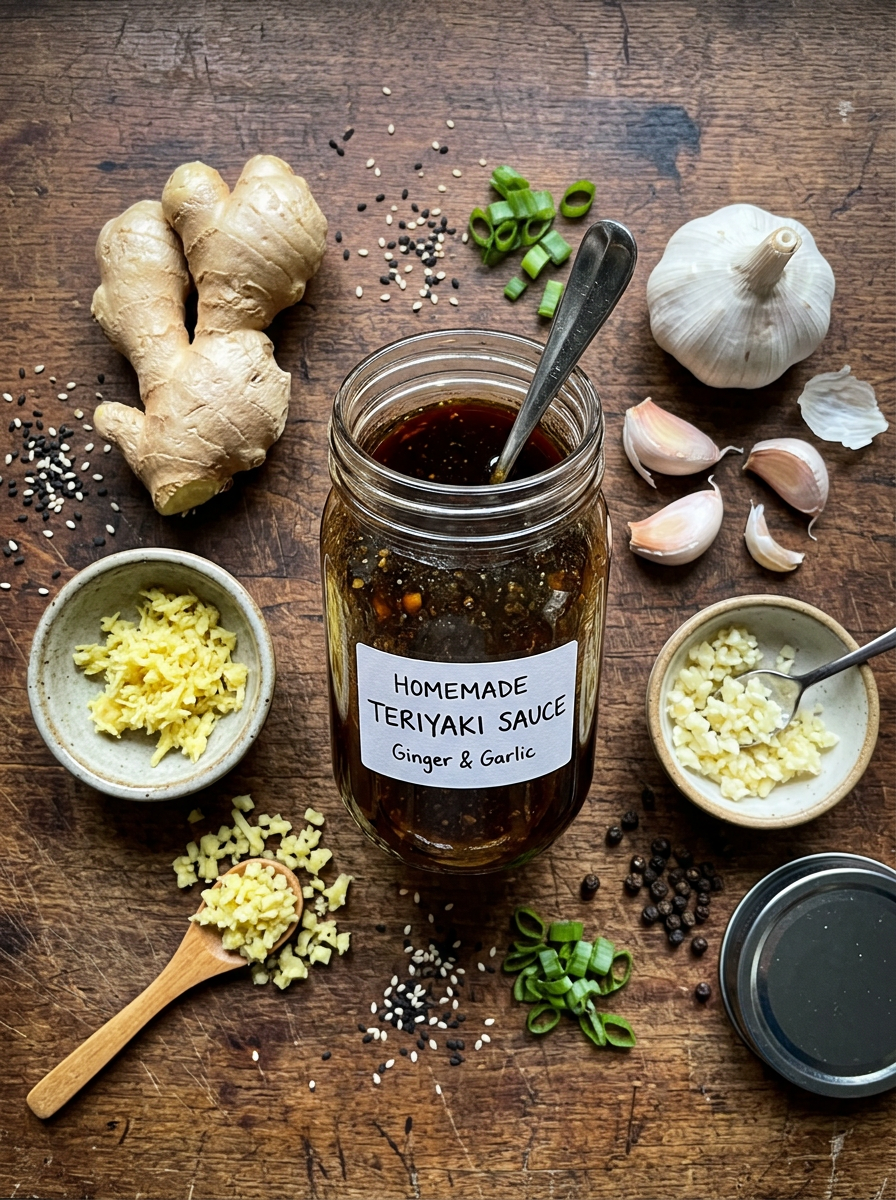
Homemade teriyaki sauce takes ten minutes, uses five pantry ingredients, and tastes nothing like the watery bottled version. Once you make it yourself, the ratio of soy to sugar to mirin becomes something you understand rather than something you measure — and that understanding is what lets you adapt it to glazes, marinades, and stir fry sauces on the fly. This guide covers the full method, why each ingredient matters, and how to adjust the recipe for every use case.
2 mins
8 mins
10 mins
½ cup
Easy
Sauces, Marinades and Rubs That Change Everything — This teriyaki recipe is one sauce out of an entire system. The ebook covers every foundational sauce you need for weeknight cooking — BBQ, pan sauces, marinades, spice rubs, and Asian-inspired glazes — with the ratios and techniques that let you adapt them to whatever’s in your fridge. For $15 it replaces a shelf of bottled sauces with recipes you actually understand.
Taima Titanium Wok Pan Pro — I’ve reduced teriyaki sauce in a lot of different pans over the years, but the titanium wok is the one I reach for every time — the heat distribution is even and nothing ever scorches on the bottom.
Why Homemade Teriyaki Sauce Beats Every Bottle
The bottled versions typically contain water, corn syrup, and thickeners, which is why they taste thin and sweet rather than rich and balanced. A proper homemade teriyaki sauce uses the reduction method — you bring the liquid to a simmer and let it cook down until it thickens naturally through the evaporation of water and the concentration of sugars. The result is a glossy, clingy glaze that coats food properly instead of sliding off.
The other difference is mirin. Real mirin is a sweet rice wine with a subtle complexity that you can’t replicate with sugar water. If you can find it in the Asian section of your supermarket, it’s worth the extra purchase — a bottle lasts months and changes the flavour of every Japanese-inspired sauce you make.
The Five Ingredients and What Each One Does
Soy sauce is the base — it provides salt and that deep umami flavour. Mirin adds sweetness and a slight acidity that keeps the sauce from being cloying. Sugar deepens the sweetness and helps the sauce caramelise against meat. Garlic and fresh ginger add aromatics that lift the sauce out of one-dimensional territory. Some versions add sesame oil at the end for a nutty finish, which is optional but excellent.
The ratio that works for a general-purpose teriyaki is equal parts soy sauce and mirin, with sugar at half that amount. From that base, you can push it sweeter for glazes, saltier for marinades, or thinner for dipping sauces by adjusting single components rather than the whole recipe.
The Reduction Method for a Thick Teriyaki Glaze
Add all the ingredients to a small saucepan or wok over medium heat. Bring to a gentle simmer — you’ll see small bubbles breaking the surface and the sauce will start to smell intensely of caramelised soy and ginger. Cook for 5–8 minutes, stirring occasionally, until the sauce has reduced by about a third and coats the back of a spoon. When you lift the spoon and draw a line through the sauce with your finger, the line should hold its shape for a couple of seconds.
Don’t walk away during this step. Teriyaki sauce goes from perfectly thick to scorched caramel in under a minute once it’s close to done. Keep the heat at medium and stay close. The sauce continues to thicken as it cools, so pull it off the heat slightly before it reaches the consistency you want.
Using Teriyaki as a Marinade vs a Glaze
For a marinade, thin the base recipe with a little extra soy sauce and water so the meat can absorb it rather than just coat the surface. Marinate chicken thighs or salmon for 20–30 minutes — longer than that and the salt in the soy starts to cure the meat rather than flavour it, which changes the texture. For a glaze, make the full reduced version and brush it on in the last two minutes of cooking so it caramelises against the heat rather than burning.
The chicken stir fry method works perfectly with this sauce — add two tablespoons of the teriyaki reduction to the wok in the final thirty seconds of cooking and toss to coat. The heat of the pan finishes the glaze directly on the chicken and vegetables, which gives you a sticky, flavourful finish without any extra steps.
The Cornstarch Shortcut (And Why the Reduction Is Better)
A lot of quick teriyaki recipes call for cornstarch mixed with water to thicken the sauce instantly. It works, and it’s faster — but the texture is different. Cornstarch-thickened sauce has a slightly gluey quality and a more opaque appearance. The naturally reduced version is glossier, more deeply flavoured, and clings to food in a way that cornstarch versions don’t quite match.
That said, the cornstarch version is perfectly fine for a weeknight when you’re stir-frying and need sauce in two minutes. Mix one teaspoon of cornstarch with two tablespoons of water before adding to the pan, whisk it into the uncooked sauce ingredients, and cook over medium-high heat for two minutes, stirring constantly. It’ll thicken quickly and won’t taste noticeably different to most people.
Storage and Keeping Teriyaki Sauce Fresh
Homemade teriyaki sauce keeps in a sealed jar in the refrigerator for up to two weeks. The sauce will thicken further in the fridge — thin it back down with a splash of water and gently reheat it before using. It doesn’t freeze well because the texture changes when thawed, but two weeks is long enough that making a larger batch at the weekend and using it across multiple dinners is genuinely worthwhile.
Variations Worth Trying
A small amount of rice vinegar added at the end gives a slightly tangy version that works especially well with salmon. Replacing some of the sugar with honey produces a different kind of sweetness that’s a little more floral and complex. A teaspoon of toasted sesame seeds stirred in after cooking adds texture as well as flavour. Any of these adjustments take thirty seconds and create a noticeably different sauce — worth experimenting once you’ve made the base version a few times.
Homemade Teriyaki Sauce
A simple 5-ingredient teriyaki sauce made by reduction — glossy, thick, and deeply flavoured. Ready in 10 minutes and better than anything in a bottle. Works as a glaze, marinade, or stir fry sauce.
Ingredients
- 4 tbsp soy sauce (low sodium recommended)
- 4 tbsp mirin (or substitute 3 tbsp rice wine + 1 tsp sugar)
- 2 tbsp sugar (brown or white)
- 2 garlic cloves, minced
- 1 tsp fresh ginger, grated
- 1 tsp sesame oil (optional, added off heat)
Instructions
- Combine soy sauce, mirin, sugar, garlic, and ginger in a small saucepan. The mixture should smell sharp and sweet when you stir it together cold.
- Bring to a simmer over medium heat, stirring until the sugar dissolves — about 1–2 minutes. You’ll see small bubbles forming around the edges.
- Reduce heat to medium-low and cook for 5–7 minutes, stirring occasionally, until the sauce reduces by about one third. The sauce will turn darker amber and the aroma will deepen into something caramelised and savoury.
- Test the consistency: lift a spoon, let the sauce drip off, then draw a line through the sauce on the back of the spoon. If the line holds for 2–3 seconds, the sauce is ready.
- Remove from heat. Stir in sesame oil if using. The sauce will continue to thicken as it cools — it should coat food evenly when brushed on.
Notes
Storage: Keep in a sealed jar in the fridge for up to 2 weeks. Reheat gently with a splash of water before using if it has thickened.
Most common mistake: Reducing too long over too high heat. The sauce scorches quickly near the end — stay close and use medium heat throughout. Pull it slightly before it looks done.
Beginner tip: The spoon test is the most reliable way to judge thickness. Don’t judge by appearance alone — the sauce always looks thinner in the pan than it is once cooled.
You Might Also Like
- 📖 Sauces, Marinades and Rubs That Change Everything — Every foundational sauce recipe you need for weeknight cooking — only $15, instant download.
- Taima Titanium Wok Pan Pro — The pan I use for every stir fry and sauce reduction — even heat, nothing sticks, and it’s the one I recommend to anyone serious about weeknight cooking.
The two things that make homemade teriyaki better than bottled are the natural reduction method and real mirin — both produce a depth of flavour that shortcuts can’t replicate. Once you’ve made this a couple of times, the ratio becomes something you understand by feel rather than measurement, which is when cooking starts to get genuinely enjoyable. Save the recipe for your next stir fry night, and if you want the full system of sauces that will change how you cook weeknight dinners, the ebook has everything in one place.
Leave a Reply