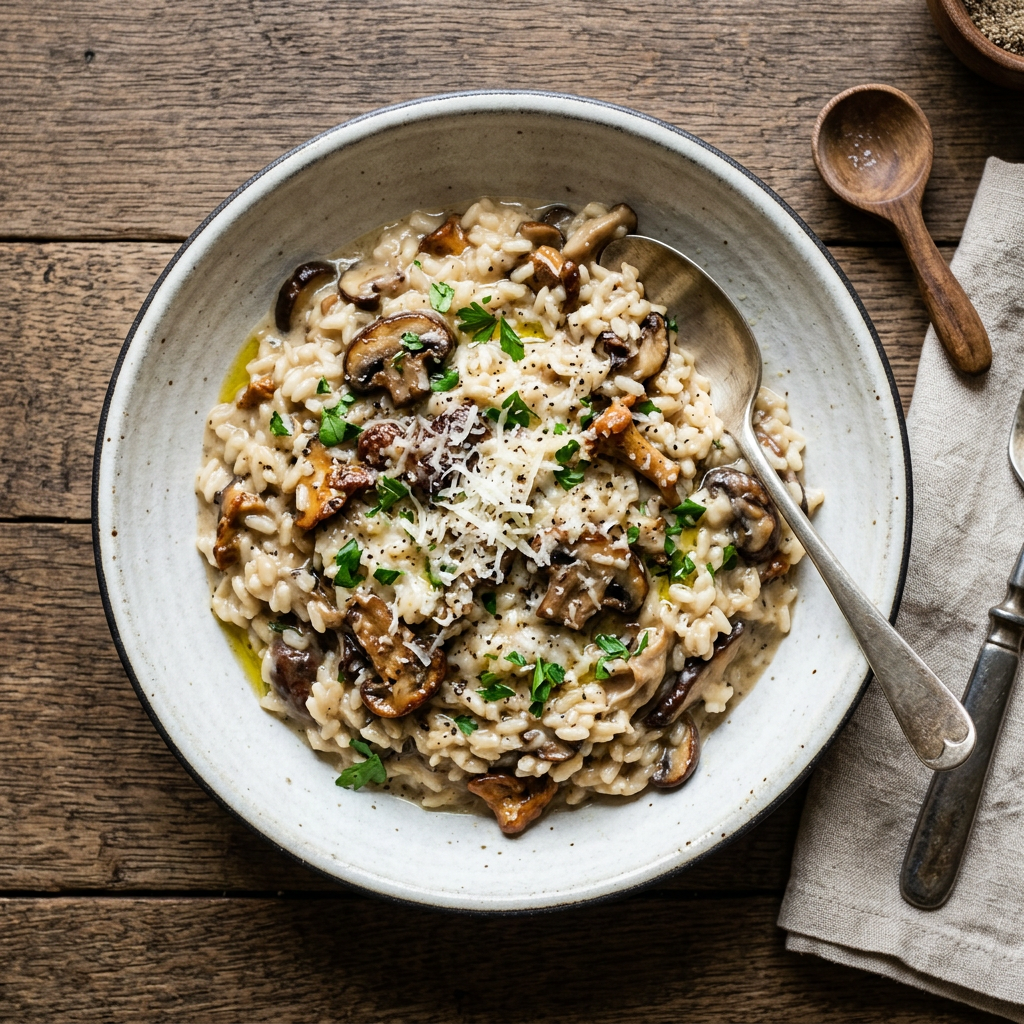
Risotto recipe has a reputation for difficulty that is not entirely deserved. The dish requires attention — you cannot walk away from it — but the technique is less about skill than about understanding what is actually happening in the pan and why. Once you know that the creaminess comes from the starch released by Arborio rice and not from cream, that warm stock prevents the temperature disruption that makes the rice cook unevenly, and that the final butter-off-heat step is what makes the texture genuinely silky rather than merely thick, the process makes sense in a way that the “stir constantly for 45 minutes” mythology does not.
Risotto is also one of the most impressive things a beginner cook can serve at a dinner table. It looks and tastes like restaurant cooking, it scales easily from two to six people, and it is endlessly adaptable — mushroom and Parmesan tonight, lemon and prawns next week, asparagus and pea the week after. Once the technique is learned, it becomes a versatile foundation rather than a single dish.
In this post you will learn why Arborio rice is non-negotiable, why the stock must be warm, the truth about stirring frequency (less than most recipes suggest), the mantecatura — the cold butter whisked in off the heat — that creates the characteristic creamy texture, why the mushrooms must be cooked separately from the rice, and the variations that turn this from a side dish into a complete meal.
10 mins
30 mins
~40 mins
4
Medium
Arborio Rice: Why Nothing Else Works
Arborio is a short-grain Italian rice with an unusually high starch content. As it cooks in liquid and is stirred, the surface starch dissolves into the cooking liquid, producing the characteristic creamy, slightly viscous sauce that surrounds the grains. Long-grain rice like basmati or jasmine contains different starch structures that do not dissolve in the same way — the liquid remains thin and the grains stay separate rather than binding into a cohesive, creamy dish.
The Arborio grain also has a specific texture goal: it should finish al dente — cooked through but with a slight resistance at the very centre of each grain. Overcooked risotto rice becomes mushy and indistinct; perfectly cooked Arborio has a slightly firm bite surrounded by a creamy, flowing sauce. This is the same al dente principle as pasta, applied to a grain that requires thirty minutes of gradual liquid absorption rather than eight minutes in boiling water.
Do not rinse Arborio rice before using it. Rinsing removes the surface starch that is the entire mechanism of the dish. Unlike long-grain rice, which benefits from rinsing for cleaner, more separate grains, Arborio should go into the pan dry.
Warm Stock: The Technical Detail Everyone Gets Wrong
Adding cold stock to hot risotto rice is the most common technical mistake in home risotto. Cold stock — straight from the fridge or poured directly from the carton — drops the temperature of the cooking rice dramatically every time it is added. The rice alternately cooks and stops cooking, producing an uneven texture where some grains are overdone and others remain undercooked within the same pan.
Warm stock — kept at a low simmer in a separate saucepan throughout the risotto cook — maintains the temperature of the main pan at a consistent level. Each addition of warm stock barely interrupts the steady, gentle cooking of the rice, and the result is grains that cook evenly from the first addition to the last.
This is not a minor detail — it is the technical reason why restaurant risotto is consistently better than most home versions. Use a small saucepan set on the adjacent burner over the lowest possible heat. Keep the stock warm but not boiling for the full duration of the risotto cook.
The Mushrooms: Why They Cook Separately
Adding mushrooms directly to the risotto pan produces steamed, pale, slightly watery mushrooms that contribute moisture to the rice rather than flavour. Mushrooms contain enormous amounts of water — roughly ninety percent by weight — and at the gentle, moderate heat of risotto cooking, they release all of that water into the pan before they can develop any colour.
Cooking the mushrooms separately in a hot pan until they are deeply golden and all their moisture has evaporated produces a completely different result: concentrated, nutty, slightly chewy mushrooms with genuine flavour that add something to the risotto rather than disappearing into it. Cook in batches if necessary — do not crowd the mushroom pan — and season with salt only after they have released their moisture and begun to brown.
Reserve half the cooked mushrooms to stir through the risotto in the final two minutes. Keep the other half to pile on top of each served portion. This produces both integrated mushroom flavour throughout the risotto and distinct, textured pieces on top.
The Soffritto: Building Flavour Before the Rice
Before the Arborio goes in, soften a finely diced shallot (or half an onion) and two cloves of garlic in butter and olive oil over medium-low heat for five to six minutes. This soffritto base — covered in the bolognese recipe as well — provides the aromatic foundation that the wine and stock build on. No browning, just softening until translucent.
Add the dry Arborio rice to the soffritto and stir for one to two minutes until every grain is coated in the fat and becomes slightly translucent at the edges. This toasting step slightly seals the outside of each grain, slowing the starch release and producing a rice that holds its al dente texture for longer rather than going from undercooked to mushy in seconds.
Add the white wine next — pour it in all at once and stir vigorously as it sizzles and reduces. The wine evaporates in about a minute and leaves behind acidity and a round, fruity complexity that stock alone cannot provide. Use a dry white wine you would drink — Pinot Grigio, Sauvignon Blanc, or Chardonnay all work well.
The Stock Addition: The Truth About Stirring
The traditional advice is to add stock one ladle at a time and stir constantly until each addition is absorbed before adding the next. This works, but it takes 30 to 45 minutes of continuous stirring and produces more anxiety than necessary for the result it achieves.
The practical approach used by many professional cooks at home: add the warm stock in larger additions — about half a cup at a time — and stir frequently (every minute or two) rather than constantly. The result is essentially identical because the starch release from Arborio rice is driven by the gentle heat and the stirring itself, and both sufficient stirring and sufficient heat are achievable without standing at the stove with a spoon in hand for the entire cook.
The ThermoPro TwinTempSpike Bluetooth Thermometer is useful for maintaining the right simmer temperature — the risotto should be at a gentle but active bubble throughout, around 185–190°F. Too low and the rice cooks unevenly; too high and the outside of the grains becomes mushy before the inside is done.
The risotto is done when the last addition of stock is almost absorbed and a grain squeezed between two fingers shows a very slight white centre — just barely firm. It will continue cooking from residual heat for another minute or two before serving.
The Mantecatura: The Step That Makes It Restaurant-Quality
Mantecatura is the Italian term for the finishing step that gives risotto its characteristic glossy, flowing, slightly loose texture. Remove the pan from heat completely. Add two tablespoons of cold unsalted butter in small pieces. Stir vigorously — almost violently — for sixty to ninety seconds until the butter has fully emulsified into the risotto rather than simply melting on top.
The physics: cold butter added off the heat emulsifies the fat into the hot starchy liquid rather than simply melting and separating. The result is a sauce that is glossy, cohesive, and silky — the butter becomes part of the sauce rather than pooling separately. This is the same cold-butter emulsification technique used in the lemon chicken pan sauce and the pork chops sauce throughout this blog.
Add the grated Parmesan at the same stage — also off the heat — and stir it through in the same vigorous motion. The cheese melts into the risotto and adds depth, saltiness, and additional thickening without the graininess that results from adding cheese to a too-hot risotto.
The Right Pan
A wide, heavy, deep pan is the correct vessel — wide enough to give the rice plenty of surface area for even cooking, deep enough to hold the full volume of stock without boiling over, and heavy enough to maintain an even, stable temperature throughout the long cook.
The Taima Titanium Deep Pan Pro handles the full risotto cook in one vessel — wide enough for even rice cooking, deep enough for the full stock volume, PFAS-free, and non-reactive so the acidic white wine does not interact with the pan surface during the initial reduction. Its even heat distribution is particularly important for risotto, where hot spots produce uneven grain cooking.
Consistency: The Right Texture to Serve
Risotto is served all’onda — “in waves” — meaning it should flow and spread slowly when spooned onto a plate rather than sitting in a firm mound. A risotto that is too thick looks impressive but tastes wrong: the grains have absorbed too much liquid and the dish is stodgy. A risotto that flows gracefully across a warm bowl has the correct restaurant-quality texture.
If the risotto seems thick before serving, add a small splash of warm stock or hot water and stir through. Risotto continues to absorb liquid as it sits — always err on the side of slightly looser than you think is right. It will firm up in the thirty seconds between pan and table.
The same Italian weeknight comfort food instinct that makes this risotto worth learning also drives the creamy garlic pasta — both are Italian starch dishes built on emulsification and the pasta water / stock technique, and both improve dramatically once you understand what creates the creaminess rather than simply following steps. The 52-Week High-Protein Meal Prep Cookbook covers how to integrate dishes like risotto — which produces generous leftovers that reheat into risotto cakes — into a full week of high-protein Italian meals.
Mushroom and Parmesan Risotto
Arborio rice toasted in a shallot and garlic soffritto, deglazed with white wine, and gradually cooked in warm chicken stock with golden pan-seared mushrooms stirred through. Finished off the heat with cold butter and freshly grated Parmesan in the Italian mantecatura technique. Silky, creamy, and restaurant quality at home in 40 minutes.
Ingredients
The Mushrooms
- 400g (14 oz) cremini or mixed mushrooms, sliced
- 2 tbsp butter
- Salt and black pepper to taste
- 2 cloves garlic, minced (add for the last 30 seconds of mushroom cooking)
- 1 tsp fresh thyme leaves (optional)
The Risotto
- 1.2 litres (5 cups) chicken or vegetable stock, kept warm in a small saucepan
- 2 tbsp unsalted butter
- 1 tbsp olive oil
- 2 shallots (or 1/2 medium onion), very finely diced
- 2 cloves garlic, minced
- 300g (1.5 cups) Arborio rice (do not rinse)
- 120ml (1/2 cup) dry white wine
- Salt and white pepper to taste
The Finish (Mantecatura)
- 2 tbsp cold unsalted butter, cut into small pieces
- 60g (3/4 cup) Parmesan, freshly grated
- Fresh parsley, chopped, to serve
- Extra Parmesan to serve
Instructions
- Cook the mushrooms: heat 2 tbsp butter in a wide pan over high heat. Add mushrooms in a single layer — cook in batches if needed. Leave undisturbed for 2–3 minutes until golden on the bottom. Toss, cook another 1–2 minutes. Add garlic and thyme for the last 30 seconds. Season with salt and pepper. Remove half the mushrooms and set aside for topping. Keep the remaining half warm.
- Keep the stock warm: place stock in a small saucepan over the lowest heat. It should be hot but not boiling throughout the risotto cook.
- Make the soffritto: in the same wide pan (wiped clean), melt 2 tbsp butter with olive oil over medium-low heat. Add shallots and cook for 5–6 minutes until completely soft and translucent. Add garlic and cook 1 more minute.
- Toast the rice: add the dry Arborio rice. Stir for 1–2 minutes until the grains are coated in fat and slightly translucent at the edges.
- Add the wine: pour in all the white wine at once. Stir vigorously as it sizzles. Cook for 1 minute until mostly absorbed and the sharp alcohol note is gone.
- Cook the risotto: add warm stock about 120ml (1/2 cup) at a time, stirring frequently (every minute or two) rather than constantly. Allow each addition to be mostly absorbed before adding the next. Continue for 18–22 minutes total until the rice is al dente — cooked through with a very slight firmness at the centre when tasted. Taste as you go. The risotto should flow rather than sit stiffly.
- In the final 2 minutes, stir the reserved cooked mushrooms through the risotto.
- Mantecatura: remove from heat completely. Add cold butter pieces and stir vigorously for 60–90 seconds until fully emulsified and the risotto looks glossy. Add grated Parmesan and stir through. Taste and adjust seasoning.
- If the risotto seems thick, add a splash of warm stock and stir through — it should flow slowly when tipped on a plate. Serve immediately in warm bowls, topped with the reserved golden mushrooms, extra Parmesan, fresh parsley, and black pepper.
Notes
Warm stock is essential: Cold stock ruins risotto texture. Keep the stock simmering gently in an adjacent saucepan for the entire cook time. This is the single most impactful technical detail in the recipe.
Leftovers: Refrigerate for up to 3 days. Reheat with a splash of stock or water over medium-low heat, stirring continuously. Alternatively, form cold risotto into patties and pan-fry in butter for risotto cakes — a genuinely outstanding next-day transformation.
Vegetarian: Use vegetable stock and ensure the Parmesan is vegetarian-certified (made without animal rennet).
Variations: Lemon and pea (omit mushrooms, add peas and lemon zest in the last 2 minutes), prawn (add cooked prawns in the last minute), asparagus (blanched asparagus tips stirred through at the mantecatura stage).
Beginner tip: The anxiety around risotto comes from the idea of constant stirring. You do not need to stir constantly — you need to stir frequently and attentively. Set a timer for 2 minutes between each stock addition, stir for 20–30 seconds, taste a grain, and decide if more stock is needed. This is manageable and produces excellent results.
Tools & Resources
- 52-Week High-Protein Meal Prep Cookbook — integrate a Sunday risotto into a full week of Italian meals, using leftovers as pan-fried risotto cakes for a completely different weeknight meal
- ThermoPro TwinTempSpike Bluetooth Thermometer — monitor both the risotto pan temperature (185–190°F ideal) and the stock pot temperature from your phone simultaneously throughout the 20-minute cook
- Taima Titanium Deep Pan Pro — wide, deep, PFAS-free, even-heating vessel for the full risotto cook — wide enough for even rice cooking, deep enough for the full stock volume, non-reactive with the white wine reduction
- Taima Titanium Nutri Pot Pro — small, PFAS-free pot for keeping the stock warm throughout the cook on the adjacent burner — the technical detail that separates restaurant-quality risotto from uneven home results
Risotto recipe comes down to three things that most beginner guides either underemphasise or frame as more complicated than they are. Keep the stock warm in a separate pot throughout the cook — this is the single most impactful technical detail and the reason restaurant risotto is consistently better than most home versions. Use the mantecatura — cold butter and Parmesan stirred vigorously off the heat at the end — because this is what creates the glossy, flowing, silky texture rather than a merely thick starchy porridge. And cook the mushrooms separately at high heat until golden before the rice goes anywhere near them, because mushrooms added directly to the risotto steam into grey, flavourless softness rather than contributing the concentrated, nutty character that makes mushroom risotto worth making. Those three decisions, made consistently, produce a dish that impresses every time.
The pan shapes every aspect of this cook — from even heat distribution for consistent grain cooking to sufficient depth for the full stock volume to a non-reactive surface for the white wine reduction. If you are thinking about upgrading to PFAS-free, non-toxic cookware built for exactly this kind of sustained moderate-heat Italian cooking, the full breakdown is at Titanium Cookware That Actually Works (2025) — covering what sets pure titanium apart and which pieces to prioritize first.
Leave a Reply