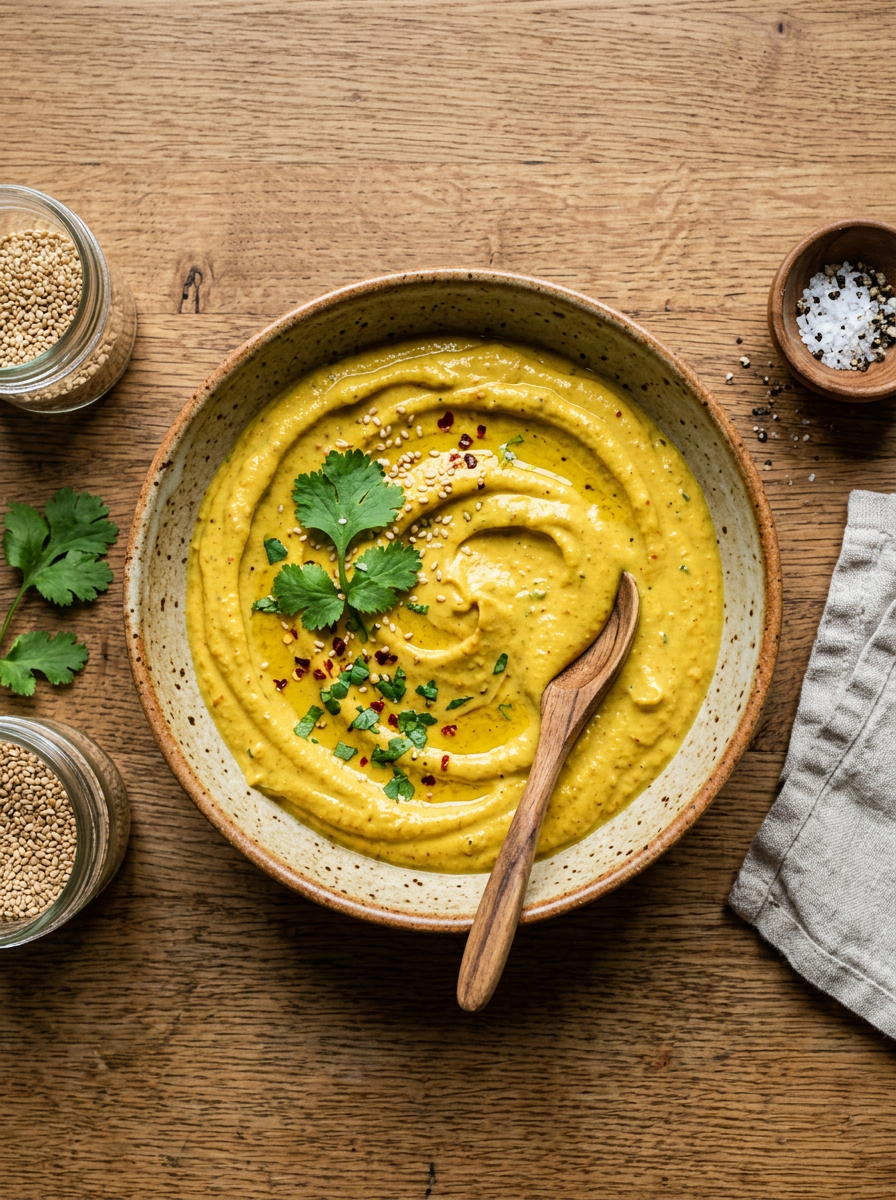
This anti-inflammatory turmeric tahini dressing takes five minutes and turns a plain salad into something worth eating twice. Turmeric and ginger are the functional core — both have well-documented anti-inflammatory effects — but the tahini and lemon make it genuinely delicious rather than medicinal. I keep a jar in the fridge every week and put it on everything from grain bowls to roasted vegetables to leftover chicken.
5 mins
0 mins
5 mins
8
Easy
95 kcal
3g
4g
8g
1g
Sauces, Marinades and Rubs That Change Everything — This dressing is one of over 40 sauces in my ebook, all built on the same principle: a few good ingredients in the right ratios make everything you already cook taste dramatically better. If your weeknight meals have started tasting the same, the ebook solves that for $15.
Why Anti-Inflammatory Turmeric Tahini Dressing Works as a Weekly Staple
Turmeric gets its anti-inflammatory reputation from curcumin, its primary bioactive compound. The research on curcumin is genuinely solid — studies show it inhibits several inflammation pathways at doses achievable through regular dietary intake. The key variable most people miss is that curcumin absorption increases dramatically in the presence of black pepper (piperine) and dietary fat, which is why this dressing includes both. The tahini provides the fat; a pinch of black pepper activates the curcumin.
Ginger adds a second layer of anti-inflammatory action through gingerols, which work on different pathways to curcumin. Together they create a dressing that is doing something beyond flavour — but the flavour is genuinely excellent, which is what makes it a habit rather than a supplement.
The Tahini and Lemon Ratio That Makes It Taste Right
The two most common failures in tahini dressings are too much tahini (heavy, paste-like) and too little acid (flat, one-dimensional). The correct ratio is roughly 3 parts tahini to 2 parts lemon juice, thinned with water until it pours like double cream. The lemon brightens the earthiness of the turmeric and cuts through the fat of the tahini — without it, the dressing tastes muddy regardless of how good your individual ingredients are.
Use good tahini. The quality range in tahini is enormous — cheap versions are bitter and grainy, good versions are smooth and nutty. Middle Eastern brands consistently outperform supermarket own-label. It is worth seeking out.
How Turmeric and Ginger Actually Work in the Body
Chronic low-grade inflammation is increasingly linked to fatigue, brain fog, joint discomfort, and metabolic dysfunction. Neither turmeric nor ginger is a treatment for anything — but both are dietary tools with meaningful evidence behind them, and a dressing you use every week delivers them consistently in a way supplements rarely do. Consistent small doses across a week are more effective than occasional large doses according to the absorption literature.
This dressing pairs especially well with legume-based dishes. If you regularly eat lentil soups or grain bowls, this high-fiber lentil soup is a natural companion — the dressing drizzled over the top just before serving adds a completely different flavour dimension to the same base recipe.
Storage and How to Keep It Fresh All Week
The dressing keeps in a sealed jar for up to 7 days in the fridge. It thickens considerably when cold — the tahini sets as the temperature drops. Remove it from the fridge 10 minutes before using, or add a tablespoon of warm water and shake. It returns to the right consistency reliably without losing any flavour.
Do not freeze it — the emulsion breaks and the texture never recovers. One batch of 8 servings covers a full week of daily use on salads, grain bowls, or roasted vegetables without any noticeable quality degradation.
Variations Worth Trying
Swap the fresh ginger for 1/4 teaspoon of ground ginger for a mellower flavour that works better on cold grain bowls. Add a teaspoon of maple syrup if you want a slightly sweeter profile for roasted root vegetables. Replace half the lemon juice with orange juice for a citrus version that pairs particularly well with roasted carrots and beetroot.
For a nut-free version, replace the tahini with sunflower seed butter — it has a similar fat content and neutral flavour, though slightly less nutty. The turmeric and ginger still carry the dressing without the tahini note.
Using It Beyond Salads
This dressing doubles as a marinade for chicken or tofu — 30 minutes in the fridge before cooking produces a golden, lightly spiced crust that develops beautifully in a hot pan. It also works as a dip for crudites or flatbread, and thinned down slightly with extra water it makes an excellent drizzle for roasted vegetable sheet pans straight from the oven.
Anti-Inflammatory Turmeric Tahini Dressing
A five-minute golden dressing built on tahini, turmeric, ginger, and lemon that delivers genuine anti-inflammatory benefits alongside deeply satisfying nutty, bright flavour. One jar covers a full week of meals.
Ingredients
- 60g (4 tbsp) good-quality tahini
- 3 tbsp fresh lemon juice (about 1.5 lemons)
- 1 tsp ground turmeric
- 1 tsp fresh ginger, finely grated (or 1/4 tsp ground)
- 1 small clove garlic, finely grated
- 1 tbsp olive oil
- 1/4 tsp black pepper
- 1/4 tsp salt
- 3 to 5 tbsp warm water (to thin to desired consistency)
Instructions
- Add the tahini, lemon juice, turmeric, ginger, garlic, olive oil, black pepper, and salt to a jar or small bowl. The mixture will seize and look thick and unworkable — this is normal and will fix itself in the next step.
- Add warm water one tablespoon at a time, stirring vigorously after each addition. The dressing will loosen dramatically after the first tablespoon. Continue until it pours like double cream — golden yellow and smooth, smelling of turmeric and lemon.
- Taste and adjust: more lemon for brightness, more salt for depth, more ginger for heat. The flavour should be nutty, tangy, and warmly spiced — not dominated by any single element.
- Transfer to a sealed jar. Use immediately or refrigerate for up to 7 days.
Notes
Storage: Sealed jar, fridge, up to 7 days. Shake or stir before each use. Add a splash of warm water if it thickens too much after refrigeration.
Substitutions: Swap tahini for sunflower seed butter for a nut-free version. Replace lemon juice with lime juice for a slightly different citrus profile that works well on Mexican-style bowls.
Key tip: The most common failure is skipping the black pepper. It is not optional — piperine in black pepper increases curcumin absorption by up to 2,000%. Use it.
Beginner tip: When tahini seizes up at first contact with lemon juice, do not panic. Add warm water gradually and keep stirring — it will emulsify into a smooth, pourable dressing within 60 seconds.
You Might Also Like
- 📖 Sauces, Marinades and Rubs That Change Everything — Over 40 flavour-building sauces and dressings for healthy cooking — only $15.
Two things make this anti-inflammatory turmeric tahini dressing worth keeping in your fridge every week: turmeric and ginger together with black pepper and dietary fat deliver the curcumin your body can actually absorb, and the tahini-lemon base tastes genuinely good rather than medicinal. A batch takes five minutes and covers every salad, grain bowl, and roasted vegetable you eat from Monday to Friday. Save the pin and come back when your fridge jar runs out.
Leave a Reply