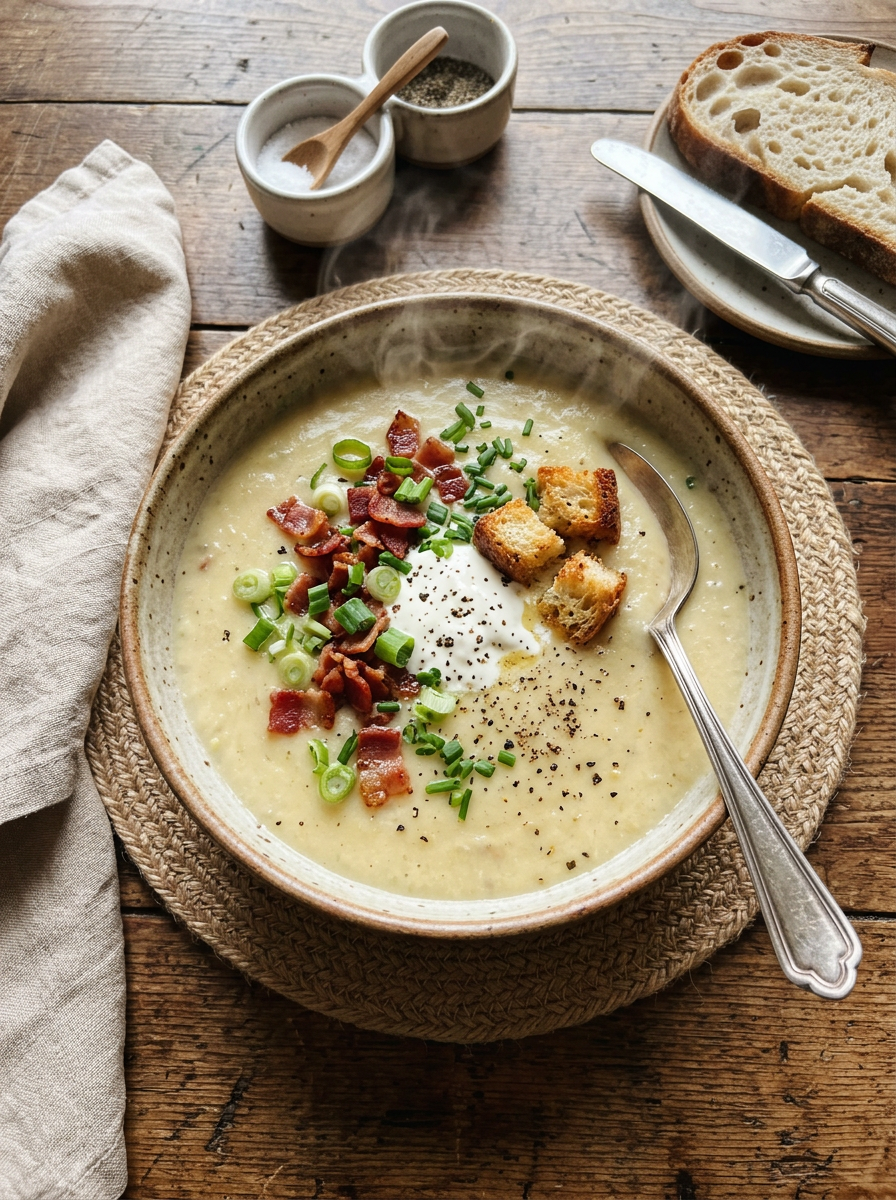
Potato soup is one of those recipes that looks simple but has a texture gap between the versions that taste like someone melted paste into warm water and the ones that taste like a meal worth making on purpose. The difference is not special ingredients or technique — it is understanding what makes potato soup thick without being heavy, and how to build flavor in a base that is mostly starch and water. Once you know the approach, it takes about forty-five minutes and requires almost nothing in terms of skill.
This recipe is for anyone who wants a genuinely satisfying bowl of creamy potato soup that eats like a real dinner. The technique teaches you how to build a layered base from aromatics before the potatoes go in, why some of the potato chunks should stay whole while others get blended, and how to achieve a rich, creamy texture without using a full cup of heavy cream.
In this post you will learn the two-texture approach to getting the right consistency, why you cook the aromatics before adding liquid, how to build the body of the soup without relying purely on cream, what the blending ratio should be, how to season a potato-heavy soup correctly, and how to add toppings that make the bowl worth eating on its own.
- Ready in 45 minutes — 15 minutes of prep, 30 minutes of cooking with minimal hands-on time
- Key technique: blend only half the soup directly in the pot for a creamy base while keeping chunky potato pieces for texture
- Serve topped with shredded cheddar, sour cream, crispy bacon bits, and fresh chives
15 mins
30 mins
45 mins
6
Easy
310 kcal
10g
38g
13g
3g
Soups, Stews and One-Pot Comfort Food
Hearty soups, stews, and one-pot meals built for batch cooking. Every recipe is designed to get better on day two — this potato soup is one of 30+ recipes following the same layered approach.
The Two-Texture Approach
The biggest mistake in potato soup is blending the entire pot smooth. Fully blended potato soup tastes like warm glue — there is no textural contrast to keep you interested and the starch from fully pureed potatoes makes the soup so thick it feels heavy rather than creamy. The approach that works is blending roughly half the soup while leaving the other half as soft potato chunks. The blended portion creates the creamy base. The unblended portion gives you something to chew and makes the bowl feel like food rather than a beverage.
The ratio is flexible and depends on personal preference, but starting around half-and-half and adjusting from there works well. Use an immersion blender and blend directly in the pot, stopping when the soup looks half-creamy and half-chunky. Or ladle out a third of the soup, blend it separately in a regular blender, and stir it back in — the result is slightly smoother but equally effective.
Building the Base Before the Potatoes
The vegetables and aromatics that go into the soup before the liquid and potatoes are not just flavor additions — they are the foundation of what the soup tastes like. Butter, onion, garlic, and celery cooked for eight to ten minutes until soft and translucent create a savory base that the potato flavor sits on top of. If you skip this step or rush it, the soup tastes flat and one-dimensional regardless of how much salt you add at the end.
A tablespoon of flour added after the aromatics are soft and before any liquid thickens the soup slightly without the glue texture you get from over-blending. Cook the flour in the butter for one minute — this is a quick roux — before adding any liquid. The starch from the flour will absorb some of the butter and cook out the raw flour taste, leaving behind a thickening agent that integrates smoothly into the soup.
Chicken broth or vegetable broth goes in after the roux. Broth adds more flavor than water and is worth using here. The potato flavor will dominate anyway, but broth adds a savory depth in the background that water cannot replicate. If you are making a vegetarian version, vegetable broth works equally well.
Which Potatoes to Use
Russet potatoes are the standard choice for potato soup because their high starch content blends smoothly and creates a naturally thick, creamy base. Yukon Gold potatoes have a slightly buttery flavor and create a soup with more natural richness. Both work. Red potatoes hold their shape better, which is useful for the chunky half of the two-texture approach. Using a mix — russets for the blended portion and reds or Yukons for the chunks — gives you the best of both.
Peel and dice the potatoes uniformly. Uneven pieces mean some chunks will be overcooked and mushy while others are still slightly firm at the same point in the cooking process. Aim for three-quarter inch cubes. At that size, the potatoes are tender after about fifteen minutes of simmering in broth without turning to complete mush, which leaves them a couple of minutes of margin.
Getting the Creaminess Right
The soup gets most of its richness from the starch released by the potatoes as they cook and from the roux base. The dairy component at the end is more about smoothness and finishing richness than doing the heavy lifting. Half a cup of heavy cream stirred in off the heat is enough for a six-portion pot. Alternatively, one cup of whole milk works and produces a slightly lighter result.
Add the dairy at the very end and off the heat or at a very low simmer. Boiling dairy into a starchy potato soup risks breaking the emulsion and can cause the cream to separate into greasy pools on the surface. The same principle applies to any cheese you add. Grated cheddar stirred in off the heat will melt evenly. Grated cheddar stirred into a vigorously boiling soup will clump and break.
Seasoning a Potato-Heavy Soup
Potatoes absorb salt. A soup that tastes correctly seasoned before the potatoes have fully cooked will be under-seasoned by the time they are done. Salt the soup in stages: once when you add the broth, once after the potatoes are cooked, and once more after the dairy. Taste after each addition. The final seasoning should happen right before serving.
Black pepper, smoked paprika, and a pinch of cayenne are the additions that make potato soup taste interesting rather than just starchy and salty. Garlic powder stirred in with the smoked paprika during the aromatic stage adds a background depth. Fresh chives at the end add a sharp counterpoint to the richness. For the reference on getting mashed potato textures and starches right in other applications, the mashed potatoes guide explains why starch management matters for potato dishes across formats.
The Toppings That Finish the Bowl
Potato soup served without any toppings is technically complete but misses the opportunity to add textural contrast and fresh flavor. The classic combination — shredded cheddar, crispy bacon bits, sour cream, and fresh chives — works because each element is doing something different. The cheese adds richness and a slight tang. The bacon adds crunch and salt. The sour cream adds creamy acidity that cuts through the starch. The chives add freshness and color.
If you are making a vegetarian version, roasted chickpeas or crispy fried shallots replace the bacon effectively. The crunch component is the most important one to maintain — without it, the soup has only soft textures and the bowl feels monotonous after a few spoonfuls regardless of how well the soup itself is made.
Storage and Reheating
Potato soup refrigerates well for four days. It will thicken considerably as it sits because the starch from the potatoes continues to absorb the liquid. When reheating, add a splash of broth or water and stir before warming. The soup will loosen and return to its original consistency. Do not reheat at high power in a microwave — the uneven heat will create hot spots that break the dairy emulsion and leave greasy patches on the surface. Medium power for two minutes, stirring once halfway through, is the right approach.
Freezing is possible but not ideal — potato soups tend to become grainy and separate after freezing because the starch structure changes at freezer temperatures. If you do freeze it, expect to need to blend or vigorously whisk the reheated soup to restore the texture, and add fresh dairy after reheating rather than relying on what is already in the frozen batch. A Taima Titanium Deep Pan Pro handles this recipe from aromatic saute through the full simmer without requiring multiple vessels, and the food-grade titanium surface does not react with the acidic dairy components. The full breakdown of how titanium cookware handles different cooking tasks is at Titanium Cookware That Actually Works (2025) — covering what sets pure titanium apart and which pieces to prioritize first.
Creamy Potato Soup
Thick, creamy potato soup made with a two-texture approach: half blended for creaminess, half left chunky for something to chew. Built on a savory aromatic base with a quick roux for body. Ready in 45 minutes.
Ingredients
The Soup
- 3 tablespoons butter
- 1 large yellow onion, diced
- 3 stalks celery, diced
- 4 cloves garlic, minced
- 1 tablespoon all-purpose flour
- 4 cups chicken or vegetable broth
- 2 lbs russet or Yukon Gold potatoes, peeled and cut in 3/4-inch cubes
- 1 teaspoon smoked paprika
- 1/2 teaspoon garlic powder
- 1 teaspoon salt (plus more to finish)
- 1/2 teaspoon black pepper
- 1/2 cup heavy cream (or 1 cup whole milk)
- 1/2 cup shredded sharp cheddar
For Serving
- Shredded cheddar
- Sour cream
- Fresh chives or green onions, sliced
- Crispy bacon bits or roasted chickpeas (vegetarian option)
- Black pepper
Instructions
- Melt butter in a large pot over medium heat. Add onion and celery. Cook, stirring occasionally, for 8-10 minutes until soft and translucent. Add garlic and cook 1 more minute until fragrant.
- Sprinkle flour over the vegetables and stir to coat. Cook for 1 minute, stirring constantly — this is your roux and it prevents lumps.
- Pour in the broth while stirring. Add potatoes, smoked paprika, garlic powder, salt, and pepper. Bring to a boil, then reduce to a simmer.
- Simmer uncovered for 15-18 minutes until the potatoes are completely tender when pierced with a fork.
- Use an immersion blender to blend about half the soup directly in the pot. Stop when the soup is roughly half smooth and half chunky. Alternatively, remove about 2 cups of soup, blend it smooth, and stir it back in.
- Turn heat to low. Stir in the heavy cream and shredded cheddar. Do NOT boil after adding dairy. Stir until the cheese melts completely.
- Taste and adjust salt. The soup will need more salt than you expect — add in small increments and taste between each addition.
- Serve topped with extra cheddar, sour cream, chives, and bacon bits or crispy chickpeas.
Notes
Storage: Refrigerate for up to 4 days. The soup will thicken considerably when cold — add a splash of broth when reheating and stir to restore consistency.
Do not boil after adding dairy: Boiling cream or cheese in a starchy soup causes it to break and develop greasy patches. Keep the heat on low once the dairy is in.
Beginner tip: Taste the soup before and after every major step — after the aromatics, after the potatoes are cooked, and after the dairy. Potato soup needs more seasoning than you expect because the potatoes absorb salt throughout the cooking process. Do not season once at the beginning and assume it is done.
Tools & Resources
- Taima Titanium Deep Pan Pro — the right depth for this recipe, handles the full volume from saute through simmer in one vessel without crowding
- ThermoPro Candy Thermometer — useful for monitoring soup temperature when adding dairy to ensure you stay below the boiling point that would break the cream
- Taima Titanium Cutting Board Set — for peeling and dicing 2 lbs of potatoes cleanly, the titanium surface does not absorb starchy moisture
- 52-Week High-Protein Meal Prep Cookbook — includes soup meal prep frameworks with this style of hearty base as a weekly prep anchor
You Might Also Like
- Homemade Chicken Noodle Soup That Actually Heals
- Homemade Beef Stew That Warms You to the Bone
- Lentil Soup Recipe That Actually Fills You Up
Three things make potato soup worth making at home rather than opening a can. The aromatic base — onion, celery, and garlic cooked properly before anything else is added — provides the layered depth that makes every spoonful taste like something made with intention rather than assembled from a list. The two-texture approach, keeping half the potatoes chunky and blending half for creaminess, creates the contrast that makes the soup interesting to eat from the first spoonful to the last. And the staged seasoning, adding salt at multiple points through the cooking process because potatoes absorb it, is what separates potato soup that tastes complete from the kind that always needs more of something you cannot quite identify.
Frequently Asked Questions
Can I make this potato soup without cream?
Yes. Substitute the heavy cream with whole milk for a lighter result, or skip dairy entirely — the roux base and blended potato starch already provide significant creaminess. If going dairy-free, use a full-fat coconut milk or cashew cream and skip the cheddar, or stir in nutritional yeast for a similar savory depth.
Why is my potato soup gluey instead of creamy?
Over-blending is almost always the cause. When potato starch is over-processed, it releases in a way that creates a sticky, paste-like texture rather than a smooth cream. Only blend about half the soup and stop as soon as the consistency looks right. Blend in short bursts rather than continuously.
What potatoes work best for creamy potato soup?
Russet potatoes create the creamiest blended base due to their high starch content. Yukon Golds add a slightly buttery flavor and blend smoothly too. Red potatoes hold their shape better — useful if you want more visible chunks. A mix of russets (for blending) and Yukons or reds (for chunks) gives the best of both results.
Can I make this soup ahead of time?
Yes — it actually improves slightly as the flavors develop overnight. Make the full soup, cool it completely, and refrigerate for up to 4 days. Reheat gently over medium-low heat with a splash of broth or water, stirring frequently. Add dairy freshly when reheating if possible for the best texture.
How do I keep the dairy from breaking when I add it?
Turn the heat to low before adding the cream or cheese. Never add dairy to a vigorously boiling soup — the high heat causes the proteins to seize and the fat to separate, creating greasy patches. Add the cream off heat or at the lowest possible simmer, stir constantly, and the emulsion will hold.
Can I freeze creamy potato soup?
It’s possible but not ideal. The starch structure changes in the freezer, and the soup can turn grainy or watery when thawed. If you do freeze it, leave out the dairy and add it fresh when reheating. Blend or whisk vigorously after reheating to restore a smoother texture.
What toppings go on potato soup?
The classic combination is shredded cheddar, sour cream, crispy bacon bits, and fresh chives. Each element serves a purpose: cheese adds richness, sour cream adds acidity, bacon adds crunch, chives add freshness. For vegetarian versions, roasted chickpeas or crispy fried shallots replace the bacon well.
Leave a Reply