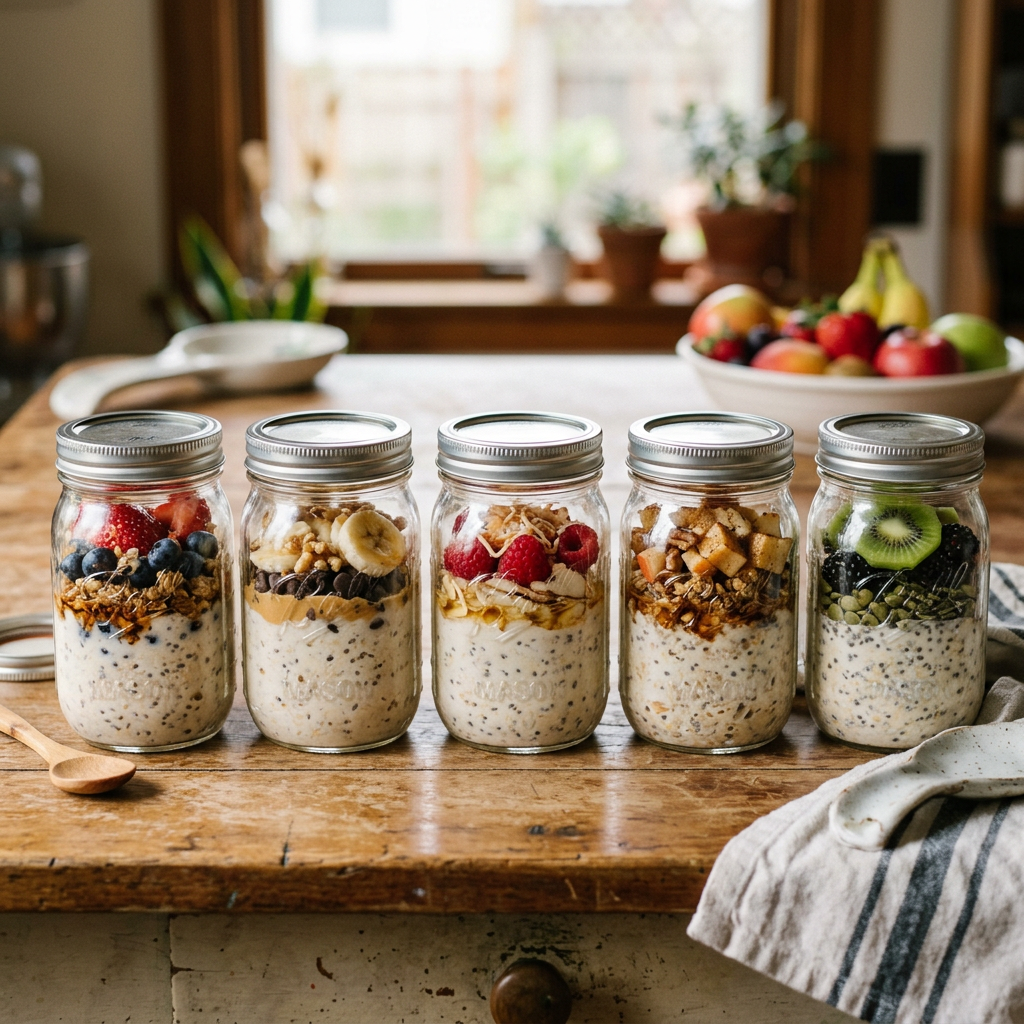
Overnight oats meal prep is the most effortless breakfast system in any kitchen — no stove, no oven, no morning cooking of any kind. Five jars assembled in ten minutes on Sunday evening produce a full working week of complete, nutritious breakfasts that improve in flavour as they sit and require nothing from you on the morning except opening the fridge and grabbing a jar.
If you are already making egg muffin cups for breakfast protein, overnight oats provide a complementary alternative — carbohydrate-forward, fibre-rich, cold and creamy rather than warm and savoury. The two systems cover different mornings, different moods, and different nutritional profiles from the same single Sunday prep session.
In this post you will learn the exact ratio of oats to liquid that produces creamy rather than soupy or gluey results, why Greek yogurt is the ingredient that adds protein without protein powder, what chia seeds actually do to overnight oats over the soaking period, how to prevent browning on fresh fruit toppings, five flavour variations that prevent the boredom that kills most breakfast routines, and the storage system for a full five-day supply.
10 mins
None
4 hrs minimum / overnight
5 jars
Very Easy
The Ratio: The Most Important Thing to Get Right
The single variable that determines whether overnight oats are creamy, soupy, or gluey is the ratio of oats to liquid. Too little liquid and the oats absorb everything and become dense and paste-like overnight. Too much liquid and the mixture is thin and watery — more like a grain soup than a breakfast. The correct ratio is one part rolled oats to one part liquid, with the Greek yogurt and chia seeds providing additional thickness beyond the liquid component.
For one jar: 80g (just under 1 cup) rolled oats, 120ml (1/2 cup) milk or plant-based milk, 80g (1/3 cup) Greek yogurt, and 1 tablespoon chia seeds. This produces a thick, creamy, fully set jar after overnight soaking that loosens pleasantly with a tablespoon of additional milk stirred in the morning if it has thickened too much.
The oats absorb milk throughout the chilling period and the chia seeds expand to several times their original volume, acting as a secondary thickener. After four hours the oats are almost fully hydrated. After eight hours (overnight) they are completely set and the texture is at its best — soft, slightly chewy, and creamy throughout rather than hard in the centre and soft only at the surface.
Rolled Oats vs. Quick Oats vs. Steel-Cut
Old-fashioned rolled oats are the correct choice for overnight oats. They hydrate fully overnight into a creamy, slightly textured result with some chew retained in each grain. Quick oats over-hydrate and become mushy and indistinct — they lose all texture by morning and the result is porridge-like rather than creamy-grainy. Steel-cut oats do not hydrate sufficiently overnight in cold liquid — they remain too firm and chalky and require either hot water or a longer soak of twelve to twenty-four hours to approach the right texture.
Do not use instant oats. They are pre-cooked and produce a completely smooth, gluey result with no texture. The rolled oat grain structure is what produces the characteristic overnight oats texture — partially hydrated grains in a creamy yogurt-milk matrix.
Greek Yogurt: Protein Without Protein Powder
Full-fat Greek yogurt adds 10 to 15 grams of protein per 100 grams and transforms the texture of overnight oats from thin and liquid to thick and creamy. It also adds a slight tang that prevents the sweetness of any toppings or sweeteners from being one-dimensional — the tartness of the yogurt balances the honey or maple syrup and makes the whole jar taste more complex and less dessert-like.
Full-fat Greek yogurt produces a noticeably creamier, more satisfying result than low-fat or non-fat versions, which produce a slightly watery, thin consistency after mixing and can cause the jar to separate slightly during the soak. The extra fat is the difference between overnight oats that feel like a complete breakfast and ones that leave you hungry an hour later.
For the highest possible protein without protein powder: 80g Greek yogurt per jar provides 8 to 12 additional grams of protein on top of the 5 to 6 grams from the oats and chia seeds. Two to three tablespoons of hemp seeds or a tablespoon of nut butter added to the base boosts protein further without changing the texture significantly.
Chia Seeds: What They Actually Do
Chia seeds absorb ten to twelve times their weight in liquid over the soaking period and expand into a gel-like consistency that thickens the jar and provides a slightly different texture from the oats — smaller, softer, slightly pudding-like pockets throughout the mix. They also add fibre, omega-3 fatty acids, and a small amount of protein per tablespoon.
One tablespoon per jar is the right amount — enough to contribute to the thickening and nutrition without dominating the texture. Two tablespoons produces a jar that is almost chia pudding rather than overnight oats — still good, but a different result. Ground flaxseed provides similar nutritional benefits with less textural impact if the chia seed gel texture is not preferred.
Add the chia seeds to the jar before the liquid, not after — dry chia seeds mixed into dry oats distribute more evenly than chia seeds added to an already-liquid mixture, where they tend to clump together and form one large gel mass rather than distributing through the jar.
Sweeteners: Less Than You Think
The sweetness in overnight oats should come primarily from the toppings and mix-ins rather than the base itself. Adding significant sweetener to the base produces a jar that is too sweet when combined with fruit toppings and any flavoured additions. A teaspoon of honey, maple syrup, or agave stirred into the base is sufficient — providing background sweetness without making the jar taste like dessert.
Mashed ripe banana stirred into the base in place of sweetener adds both sweetness and natural creaminess — a tablespoon of mashed banana per jar is the right amount. This also produces the banana cream overnight oats variation without any additional ingredients beyond the base.
Five Flavour Variations for a Full Week Without Repetition
Make five jars with the same base but different mix-ins and toppings. Prepare all five in parallel — base first in each jar, then move through adding the variation ingredients. Total time: ten minutes for five jars.
Variation 1 — Classic Berry (Monday): vanilla extract in the base, topped with mixed berries and a tablespoon of almond butter. Bright, fresh, and the most universally appealing starting point for the week.
Variation 2 — Banana Peanut Butter (Tuesday): mashed ripe banana stirred into the base, peanut butter drizzled on top, sliced banana added fresh in the morning. The same ripe bananas from the banana bread and banana pudding guides on this blog are exactly right here too.
Variation 3 — Apple Cinnamon (Wednesday): half a teaspoon of cinnamon and a pinch of nutmeg in the base, diced apple stirred through (do not add raw diced apple in advance — it browns; add fresh in the morning or substitute with unsweetened apple sauce stirred into the base). Toasted walnut pieces on top.
Variation 4 — Chocolate Peanut Butter (Thursday): a tablespoon of cocoa powder and an extra teaspoon of honey in the base, peanut butter and a few dark chocolate chips on top. The version that feels like dessert but provides the same protein and fibre as any other.
Variation 5 — Mango Coconut (Friday): a tablespoon of coconut milk stirred into the base (reducing regular milk by the same amount), diced mango added fresh in the morning, toasted coconut flakes and lime zest on top. The variation that feels most different from the others and provides a bright, tropical finish to the week.
Toppings: What to Add Now vs. What to Add in the Morning
Some toppings can go in the jar at assembly time and improve with the overnight soak. Others must be added fresh in the morning to preserve their texture and appearance.
Add at assembly (can soak overnight): nut butters (stir through the base or swirl on top — both work), dried fruit (raisins, cranberries, dates — they rehydrate nicely), seeds (hemp, flax, pumpkin), cocoa powder, cinnamon and spices, vanilla extract, honey or maple syrup, unsweetened apple sauce.
Add fresh in the morning only: fresh fruit (berries, banana, mango, apple — all brown or go mushy overnight), crunchy granola or nuts (lose all crunch if soaked overnight), fresh-cut herbs like mint. The Taima Pure Titanium Cutting Board Set handles the fresh fruit morning prep in thirty seconds — stable, non-porous, and odour-free so the fruit tastes only of itself.
The Container System: Mason Jars Are the Right Choice
Wide-mouth mason jars (500ml / 16 oz) are the best containers for overnight oats — they seal airtight, are made of glass so they absorb no odour or colour, can be shaken to mix ingredients in the morning, and look appealing enough that opening one feels like a good start to the day rather than a depressing compromise. Labelling each jar with the flavour variation and the day it is assigned prevents the frustration of opening the wrong jar on a busy morning.
Plastic containers work but absorb flavour from one batch to the next and do not rinse as cleanly as glass. If using plastic, use containers dedicated exclusively to overnight oats rather than repurposing leftovers containers.
For a completely comprehensive weekly breakfast system combining overnight oats with egg muffin cups and other prepped options, the 52-Week High-Protein Meal Prep Cookbook maps out exactly how to rotate breakfast formats across a full year of weekly plans without repetition — pairing hot and cold options, varying protein sources, and building in the flexibility that keeps the system sustainable rather than becoming a chore.
The Warm Version: When Cold Oats Aren’t What You Want
On cold mornings when a cold breakfast is less appealing, overnight oats can be warmed — the soaked oats heat excellently and the texture becomes closer to traditional porridge while retaining the overnight flavour development that makes them better than oats cooked from raw.
Transfer the jar contents to a bowl or small saucepan, add a tablespoon of extra milk, and heat gently over medium-low heat for two to three minutes, stirring constantly. The Taima Titanium Nutri Pot Pro handles this quickly — even heat on the stovetop and PFAS-free, so nothing leaches into the oats during the brief warm-through.
Alternatively, microwave in a microwave-safe bowl for 60 to 90 seconds, stirring halfway. Add toppings after warming — fresh fruit especially benefits from being added after heating rather than cooked in the microwave.
What to Add for Weekend Breakfasts
Overnight oats are designed for weekdays — grab from fridge, add toppings, eat within five minutes. For weekend mornings when there is more time, the same base can be elevated significantly with a homemade granola topping — toasted oats, nuts, honey, and coconut oil — that adds crunch and warmth. The Complete Beginner’s Guide to Mastering Breads, Cakes, Cookies and Pastries covers homemade granola alongside the full range of baking skills that extend naturally from the breakfast prep habits this recipe introduces.
For a hot weekend breakfast alternative, the fluffy pancakes guide covers the batter method and rest time that produces the tall, airy stack — the weekend equivalent of the overnight oats system that requires cooking but produces something genuinely special at the table.
5-Jar Overnight Oats Meal Prep
Old-fashioned rolled oats, full-fat Greek yogurt, whole milk, chia seeds, and a teaspoon of honey combined in five mason jars with different flavour variations. Assembled in 10 minutes, refrigerated overnight, and ready to grab every morning for five days. No cooking. No morning effort. 18–25g protein per jar.
Ingredients per Jar (multiply × 5 for the full batch)
The Base
- 80g (3/4 cup) old-fashioned rolled oats
- 120ml (1/2 cup) whole milk or unsweetened plant-based milk
- 80g (1/3 cup) full-fat Greek yogurt
- 1 tbsp chia seeds
- 1 tsp honey or maple syrup
- 1/4 tsp vanilla extract
- Pinch of salt
Flavour Variations (mix-ins added at assembly)
- Classic Berry: no additional mix-ins in base; top with mixed berries + almond butter in the morning
- Banana PB: 1 tbsp mashed ripe banana stirred into base; top with peanut butter + fresh banana in the morning
- Apple Cinnamon: 1/2 tsp cinnamon + 1 tbsp unsweetened apple sauce in base; top with toasted walnuts in the morning
- Chocolate PB: 1 tbsp cocoa powder + extra 1/2 tsp honey in base; top with peanut butter + dark chocolate chips in the morning
- Mango Coconut: 1 tbsp coconut milk replacing 1 tbsp regular milk in base; top with diced mango + toasted coconut + lime zest in the morning
Instructions
- Set out 5 mason jars or airtight containers. Label each with the day and flavour variation if desired.
- In each jar, add chia seeds first (dry), then rolled oats. Add the milk, Greek yogurt, honey, vanilla, and salt. Add any base mix-ins for the specific variation (mashed banana, cinnamon, cocoa powder, etc.).
- Stir each jar thoroughly until the yogurt is fully incorporated and all dry ingredients are moistened. No dry oat or yogurt clumps should remain on the bottom or sides.
- Seal the jars and refrigerate for a minimum of 4 hours, overnight preferred. The oats and chia seeds will absorb the liquid and thicken significantly.
- In the morning: if the oats are thicker than desired, stir in 1–2 tablespoons of additional milk until the consistency is right. Add all fresh toppings (fruit, granola, crunchy additions) at this point — never in advance.
- Eat cold directly from the jar or transfer to a bowl. Or heat gently in a pan or microwave if preferred warm.
Macros per Jar (base recipe, Classic Berry variation)
- Calories: ~320–380 kcal
- Protein: 18–22g
- Carbohydrates: 45–50g
- Fat: 8–12g
- Fibre: 6–8g
Notes
Too thick in the morning: Stir in 1–2 tablespoons of cold milk until you reach your preferred consistency. The oats continue to absorb liquid overnight and some jars (especially those with banana or apple sauce) will set very firmly.
Too thin: Increase Greek yogurt to 100g per jar or add an extra half tablespoon of chia seeds. Let soak for longer — the chia continues to thicken the mixture up to 12 hours.
Storage: 5 days refrigerated. Do not freeze assembled overnight oats — the oat texture changes significantly after freezing. The base can be prepped dry (oats + chia in jars) and wet ingredients added fresh up to 5 days ahead.
Fresh fruit timing: Never add fresh cut fruit to the jars at assembly. All fresh fruit browns or goes mushy overnight in contact with the yogurt’s acidity. Add every fresh topping in the morning, immediately before eating.
Beginner tip: The first time, make only two jars to test your preferred consistency with the ratio before committing to five. After one week you will know whether to add more milk, more yogurt, or more oats to hit your ideal texture.
Tools & Resources
- 52-Week High-Protein Meal Prep Cookbook — pair overnight oats with egg muffin cups and chicken and rice bowls for a complete weekly high-protein meal plan covering breakfast and lunch from one Sunday session
- Complete Beginner’s Guide to Mastering Breads, Cakes, Cookies and Pastries — learn to make homemade granola from scratch for the most satisfying possible crunchy topping on your overnight oats
- Taima Pure Titanium Cutting Board Set — non-porous, odour-free surface for slicing fresh fruit toppings each morning in thirty seconds without any flavour transfer between fruits
- Taima Titanium Nutri Pot Pro — for the warm overnight oats variation: even gentle heat on the stovetop, PFAS-free, ideal for the 2–3 minute warm-through on cold mornings when cold oats aren’t appealing
Overnight oats meal prep is the simplest possible meal prep system — no cooking, no equipment beyond jars and a spoon, ten minutes for five days of complete breakfasts. The ratio of one part oats to one part liquid with Greek yogurt and chia seeds producing the rest of the thickness creates a creamy, satisfying result that holds quality for five days and improves over the first twenty-four hours as the flavours meld. The five flavour variations built from the same base ensure that Friday’s jar tastes as appealing as Monday’s — the single most important factor in whether a meal prep system survives the second and third week or quietly gets abandoned. Pair these jars with the egg muffin cup system and a week of breakfast is covered from one ten-minute Sunday session and one thirty-minute baking session. That is the entire foundation of a breakfast meal prep routine that actually works.
The cutting board for fresh fruit toppings and the small pot for the warm version are the two pieces of kitchen equipment that touch this recipe most directly. If you are thinking about upgrading to PFAS-free, non-toxic kitchen equipment built for everyday use, the full breakdown is at Titanium Cookware That Actually Works (2025) — covering what sets pure titanium apart and which pieces to prioritize first.
Leave a Reply