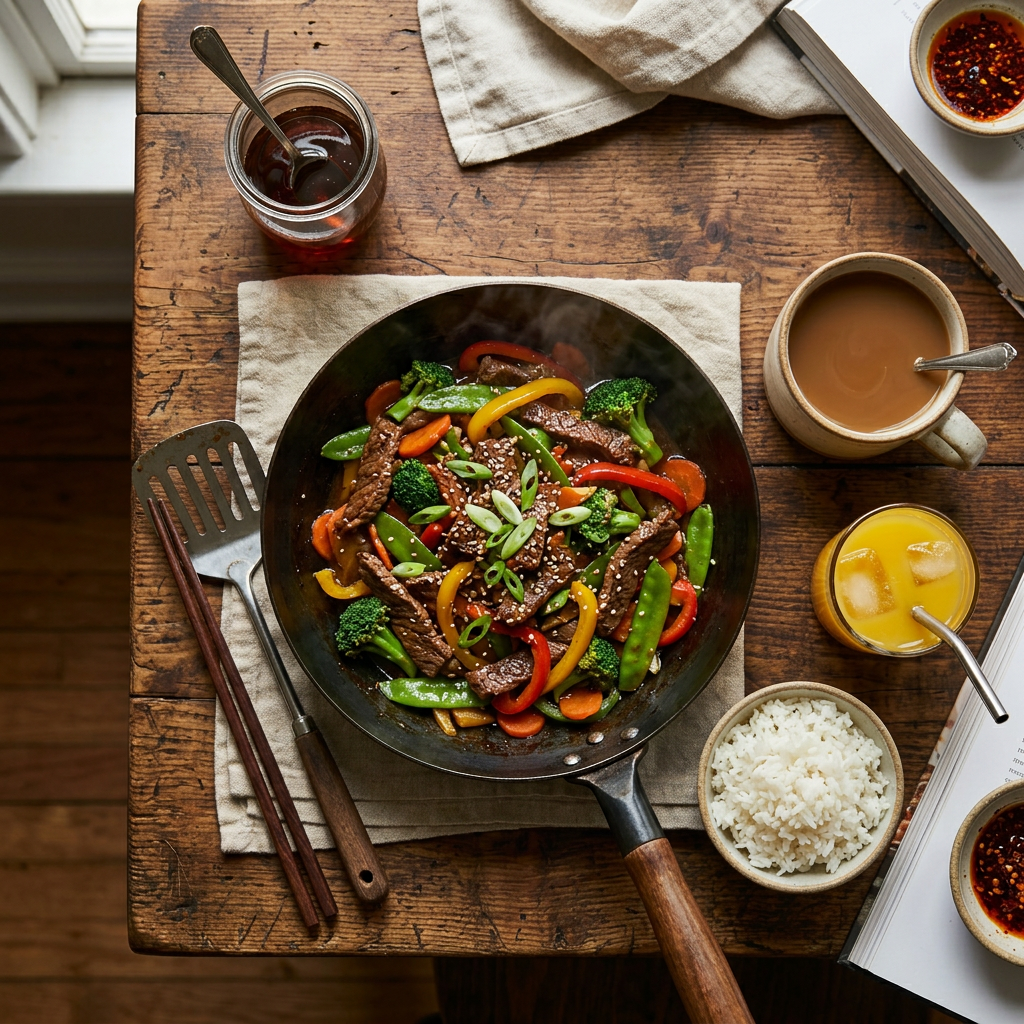
Beef stir fry recipe is one of those weeknight dishes where the gap between a version that tastes like takeout and one that tastes like something cooked at home in a pan that was not hot enough is enormous — and explained almost entirely by two technique decisions that most recipes mention but do not emphasise enough. Slicing the beef against the grain rather than with it. And using a pan that is genuinely smoking hot rather than merely warm.
If you have already made the chicken stir fry on this blog, you know the framework: high heat, fast cook, everything prepped and ready before the pan goes on. Beef stir fry uses the same structure but introduces two additional techniques — the velveting marinade that makes restaurant stir fry beef so noticeably tender, and the grain-slicing method that is the single biggest factor in whether the beef chews easily or feels like it needs three times as many bites as it should.
In this post you will learn how to identify the grain direction in flank steak and slice correctly against it, why the cornstarch velveting marinade transforms the texture of the cooked beef, why the beef must be cooked in batches at the highest heat your stove produces, how to build the sauce in the same pan after the beef is done, and the vegetable combinations that work best with the bold flavour profile of a beef stir fry.
15 mins + 20 min marinate
12 mins
~50 mins
4
Easy
The Cut: Why Flank Steak and What to Do With It
Flank steak is the best beef for stir fry. It is a large, flat cut from the belly of the cow with a bold, beefy flavour, relatively affordable price, and most importantly a clearly visible grain direction that makes the slicing technique easy to execute correctly. Sirloin and skirt steak are excellent alternatives. Avoid thick, expensive cuts like ribeye or New York strip — the fat marbling that makes them exceptional for grilling or pan-searing does not contribute positively to a stir fry where everything is cut to the same small size and cooked in a sauce.
The key technique: partially freeze the steak for fifteen to twenty minutes before slicing. A slightly firm but not fully frozen steak is dramatically easier to cut into thin, uniform slices than a room-temperature steak, which flexes and compresses under the knife. Fifteen minutes in the freezer produces the ideal firmness without the cut quality of true frozen meat.
Slicing Against the Grain: The Technique Most Beginners Miss
The grain in a steak refers to the direction of the long muscle fibres running through the meat. In flank steak, these fibres run visibly in one direction and are easy to identify — parallel striations across the surface of the cut.
Slicing with the grain means cutting parallel to these fibres. The resulting pieces contain long, continuous muscle fibres that are tough and chewy — this is the source of the complaint that beef stir fry was “like rubber.”
Slicing against the grain means cutting perpendicular to those fibres. Each slice severs the muscle fibres into very short segments. The resulting pieces are tender and easy to chew, even when cooked to medium or medium-well in the stir fry, because there are no long fibres to resist the bite.
Look at the steak and identify which direction the lines run. Turn the steak ninety degrees and slice. Aim for slices about 3mm (1/8 inch) thick — thin enough to cook through in thirty seconds at high heat, thick enough to have some presence in the finished dish.
The Taima Pure Titanium Cutting Board Set is the right surface for this prep — non-porous, stable, and non-absorbent so the raw beef juices do not seep into the board, and it stays completely flat during the thin, precise slicing work that beef stir fry requires.
The Velveting Marinade: Restaurant Beef Tenderness at Home
Velveting is the Chinese restaurant technique that produces the noticeably tender, smooth-textured beef in stir fry that home cooking rarely achieves. The marinade contains cornstarch, soy sauce, and a small amount of baking soda — the baking soda raises the pH of the beef surface, which inhibits protein cross-linking during cooking and produces a more tender, less chewy result at the same internal temperature.
Toss the sliced beef with one teaspoon of cornstarch, one tablespoon of low-sodium soy sauce, one teaspoon of sesame oil, and a quarter teaspoon of baking soda. Mix thoroughly until every piece is coated. Let it sit for fifteen to twenty minutes at room temperature. The beef will look slightly tacky — this is the cornstarch and baking soda at work. Do not rinse before cooking.
The cornstarch also forms a light coating on the outside of each slice that crisps slightly during the sear and helps the sauce cling to the beef in the finished dish. This is the combination of effects — tenderising from the inside, light crisp from the outside — that makes restaurant stir fry beef texture so difficult to approximate without understanding the technique.
Extremely High Heat: The Non-Negotiable
A stir fry at medium heat is not a stir fry — it is a braise. Medium heat produces a pan full of beef that steams in its own juices, turns grey rather than browning, and releases all its moisture into the pan before it can sear. The result is tough, pale, wet beef surrounded by a watery sauce.
High heat — the highest setting on your stove — produces immediate, violent sizzling the moment the beef enters the pan. The surface moisture evaporates almost instantly, Maillard browning begins in seconds, and the exterior of each slice develops a lightly caramelised, slightly crispy edge before the interior has a chance to overcook. This is wok hei — the smoky, charred character that distinguishes restaurant stir fry from home stir fry.
Preheat the pan for two full minutes on the highest heat setting before adding oil. The pan should be so hot that a drop of water evaporates immediately on contact. Add high smoke point oil — avocado, vegetable, or peanut — not olive oil, which burns at these temperatures.
Batch Cooking: The Most Important Practical Rule
Cook the beef in two or three small batches, never all at once. Adding a full pound of beef to the pan simultaneously cools the surface dramatically — all that cold meat absorbs the pan’s heat and the temperature drops below the searing threshold. The beef steams rather than sears and you lose the browning that makes the dish worthwhile.
Add the beef in a single layer with space between pieces. Leave undisturbed for thirty seconds until the bottom edge shows browning. Toss once and cook for another thirty seconds. Remove to a plate. The beef is not fully cooked at this point — it will finish in the sauce. Repeat with the remaining batches, adding a small amount of fresh oil between each.
The Taima Titanium Wok Pan Pro is built for this style of cooking — the curved sides allow the tossing motion that keeps the beef moving at extreme heat, PFAS-free so no coating burns off at the temperatures stir fry demands, and the surface area accommodates a proper single-layer batch without overcrowding.
The Sauce: Balanced and Glossy
The stir fry sauce goes in after the vegetables are cooked and before the beef returns to the pan. Make the sauce ahead in a bowl — it takes thirty seconds to mix and having it ready means the dish comes together in one continuous high-heat sequence rather than requiring you to measure things while the pan is smoking.
The base: low-sodium soy sauce for salt and umami, oyster sauce for depth and slight sweetness, a small amount of hoisin for complexity, fresh ginger and garlic for aromatics, a teaspoon of sesame oil stirred in off the heat at the end for fragrance. Cornstarch dissolved in water thickens the sauce as it heats and produces the glossy, coating consistency that makes the sauce cling to every piece of beef and vegetable rather than pooling at the bottom of the bowl.
The sauce should be poured in while the heat is still high and stirred immediately — it will thicken very quickly at these temperatures. Add the beef back immediately after the sauce thickens. Toss for thirty seconds and serve. Total time from when the beef goes in the first batch to when the dish is on the plate is under ten minutes.
Vegetables: What Works and in What Order
Broccoli florets and sliced bell pepper are the most natural companions for beef stir fry — the slight bitterness of the broccoli and the sweetness of the pepper both complement the bold, savoury sauce without competing. Snap peas, mushrooms, broccolini, and baby corn all work well. Avoid watery vegetables like courgette and spinach which release excessive moisture and thin the sauce.
Dense vegetables go in first — broccoli and carrot need two to three minutes in the hot pan before softer vegetables are added. Bell pepper and snap peas need only sixty to ninety seconds. Aromatics — garlic and ginger — go in for thirty seconds just before the sauce, in the same sequence as the easy chicken stir fry technique. The vegetable-first, aromatics-second, sauce-third order is the structure of every great stir fry regardless of protein.
For a full week of high-protein stir fry meals, the 52-Week High-Protein Meal Prep Cookbook covers how to batch-prep stir fry components — sliced beef, prepped vegetables, made sauce — for three weeknight dinners from one Sunday session of twenty minutes of prep.
Beef Stir Fry with Broccoli and Bell Pepper
Flank steak sliced thin against the grain, velveted in a cornstarch-baking soda marinade, seared in smoking-hot batches, and tossed with crisp broccoli and bell pepper in a glossy soy-oyster sauce. Ready in 25 minutes and genuinely better than takeout.
Ingredients
The Beef and Velveting Marinade
- 500g (1 lb) flank steak, partially frozen for 15 min, then sliced 3mm (1/8 inch) thick against the grain
- 1 tsp cornstarch
- 1 tbsp low-sodium soy sauce
- 1 tsp sesame oil
- 1/4 tsp baking soda
The Stir Fry Sauce
- 3 tbsp low-sodium soy sauce
- 2 tbsp oyster sauce
- 1 tbsp hoisin sauce
- 1 tsp sesame oil (add off heat)
- 1 tsp brown sugar
- 1 tbsp cornstarch dissolved in 3 tbsp cold water
- 60ml (1/4 cup) beef or chicken stock
Aromatics and Vegetables
- 4 cloves garlic, minced
- 1 tbsp fresh ginger, grated
- 300g (about 3 cups) broccoli florets
- 1 red bell pepper, sliced
- 1 yellow bell pepper, sliced
- 2–3 tbsp neutral oil (avocado or vegetable), divided
- Sliced spring onions and sesame seeds to serve
- Steamed rice or noodles to serve
Instructions
- Velvet the beef: toss sliced beef with cornstarch, soy sauce, sesame oil, and baking soda. Mix thoroughly until every piece is coated. Marinate at room temperature for 20 minutes.
- Make the sauce: whisk together soy sauce, oyster sauce, hoisin, brown sugar, stock, and cornstarch slurry in a small bowl. Set aside. Keep sesame oil separate to add at the end.
- Heat a wok or wide pan over the highest heat for 2 full minutes. Add 1 tbsp oil. Once shimmering and beginning to smoke, add half the beef in a single layer. Sear undisturbed for 30 seconds until the bottom edges show browning. Toss once, cook 20–30 more seconds. Remove to a plate. Add another tablespoon of oil and repeat with the remaining beef. Remove to the same plate.
- In the same pan over high heat, add 1 tbsp oil. Add broccoli florets. Toss and stir fry for 2 minutes until bright green and just beginning to char at the edges. Add bell peppers. Stir fry for 1 minute more.
- Push the vegetables to the sides. Add garlic and ginger to the centre of the pan. Cook for 30 seconds, stirring constantly, until fragrant.
- Pour in the sauce. It will bubble and thicken within 30–45 seconds. Stir immediately to coat the vegetables. Return the beef to the pan. Toss everything together for 30 seconds until the beef is warmed through and fully coated in the sauce. Remove from heat. Stir in the remaining teaspoon of sesame oil.
- Serve immediately over steamed rice or noodles, topped with sliced spring onions and sesame seeds.
Notes
Slicing tip: Partially freeze the steak for 15 minutes before slicing — it is significantly easier to cut thin uniform slices from a slightly firm steak. Always slice perpendicular to the grain direction.
Batch cooking: Never crowd the pan. Two small batches of beef each cooked in a single layer will produce more browning than one large batch every time. The second batch benefits from the seasoned surface of the pan.
Sauce too thin: Let it reduce for an additional 30 seconds on high heat before adding the beef back. The cornstarch slurry thickens quickly — the sauce will continue to thicken as it cools slightly.
Beef substitute: Sirloin steak and skirt steak both work well with the same technique. Avoid thick cuts — thin, even slices against the grain are what makes this recipe work.
Beginner tip: Prepare everything before the pan goes on. Once you start cooking, each step happens in under two minutes and there is no time to measure, chop, or mix while the heat is on. Mise en place — everything in its place — is the technique that turns a stir fry from chaotic to straightforward.
Tools & Resources
- 52-Week High-Protein Meal Prep Cookbook — prep stir fry components on Sunday and produce three weeknight dinners from one twenty-minute session of slicing, saucing, and prepping
- ThermoPro TwinTempSpike Bluetooth Thermometer — monitor pan surface temperature from your phone to verify the wok is genuinely at high heat before each batch of beef goes in
- Taima Titanium Wok Pan Pro — curved sides for tossing at extreme heat, PFAS-free so no coating degrades at the temperatures stir fry demands, and wide enough for a proper single-layer batch without crowding
- Taima Pure Titanium Cutting Board Set — stable, non-porous surface for thin precision slicing against the grain and prepping all vegetables without cross-contamination from raw beef juices
Beef stir fry recipe success is built on two decisions made before the pan goes on and two made during the cook. Before: slice the beef thin against the grain to sever the muscle fibres, and velvet it in cornstarch and baking soda so it cooks tender rather than tough. During: use the absolute maximum heat your stove produces, and cook in small batches so every piece sears rather than steams. The sauce, the vegetables, and the aromatics all follow the same framework as the chicken stir fry — the protein technique and the heat management are what change between them, and both are learned in a single cook. Get those four decisions right and you will never order beef stir fry for delivery again.
The pan or wok you use for stir fry determines whether the high heat delivers what it should — a surface that reaches and maintains extreme temperatures, non-toxic at those temperatures, and wide enough for a single-layer batch without crowding. If you are thinking about upgrading to PFAS-free, non-toxic cookware built for high-heat cooking like stir fry and searing, the full breakdown is at Titanium Cookware That Actually Works (2025) — covering what sets pure titanium apart and which pieces to prioritize first.
Leave a Reply