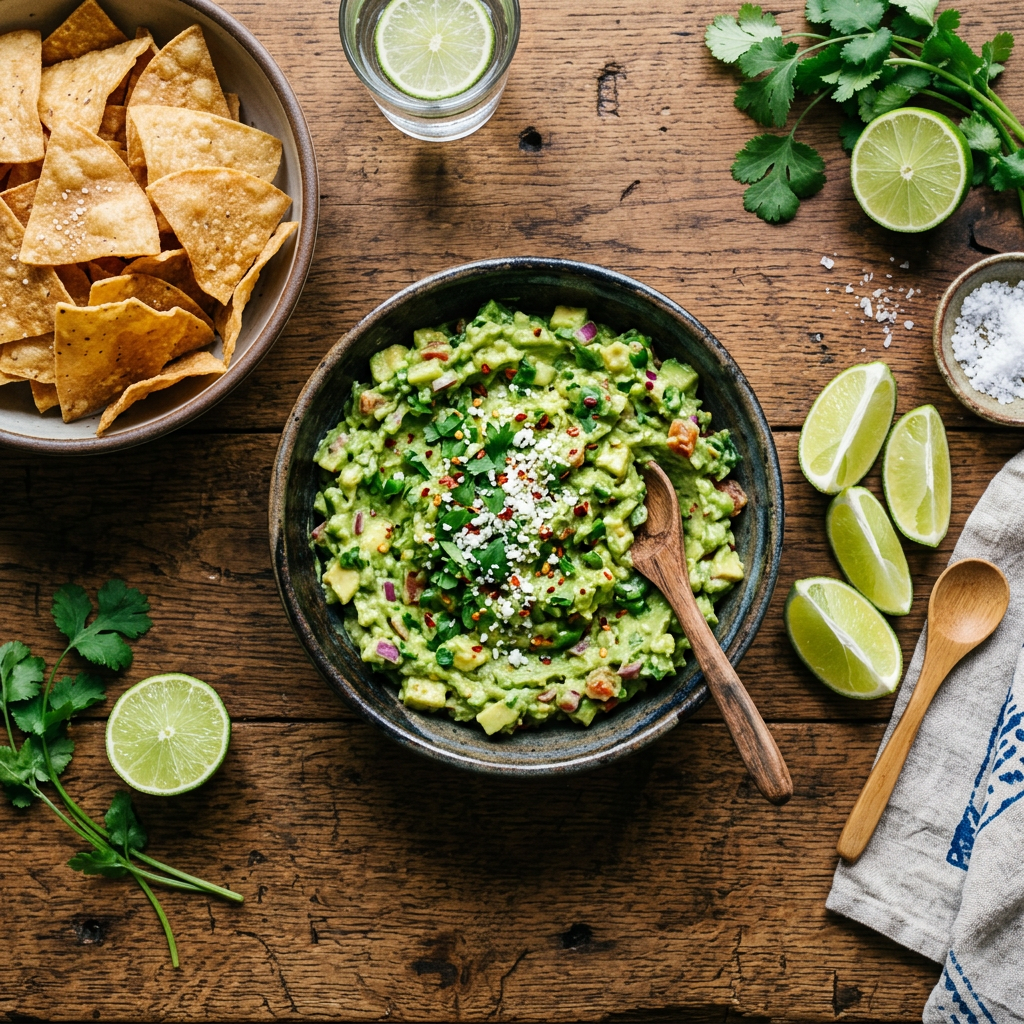
Guacamole recipe is the first thing I point beginners toward when they say they cannot cook. There is no heat involved, no timing to manage, no technique that requires practice — just six fresh ingredients combined in a bowl. The gap between store-bought guacamole and homemade is larger than almost any other comparison in cooking. Pre-made versions are preserved, slightly grey, and taste of little beyond generic avocado puree. Homemade guacamole made with ripe avocados and fresh lime juice is bright, creamy, textured, and genuinely difficult to stop eating.
If you have never made guacamole before, this is one of the best possible starting points in the kitchen. It takes ten minutes, requires no special equipment, teaches you how to taste and adjust seasoning in real time, and produces something substantially better than anything you can buy.
In this post you will learn how to identify a ripe avocado reliably, why the mash texture matters more than most people think, what each ingredient contributes and in what order to add them, the secret ingredient that rounds everything out, how to keep guacamole green for longer, and every useful way to serve it beyond chips.
10 mins
None
10 mins
4–6
Very Easy
The Most Important Step in Any Guacamole Recipe: Ripe Avocados
Everything else in this recipe is adjustable — more lime, less jalapeño, cilantro or no cilantro. The ripeness of the avocado is not negotiable. An underripe avocado produces guacamole that is pale, waxy, slightly bitter, and resistant to mashing into a creamy consistency. A ripe avocado produces guacamole that is deeply green, buttery, and mashes in seconds into the smooth-yet-chunky texture that makes great guacamole what it is.
How to check ripeness: hold the avocado in your palm and squeeze gently. It should yield to moderate pressure without feeling mushy. A firm avocado that does not yield at all needs one to two more days at room temperature. A very soft avocado that feels hollow or has dark dented spots may be overripe and browning inside — check before buying.
The stem check: pop the small stem nub off the top of the avocado with your finger. If the flesh underneath is bright green, the avocado is ripe. If it is brown, the avocado is overripe inside even if the skin looks acceptable. If the stem does not pop off easily, the avocado needs more time.
The Mash: Chunky vs. Smooth
The best homemade guacamole is neither a smooth puree nor a pile of barely broken-down chunks. The ideal texture is predominantly creamy with irregular pieces of avocado that provide variation in each bite — some areas smooth and rich, some areas with a distinct chunk that gives the whole dip a sense of freshness and texture.
Mash the avocado with a fork against the side of the bowl, leaving some larger pieces deliberately intact. Smash rather than stir — use the back of the fork to press and fold. Stop when the mixture looks roughly two-thirds smooth and one-third chunky. It will break down a little more once the other ingredients are stirred in, so err on the side of slightly chunkier than your target.
Never blend guacamole. A blender produces a completely smooth, airy paste that tastes of nothing but avocado and loses all the textural interest that makes eating guacamole enjoyable. A fork and bowl is the correct tool for every version of this recipe.
Lime Juice: More Than You Think
Fresh lime juice is non-negotiable — bottled lime juice has a cooked, slightly bitter edge that flattens the entire flavour of the guacamole. One lime provides enough juice for two avocados if the avocados are ripe and the lime is fresh and yielding. Roll the lime firmly on the counter for thirty seconds before cutting — this breaks down the internal structure of the fruit and produces significantly more juice.
Add the lime juice first, before any other ingredient. It does two things simultaneously: it prevents oxidation of the mashed avocado (slowing browning) and it seasons the base with acid before the other flavours are added, which means the salt and spice additions that follow can be tasted in their final context rather than in an unseasoned base.
If the finished guacamole tastes flat, the answer is almost always more lime juice, not more salt. Acid is what makes guacamole bright and lively rather than heavy and dull.
The Six Ingredients and What Each One Does
Avocado is the base — fat, creaminess, and the mild, buttery flavour that carries everything else. Lime juice adds acidity, brightness, and preserves colour. Salt seasons and draws out the flavour of the avocado itself — the guacamole will taste flat and one-dimensional without adequate salt.
Red onion adds a sharp, slightly sweet bite and a textural contrast to the creamy avocado. Dice it very finely — large chunks of raw onion are unpleasant and dominate every bite. If raw onion is too sharp for you, rinse the diced onion briefly under cold water and drain before adding — this removes much of the harsh volatile compounds without eliminating the onion flavour entirely.
Fresh jalapeño adds heat and a vegetal freshness. Remove the seeds and membrane for mild heat; leave some seeds in for more. A serrano pepper delivers a sharper, hotter bite if you prefer more intensity. Dice very finely — the same principle as the onion applies.
Fresh cilantro adds an herbal brightness that defines the flavour of traditional guacamole. If you dislike cilantro, leave it out entirely rather than substituting — the dish is excellent without it and no substitute replicates its specific character without adding a different flavour entirely.
The Secret Ingredient: Cumin
A quarter teaspoon of ground cumin is the ingredient that most home guacamole recipes either omit or mention as optional but which makes a consistently noticeable difference. Cumin rounds out the flavour — it adds a warm, earthy base note that ties the acidity of the lime, the sharpness of the onion, and the richness of the avocado into a coherent whole rather than a collection of separate flavours.
The amount should be subtle — you should not be able to identify it as cumin in the finished guacamole, only notice that the overall flavour feels deeper and more complete. A quarter teaspoon for two avocados is the correct amount. More than that tips the balance too far and makes the guacamole taste like a spice blend rather than fresh avocado.
Seasoning to Taste: The Most Important Skill
Taste the guacamole after combining all ingredients. Then taste it again. Then adjust. This is the skill that all cooking — from the simplest recipes to the most complex — builds toward. A finished guacamole that needs more lime juice tastes flat and heavy. One that needs more salt tastes watery and indistinct. One that needs more jalapeño tastes safe and bland. One that needs more cilantro tastes like it is missing something herbal and fresh.
Taste with the chip or bread you are serving alongside — the seasoning that is correct for the guacamole alone will seem slightly underseasoned when eaten with a salty tortilla chip, and the chip’s salt is part of the overall flavour equation.
Keeping It Green
Avocado turns brown when the flesh is exposed to oxygen — a reaction called enzymatic browning. Lime juice slows this significantly but does not stop it indefinitely. The most effective storage method is to press plastic wrap or cling film directly against the surface of the guacamole with no air gap at all, then refrigerate. This limits oxygen contact to near zero.
The avocado pit pressed into the surface of the guacamole reduces browning only in the immediate area it contacts — it is a partial solution but not a complete one. The plastic-wrap-against-the-surface method is far more effective and keeps guacamole green for up to two days in the fridge.
A thin layer of cold water poured over the surface of the guacamole before wrapping adds an additional oxygen barrier. Pour it off and stir the guacamole briefly before serving. The top layer may show slight browning; scrape it off and the bright green guacamole underneath is perfectly fine to eat.
Guacamole as a Meal Prep Component
Guacamole is one of the most versatile meal prep toppings in a weekly cooking plan. A batch made Sunday works across the entire week — as a topping for meal prep bowls, a spread for wraps and sandwiches, a dip for raw vegetables at lunch, and a sauce alongside grilled protein at dinner. The healthy spring meal prep guide covers exactly how to build a component-based week of meals, and guacamole is one of the highest-impact additions to any meal prep spread for almost no additional effort. The 52-Week High-Protein Meal Prep Cookbook maps out a full year of this kind of strategy with structured weekly plans built around versatile condiments and sauces exactly like this.
What to Serve It With
Tortilla chips are the classic vehicle. Warm them briefly in a dry pan for 60 seconds per side to restore crispness and the toasty corn flavour that goes flat once chips have been open for a while. The Taima Titanium Nutri Pan Pro 2.0 works perfectly for this — wide, PFAS-free, and even-heating so every chip gets the same 60 seconds of dry heat without hot spots burning one side while the other stays cold.
Tacos: guacamole alongside ground beef tacos, pulled chicken, or grilled fish turns a good taco into a great one. The fat of the avocado balances the spice of the meat and the acidity of any salsa simultaneously.
Grilled or pan-seared chicken: a spoonful of guacamole on top of sliced chicken thigh turns a simple protein into something that looks and tastes considerably more assembled than the effort involved.
Eggs: guacamole spooned alongside scrambled eggs or on top of a fried egg on toast is one of the most satisfying quick breakfasts in any kitchen. The fat and acidity of the guacamole makes eggs taste considerably richer and more complete.
For anyone wanting to go further and learn to make authentic homemade tortillas and flatbreads from scratch to serve alongside — the Complete Beginner’s Guide to Mastering Breads, Cakes, Cookies and Pastries covers the foundational dough and bread techniques that make homemade tortilla chips and flatbreads completely approachable.
Classic Homemade Guacamole
Two ripe avocados mashed to a chunky-creamy consistency with fresh lime juice, red onion, jalapeño, cilantro, and a pinch of cumin. No cooking, no blender, ten minutes. Tastes nothing like the container.
Ingredients
- 2 large ripe avocados
- 2 tbsp fresh lime juice (about 1 lime), plus more to taste
- 1/2 tsp kosher salt, plus more to taste
- 1/4 small red onion, finely diced (about 3 tbsp)
- 1 jalapeño, seeds removed, finely diced (leave some seeds for more heat)
- 2 tbsp fresh cilantro leaves, roughly chopped
- 1/4 tsp ground cumin
- Optional: 1 small roma tomato, seeds removed, finely diced
Instructions
- Halve the avocados, remove the pits, and scoop the flesh into a medium bowl. Add lime juice immediately.
- Using a fork, mash the avocado against the side of the bowl until roughly two-thirds smooth, one-third chunky. Do not over-mash — leave some texture.
- Add salt, diced red onion, jalapeño, cilantro, and cumin. Fold together gently with the fork until just combined. Add diced tomato if using.
- Taste. Adjust with more lime juice if it tastes flat, more salt if it tastes watery, more jalapeño if it needs heat. Taste again after adjusting — seasoning guacamole is an active process, not a one-time step.
- Serve immediately with tortilla chips, or press plastic wrap directly against the surface and refrigerate for up to 24 hours.
Notes
Ripeness test: Squeeze the avocado gently — it should yield to firm pressure. Pop the stem nub off the top; bright green underneath means ripe and ready. Brown underneath means overripe.
Storage: Press plastic wrap directly against the surface with zero air gap. Keeps green for up to 2 days in the fridge. A thin layer of cold water poured over the top before wrapping adds extra protection — pour off and stir before serving.
No cilantro: Simply leave it out. The guacamole is excellent without it. Do not substitute dried cilantro — it tastes completely different and adds nothing.
Mild version: Remove all seeds and membrane from the jalapeño, or omit entirely. Add a small pinch of smoked paprika for a mild warmth without any heat.
Beginner tip: If your guacamole tastes like it is missing something after all the ingredients are in, try more lime juice before more salt. Flat guacamole almost always needs acid, not more seasoning. Add half a teaspoon at a time and taste after each addition.
Tools & Resources
- 52-Week High-Protein Meal Prep Cookbook — make a double batch of guacamole on Sunday and use it as a topping across a full week of high-protein bowls, wraps, and plates
- Complete Beginner’s Guide to Mastering Breads, Cakes, Cookies and Pastries — learn to make homemade tortillas and flatbreads from scratch for the most satisfying possible guacamole experience
- Taima Pure Titanium Cutting Board Set — non-porous, odor-free surface for fine-dicing jalapeño, red onion, cilantro, and tomato without any flavour transfer between the ingredients
- Taima Titanium Nutri Pan Pro 2.0 — wide, PFAS-free pan for warming tortilla chips briefly in a dry pan to restore crispness and that fresh-toasted corn flavour before serving
Homemade guacamole recipe requires no heat, no equipment beyond a fork and a bowl, and ten minutes from whole avocado to finished dip. The avocado must be genuinely ripe — squeeze-yielding, bright green under the stem — and the lime juice goes in first, both to slow browning and to season the base before anything else is added. Cumin at a quarter teaspoon is the detail that rounds the whole thing out without announcing itself. Taste after every addition and adjust with lime before salt when something seems missing. The result is so far ahead of anything pre-made that once you make it this way, the container version becomes genuinely difficult to consider.
The cutting board you prep on matters more in this recipe than almost any other — every ingredient is fresh and finely diced, and a porous board that absorbs jalapeño and onion oils transfers those flavours unpredictably. A non-porous, odor-resistant surface keeps each ingredient tasting only of itself. If you are thinking about upgrading your kitchen basics, the full cookware breakdown is at Titanium Cookware That Actually Works (2025) — covering what sets pure titanium apart and which pieces to prioritize first.
Leave a Reply