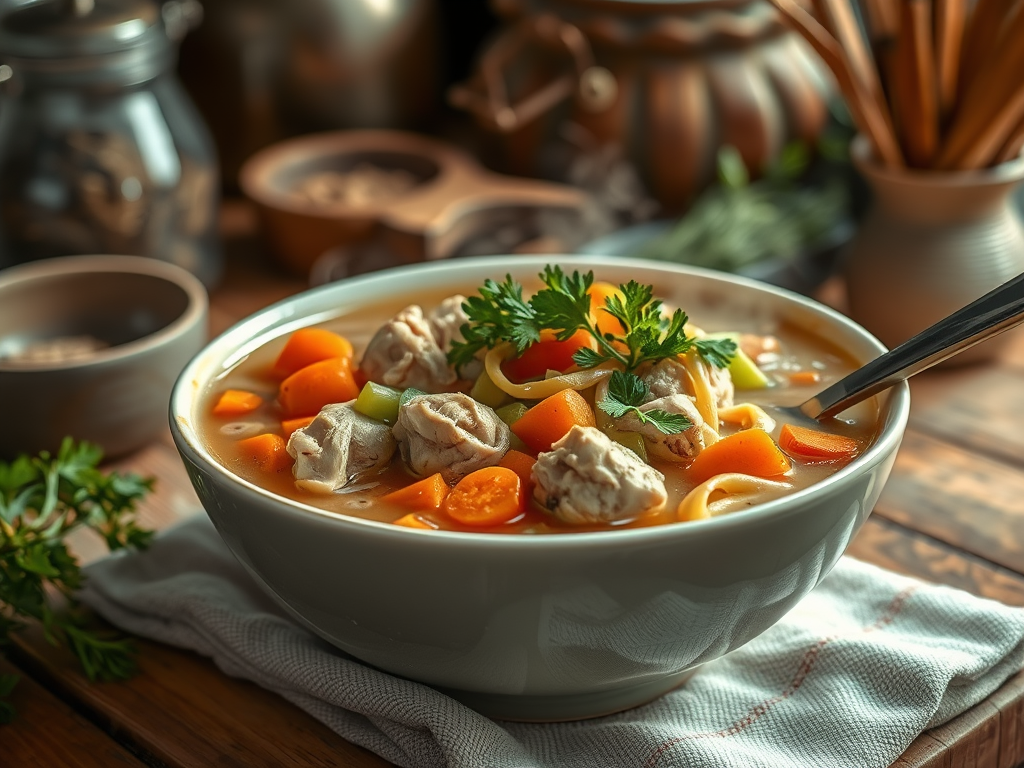
Homemade chicken noodle soup is the recipe I reach for whenever the week has been too long, the weather has turned, or someone in the house is not feeling well. I grew up thinking this kind of soup required hours of work and a proper stock made days in advance. It does not. This version is on the table in 45 minutes, and it tastes like it has been going all day.
If you are new to cooking and want a recipe that will become a permanent part of your kitchen, start here. The techniques you learn making this soup — building a flavour base, simmering proteins in broth, finishing with fresh herbs — apply to almost every soup and stew you will ever make.
In this post you will learn which chicken cut makes the best soup and why, how to build a broth that tastes deep and complex without hours of simmering, when to add the noodles, and how to store and reheat the soup so it tastes just as good on day three as it did the first night.
10 mins
35 mins
45 mins
4–6
Easy
Why Chicken Thighs Make Better Soup Than Breasts
Bone-in, skin-on chicken thighs are the right choice for a rich homemade chicken noodle soup. The bones release collagen as they simmer, which gives the broth a silky, almost gelatinous body that store-bought stock can never fully replicate. The skin renders its fat into the broth, adding richness and depth.
Chicken breast produces a leaner broth and can become stringy and dry when simmered for more than about 20 minutes. Thighs are far more forgiving — they stay juicy and tender even after a longer simmer, which gives you a wider window for timing without worrying about the chicken going past its best.
If you prefer using chicken breast, add it toward the end of the cook — about 15 minutes of simmering is enough. Remove it before it tightens up, shred it off the bone if applicable, and return the shredded meat to the pot just before serving.
Building the Flavour Base
The foundation of any good chicken soup from scratch is a properly sweated mirepoix — the combination of onion, carrot, and celery cooked in fat until softened and fragrant. This is not just a collection of vegetables you throw into liquid. It is a flavour base that sets the character of everything that follows.
Cook the mirepoix in butter or olive oil over medium heat for about five minutes before adding garlic and any herbs. The vegetables should be soft and translucent, not browned. A slight golden colour on the onion is fine and adds depth, but you are not looking for caramelisation at this stage.
Garlic goes in last among the aromatics because it cooks faster than onion and celery. Add it for just one minute before introducing the stock — long enough to bloom and turn fragrant, short enough that it does not burn and turn bitter.
Using Stock vs. Broth vs. Water
Good quality chicken stock is the single biggest variable in an easy chicken noodle soup recipe. Stock made from bones is richer and more gelatinous than broth, which is typically made from meat. Either works in this recipe — the bone-in chicken thighs you are simmering in it will enrich whatever liquid you start with.
If you have homemade stock, use it. If not, a quality low-sodium store-bought stock is the next best option. Low-sodium gives you control over the final seasoning — pre-salted stocks can make it very difficult to balance the flavour once you have added everything else.
In a pinch, water works. It produces a lighter soup than stock, but the chicken thighs will still release collagen and fat as they cook, giving the broth genuine body. Season more carefully at the end to compensate.
The Herbs That Make This Soup
Fresh thyme and fresh parsley are the two herbs that define classic chicken noodle soup. Thyme goes in early with the aromatics and infuses the broth slowly during the simmer. Parsley goes in at the very end — it is a finishing herb, and its bright, green flavour disappears if you add it too soon.
Bay leaves are worth adding — one or two during the simmer extract a subtle floral bitterness that makes the broth taste complex. Remove them before serving. They are not pleasant to bite into.
A parmesan rind added to the simmering broth is a technique borrowed from Italian cooking that makes a noticeable difference. It adds umami depth without any cheese flavour in the finished soup. Keep a bag of parmesan rinds in the freezer — they last indefinitely and improve every broth you make.
Choosing and Cooking the Noodles
Egg noodles are the classic choice for chicken noodle soup — wide, flat, and slightly chewy with a richness that holds up to the broth without becoming heavy. They cook quickly (usually six to eight minutes) and absorb the broth beautifully.
The most important rule about noodles in soup: cook them separately if you are storing leftovers. Noodles left sitting in broth continue to absorb liquid and swell overnight, turning from pleasantly chewy to bloated and mushy by the next morning. If you are making this soup ahead or planning to store it for several days, keep the noodles in a separate container and add them fresh when reheating each portion.
If you are cooking the whole pot in one session and serving immediately, add the noodles directly to the simmering soup for the last ten minutes of the cook. They absorb some of the broth and become infused with its flavour in a way that separately cooked noodles never quite replicate.
The Right Pot for Soup
A wide, heavy pot is the right vessel for chicken noodle soup. The width gives you room to sweat the aromatics in a single layer without steaming, and the depth handles the full volume of stock and chicken without splashing.
The Taima Titanium Nutri Pot Pro is built for exactly this kind of long simmer. Pure titanium is completely non-reactive — it does not interact with acidic ingredients like tomatoes or lemon juice that sometimes feature in soup variations, and it does not leach anything into the broth during extended cooking. No PFAS, no coatings to worry about.
Even heat distribution matters for soup more than most people realise. Hot spots at the bottom of a thin pot scorch the mirepoix before the vegetables have a chance to soften properly, which pushes a bitter note into the broth that you cannot reverse.
Seasoning: The Most Underrated Step
Season the soup in stages, not all at once at the end. Salt the mirepoix lightly as it cooks. Season the broth when it goes in. Taste and adjust again after the chicken has simmered. Final seasoning after the noodles, because the noodles absorb salt from the broth.
White pepper instead of black pepper keeps the broth visually clean and adds a slightly different heat profile. A small squeeze of fresh lemon juice stirred in just before serving brightens the entire bowl in a way that makes the soup taste fresher without adding any lemon flavour — the effect is subtle but consistent.
Do not undersalt soup. Under-seasoned soup tastes flat no matter how good your technique was. Taste repeatedly and season incrementally, and the final bowl will reward every step you put into it.
Variations to Try
Lemon orzo: swap egg noodles for orzo and add lemon zest and juice at the end. Serve with fresh dill instead of parsley. This variation feels lighter and works particularly well in spring — for seasonal soup and meal prep ideas that align with what is in season right now, the healthy spring meal prep guide is worth bookmarking.
Ginger and turmeric: add a teaspoon of freshly grated ginger and half a teaspoon of turmeric to the aromatics. This variation leans more healing and anti-inflammatory, and the golden colour of the finished broth is visually striking.
White bean and kale: stir in a can of drained white beans and two handfuls of shredded kale in the final five minutes of cooking. The beans add protein and body, and the kale wilts beautifully without becoming bitter.
Make-Ahead and Storage
This soup is genuinely better the next day. The broth deepens overnight as the chicken continues to infuse it, and the flavours meld in a way that freshly made soup does not quite achieve. Make a full batch on Sunday and it provides four to six portions through the week.
Store the broth and chicken separately from the noodles. The soup base (broth, chicken, vegetables) keeps in the fridge for up to four days and in the freezer for up to three months. Cook the noodles fresh for each serving — it takes six minutes and the difference in texture is significant.
Reheat the soup base in a pot over medium heat until it is at a full simmer. Add freshly cooked noodles, taste for seasoning, and finish with fresh parsley and a squeeze of lemon. For building broader batch-cooking habits around recipes like this, the Complete Beginner’s Guide to Mastering Breads, Cakes, Cookies and Pastries covers the kind of foundational technique that makes every component of a recipe — including stocks and broths — more consistent and reliable.
Homemade Chicken Noodle Soup
Rich, golden chicken broth with tender shredded chicken, soft vegetables, and egg noodles. Built from a proper mirepoix and bone-in thighs that enrich the broth as they simmer — ready in 45 minutes and better the next day.
Ingredients
- 4 bone-in, skin-on chicken thighs (about 1 kg / 2 lbs)
- 2 tbsp unsalted butter or olive oil
- 1 large onion, diced
- 3 medium carrots, sliced into coins
- 3 stalks celery, sliced
- 4 cloves garlic, minced
- 1.5 litres (6 cups) low-sodium chicken stock
- 2 bay leaves
- 4–5 sprigs fresh thyme (or 1/2 tsp dried)
- 1 parmesan rind (optional but recommended)
- 180g (6 oz) egg noodles
- Handful of fresh flat-leaf parsley, chopped
- Juice of half a lemon
- Salt, white pepper, and black pepper to taste
Instructions
- Season chicken thighs generously on both sides with salt and pepper.
- In a large, heavy pot over medium heat, melt butter. Add onion, carrot, and celery. Season lightly with salt. Cook, stirring occasionally, for 5–6 minutes until softened and the onion is translucent.
- Add garlic and thyme. Cook for 1 minute, stirring, until fragrant.
- Add chicken stock, bay leaves, and parmesan rind if using. Stir to combine.
- Add chicken thighs skin side down. Bring to a gentle boil, then reduce heat to a steady simmer. Cook for 25 minutes until the chicken is fully cooked through and the broth has deepened in flavour.
- Remove the chicken thighs to a cutting board. Remove and discard the skin, bay leaves, thyme sprigs, and parmesan rind. Shred the chicken meat off the bone using two forks. Return shredded chicken to the pot.
- Bring the soup back to a simmer. Add egg noodles and cook for the time specified on the package (usually 6–8 minutes) until just al dente.
- Remove from heat. Stir in fresh parsley and lemon juice. Taste and adjust seasoning with salt and white pepper.
- Serve immediately in warmed bowls.
Notes
Storage: Store soup base (broth, chicken, vegetables — no noodles) in an airtight container for up to 4 days in the fridge or 3 months in the freezer. Cook noodles fresh for each serving.
Why separate noodles: Noodles left in broth swell overnight and turn mushy. Cooking them fresh takes 6 minutes and maintains the right texture across multiple days.
Chicken breast option: Add boneless chicken breast after the vegetables are softened. Simmer 15 minutes only. Remove, shred, return to pot.
Parmesan rind tip: Keep a bag of rinds in the freezer. They last indefinitely and add umami depth to any broth or soup without adding cheese flavour.
Beginner tip: Season in stages — when sweating the vegetables, when adding the stock, after the chicken is shredded, and finally after the noodles. Taste at each stage and you will not end up with an under-seasoned or over-salted final bowl.
Tools & Resources
- Taima Titanium Nutri Pot Pro — PFAS-free, non-reactive pot ideal for long simmers without hot spots or any leaching into the broth
- Taima Pure Titanium Cutting Board Set — non-porous, odor-free surface for prepping chicken, carrots, celery, and onion in one session
- Taima Titanium Nutri Pan Pro 2.0 — a PFAS-free pan for any variation that calls for searing chicken or browning aromatics separately before adding to the pot
- Meat Thermometer — ensures chicken thighs have reached 165°F before shredding, giving you confidence at every step
Homemade chicken noodle soup is one of the most practical recipes in any kitchen. Build a proper mirepoix, simmer bone-in thighs until the broth is rich and golden, season in stages, and keep the noodles separate from any portion you are storing. These are simple habits that make a significant difference to the final bowl — and once you have made this soup once, you will have a template for every comforting broth-based dish you ever make after it.
The pot you simmer your soup in shapes the flavour of everything you cook in it, and non-reactive cookware matters particularly for long-simmered dishes. If you are thinking about upgrading your kitchen equipment to something non-toxic and genuinely built for this kind of cooking, the full breakdown is at Titanium Cookware That Actually Works (2025) — covering what separates pure titanium from coated alternatives and which pieces are worth investing in first.
Leave a Reply