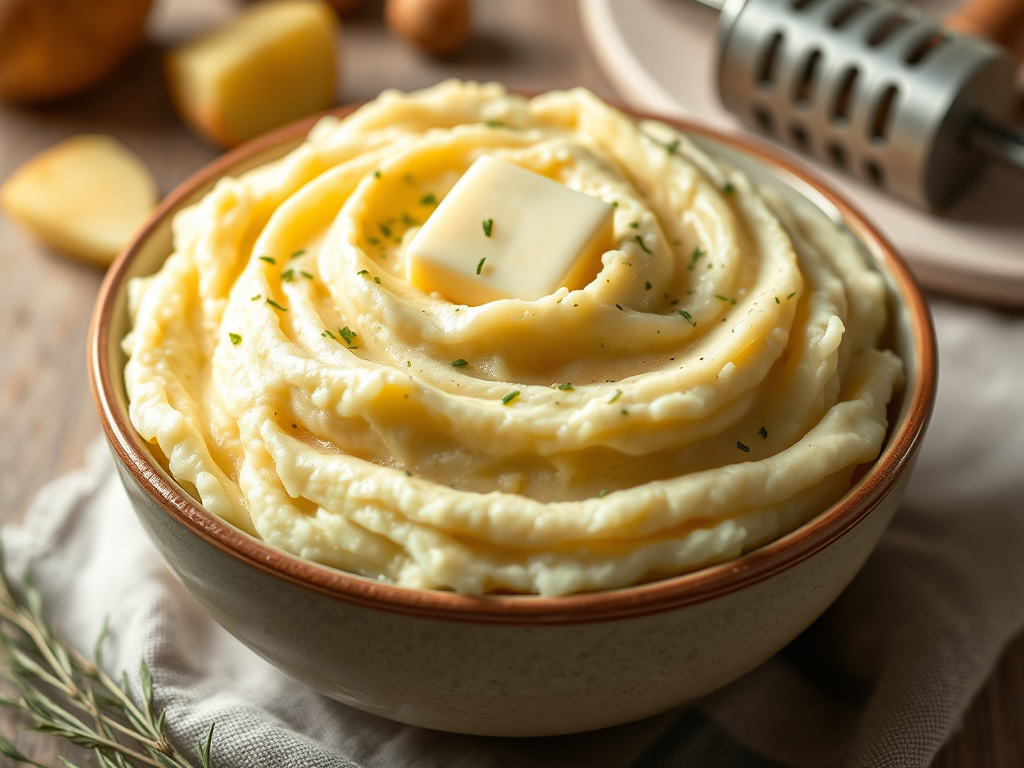
Mashed potatoes recipe disasters all look the same — a pot of grey, gummy paste that sticks to the spoon and sits heavy on the plate. I made them this way for years before I understood the two things that cause it. The first is the wrong potato for the job. The second is overworking the starch after the dairy goes in, which activates a glue-like property in the potato that no amount of butter or cream can undo once it has started.
If you are new to cooking and want a side dish that makes every main course taste more complete, this is the one to nail. Creamy mashed potatoes take twenty-five minutes, five ingredients, and one good technique — and they pair with almost everything that comes out of an oven or off a stovetop.
In this post you will learn which potato produces the fluffiest result and why, why starting in cold water matters, the warm dairy technique that prevents dense mash, the butter-first method that makes the texture genuinely silky, and how to store and reheat without losing the creaminess.
5 mins
20 mins
25 mins
4–6
Easy
The Best Potato for a Mashed Potatoes Recipe
Yukon Gold potatoes are the best all-round choice for creamy mashed potatoes. They have a naturally buttery flavour, a medium starch content that produces a smooth and creamy texture without being either dense or gluey, and a golden colour that makes the finished dish look richer than plain white mash. Their flesh holds together slightly better than russets, which means they are more forgiving if you push the cook time by a couple of minutes.
Russet potatoes are the other strong option. High in starch and low in moisture, russets produce an exceptionally fluffy, light mash when done correctly — the kind that absorbs large amounts of butter and cream without becoming heavy. The tradeoff is a slightly less rich flavour than Yukon Gold and a narrower window between perfectly cooked and overdone.
Avoid waxy potatoes — red-skinned or new potatoes — for mashing. They are low in starch, high in moisture, and do not break down well during cooking. The result is lumpy, dense, and slightly gluey regardless of technique.
Start in Cold Water, Not Boiling
Potatoes placed into already-boiling water cook unevenly — the outside softens and begins to fall apart before the centre is done. Starting in cold salted water and bringing everything to temperature together produces even cooking all the way through, so every piece is tender at the same time.
Salt the water generously — a full tablespoon of kosher salt per pot. Potatoes are dense and absorb flavour during cooking; water seasoned at the boiling stage seasons the potato from the inside out in a way that surface seasoning after mashing cannot replicate. Under-salted cooking water is one of the most common reasons mashed potatoes taste flat despite having plenty of butter and cream added at the end.
Cut potatoes into even chunks — about 1.5 to 2 inches. Consistent sizing means consistent cooking time. A mix of large and small pieces produces some that are overdone while others are still firm, and overdone pieces absorb too much water and dilute the flavour.
The Steam-Dry Step Most Recipes Skip
After draining the cooked potatoes, return them to the hot pot over low heat for one to two minutes, shaking the pot gently to turn them. This step drives off the surface moisture that accumulated during boiling — moisture that, if left in the potato, dilutes the butter and produces a slightly watery mash.
The potatoes should look slightly chalky on the surface and be giving off a little steam before the butter goes in. That is the visual cue that the surface moisture has evaporated and the potato is ready to absorb fat rather than dilute it.
This step takes ninety seconds and makes a noticeable difference to the final texture and richness. It is not dramatic — just a small amount of steam rising from the pot — but the result is a mash that absorbs butter cleanly rather than producing a slightly wet, pooled texture around the base.
Butter First, Warm Dairy Second
The best mashed potatoes recipe adds butter before the dairy, not alongside it. Butter goes in directly to the hot, steam-dried potatoes and is mashed in fully before any milk or cream is added. The fat coats the starch granules in the potato before the liquid arrives, which prevents the starch from becoming waterlogged and gluey when the dairy is stirred in.
Use room temperature or slightly softened butter rather than cold butter straight from the fridge. Cold butter takes longer to melt and incorporate, which means you end up mashing longer than necessary to achieve a smooth texture — and the longer you mash after the dairy is in, the more glue you activate.
Warm the milk and cream together in a small saucepan before adding them. Adding cold dairy to hot potatoes causes the potato to tighten and the texture to become dense. The dairy should be warm enough that it does not drop the temperature of the mash when it goes in — around 150°F is ideal, which the ThermoPro TwinTempSpike Bluetooth Thermometer reads precisely from your phone while you finish draining the potatoes.
How to Mash Without Making Glue
A potato masher produces the most reliable result for a home cook. Use a firm, downward pressing motion rather than vigorous stirring or circular motion — the goal is to break the cells open gently, not to work the starch into a paste. Mash to the texture you want, then stop. Every additional press after “done” adds more starch activation.
A potato ricer produces an even smoother, fluffier result than a masher and is the tool most restaurant kitchens use for their mashed potatoes. The ricer presses cooked potato through small holes without any shearing motion, which minimises starch damage and produces an almost impossibly light texture. If you plan to make mashed potatoes regularly, a ricer is worth the small investment.
Never use a blender, food processor, or electric hand mixer. These tools break the starch cells at a molecular level and produce a paste so gluey it cannot be fixed. Once you have gone past the masher stage into machine territory, the batch is lost.
The Right Pot Makes the Cook Easier
A heavy, wide pot with enough depth to hold the potatoes submerged in water by at least an inch is the right vessel. Thin pots develop hot spots at the bottom that cook the lowest potatoes faster than the top layer, producing uneven results even when the cut sizes are consistent.
The Taima Titanium Nutri Pot Pro distributes heat evenly across its entire base, which means every potato chunk cooks at the same rate. It is also PFAS-free and non-reactive — relevant here because the salted water and the slightly acidic potato starch sit in the pot for the full boiling time, and a reactive surface can affect both the water flavour and the potato flesh over a long cook.
Seasoning: The Two-Stage Approach
Season the cooking water heavily — a tablespoon of salt per large pot, enough that the water tastes distinctly salty. This seasons the potato from within. Then add butter without additional salt so the fat can absorb into the potato cleanly. Only add the final seasoning — salt and white pepper — after the warm dairy has been incorporated and the texture is set.
White pepper rather than black keeps the mash visually clean and adds a slightly different, more delicate heat. Black pepper works perfectly well but leaves visible specks — personal preference rather than technique.
Taste the finished mash and adjust. The final seasoning is the moment you bring everything into balance — a pinch more salt, a small addition of butter if the texture feels slightly stiff, a tablespoon more warm milk if it needs loosening.
Variations
Garlic mashed potatoes: add four whole peeled garlic cloves to the pot with the potatoes from the start. They cook and soften alongside the potato and mash directly in. Alternatively, roast a full head of garlic at 400°F for 40 minutes, squeeze the softened cloves out, and stir them through the finished mash — roasted garlic produces a sweeter, more mellow flavour than boiled.
Loaded mashed potatoes: fold in grated cheddar, crumbled bacon, sour cream, and sliced spring onion after the dairy is incorporated. This is the version that makes mashed potatoes a standalone dish rather than a side, and works exceptionally well alongside a simply cooked protein. For the perfect pairing, a properly cooked steak brings out the best in a bowl of loaded mash — the technique for both is covered in the guide to cooking steak perfectly every time.
Parmesan and chive: fold in a generous handful of freshly grated Parmesan and a tablespoon of finely sliced chives just before serving. The Parmesan adds salt and a nutty depth that makes these feel considerably more elevated than a basic mash with the same effort.
Make-Ahead and Storage
Mashed potatoes can be made up to two days ahead and stored in an airtight container in the fridge. They thicken significantly as they cool — this is normal and does not indicate a problem.
Reheat in a saucepan over medium-low heat with a generous splash of warm milk and a knob of butter, stirring gently and constantly. Do not use a microwave for a full batch — the heat is too uneven and can produce gluey patches alongside parts that are still cold. A microwave works for a single portion heated on 50% power with a splash of milk, stirring halfway through.
For batch cooking with the rest of the week’s meals in mind, mashed potatoes store alongside braised proteins beautifully. The 52-Week High-Protein Meal Prep Cookbook maps out how to build a full week of meals around a Sunday cook that includes a large batch of mash alongside protein — covering storage, reheating, and which proteins pair most effectively at each meal.
Creamy Mashed Potatoes
Yukon Gold potatoes boiled in heavily salted water, steam-dried, then mashed with softened butter first and warm dairy second. Rich, fluffy, and never gluey — the technique is simple once you understand why each step matters.
Ingredients
- 1 kg (about 2.2 lbs) Yukon Gold potatoes, peeled and cut into 1.5–2 inch chunks
- 1 tbsp kosher salt (for the cooking water)
- 85g (6 tbsp) unsalted butter, at room temperature, cut into pieces
- 120ml (1/2 cup) whole milk
- 60ml (1/4 cup) heavy cream
- 1/2–1 tsp kosher salt (for seasoning, to taste)
- 1/4 tsp white pepper (or black pepper)
- Optional: sour cream (2 tbsp), chives, extra butter for serving
Instructions
- Place the cut potatoes in a large, heavy pot. Cover with cold water by at least 1 inch. Add 1 tablespoon kosher salt and stir. Bring to a boil over medium-high heat.
- Reduce heat slightly and simmer for 15–20 minutes until a knife slides easily into the largest piece with zero resistance. Do not overcook — the potatoes should be fully tender but not falling apart.
- While the potatoes cook, combine milk and cream in a small saucepan. Warm over low heat until steaming but not simmering, about 150°F. Remove from heat and keep warm.
- Drain the potatoes completely. Return the empty pot to the stove over low heat. Add the drained potatoes back in and shake the pot gently for 60–90 seconds until the surface looks chalky and steam rises. Remove from heat.
- Add the softened butter pieces to the hot, steam-dried potatoes. Mash with a potato masher using firm downward presses until the butter is fully incorporated and no large lumps remain.
- Pour in about half the warm dairy mixture and stir gently to combine. Add more dairy a little at a time until you reach your preferred consistency — creamy but still holding its shape. Do not over-stir.
- Season with salt and white pepper. Taste and adjust. Add a tablespoon of sour cream if desired and fold gently. Serve immediately, topped with a small pat of butter and chopped chives if using.
Notes
Never use a blender or food processor: These destroy the starch and produce irreversibly gluey mashed potatoes. Always use a masher or potato ricer.
Storage: Refrigerate in an airtight container for up to 3 days. Reheat on the stovetop over medium-low with a splash of warm milk and a knob of butter, stirring gently.
Russet swap: Works well but produces a fluffier, slightly drier texture. May need slightly more dairy. Steam-dry carefully as russets release more moisture than Yukon Golds.
Make-ahead: Make up to 2 days ahead. The mash will thicken in the fridge — this is normal. Always reheat with warm milk and butter to restore the original consistency.
Beginner tip: Stop mashing the moment you reach the texture you want. Every additional press activates more starch. The best mashed potatoes are slightly undermashed and finished with a gentle stir of warm dairy — not mashed to complete smoothness with a masher and then stirred aggressively.
Tools & Resources
- 52-Week High-Protein Meal Prep Cookbook — batch mashed potatoes alongside proteins like chicken, beef, or salmon for a full week of complete dinners in one Sunday cook
- ThermoPro TwinTempSpike Bluetooth Thermometer — monitor dairy temperature from your phone and add it at the ideal 150°F to prevent the potatoes from tightening or becoming dense
- Taima Titanium Nutri Pot Pro — heavy, PFAS-free pot with even heat distribution for a consistent boil and no hot spots that cook some potato chunks faster than others
- Taima Pure Titanium Cutting Board Set — non-porous, odor-free surface for peeling and cutting potatoes into consistent chunks before the cook
The best mashed potatoes recipe is built on four decisions made before a single mash stroke: Yukon Gold for a naturally creamy, forgiving texture; heavily salted cold-start water that seasons from within; a steam-dry step after draining that removes surface moisture and prepares the starch to absorb fat cleanly; and warm dairy added after softened butter, stirred in gently and only until the texture is right. Follow those four steps and the result is a mash that is rich without being dense, fluffy without being dry, and creamy in a way that holds together on the plate rather than pooling around the edges.
Mashed potatoes are at their best alongside a properly cooked protein — and few pairings hit harder than a great mash under a perfectly seared steak. The even heat distribution of the pot you boil in determines whether every chunk cooks at the same rate. If you are thinking about upgrading to PFAS-free, non-reactive cookware that handles both long boils and high-heat searing, the full breakdown is at Titanium Cookware That Actually Works (2025) — covering what sets pure titanium apart and which pieces to prioritize first.
Leave a Reply